← back to Raising Healthy Families blog
Parenting
In each episode of the Healthy Parenting Handbook Podcast, Katie Kimball, the national voice of healthy kids cooking, interviews experts in fields like nutrition, medicine, psychology, parenting, technology, entrepreneurship and more to help parents get tools to raise healthy, independent kids.
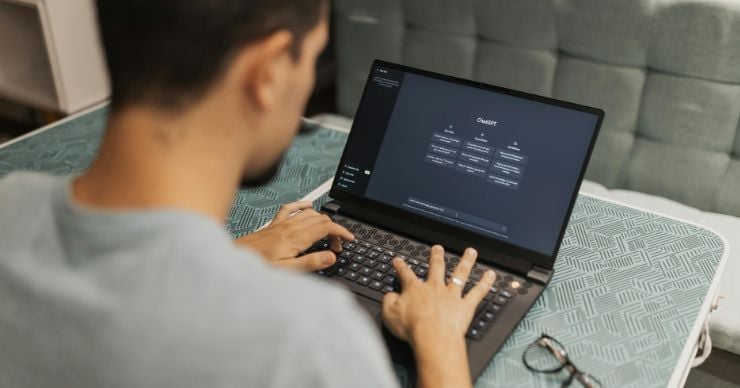
AI Can Answer Almost Anything. Your Kid Still Has to Know What to Ask.
There’s a fear going around that AI is going to make our kids’ brains soft. That they won’t have to think anymore, because the screen will think for them. I don’t buy it! AI hands you an answer the instant you ask. But AI does nothing for the kid who never thought to ask in the...
What’s Still Worth Teaching to Prepare Our Kids for the AI Age
Artificial intelligence is changing so quickly that honestly? I don’t think any of us can accurately predict what our kids’ jobs will look like in 10 or 20 years.
But I also don’t think parents can afford to throw up our hands and say, “Well, who knows?” and ignore the conversation.
In this second part of my AI series on the Healthy Parenting Handbook podcast, I’m digging into the question I think every parent is asking right now: What skills will actually matter in the age of AI?
Not coding. Not memorizing facts. Not just following directions.
The more I think about it, the more convinced I am that our kids are going to need to become more fully human, not less.
In this solo episode, I share the seven skills I believe will help kids thrive in a rapidly changing future, whether they become entrepreneurs, tradespeople, creators, leaders, or something none of us can even imagine yet. We’re talking about the kinds of skills AI can’t practice for us: communication, resilience, critical thinking, emotional regulation, adaptability, and learning how to learn.
I also share some surprising thoughts about which college paths may already be becoming obsolete, why hands-on skills may actually become more valuable again, and what I’m seeing firsthand as AI completely transforms the way my husband works every single day.
If you’ve been wondering how to prepare your kids for a future nobody can fully predict, this episode will help you focus on the skills that actually last.
...
Why Bother Teaching Life Skills When Robots Will Do Everything?
What happens when the future changes faster than parenting advice can keep up?
Artificial intelligence is already transforming jobs, schools, communication, creativity, and even the way businesses run day to day. And as parents, it can feel equal parts fascinating and terrifying.
Should we be worried? What skills will our kids actually need? And how in the world do we prepare children for jobs that don’t even exist yet?
In this solo episode, I dive into the rapidly changing world of AI through the lens of parenting, critical thinking, life skills, and human connection. I’m exploring why parents can’t afford to ignore this conversation… but also why panic probably isn’t the answer.
In this episode, you’ll hear:
- Why AI might eliminate some jobs… but create entirely new industries we can’t yet imagine
- The surprising historical parallels between AI and the decline of family farms
- Why trying to predict your child’s future career may be impossible (and that’s actually okay)
- What Back to the Future got hilariously wrong about the year 2015
- The reason “human touch” jobs may become even more valuable in the AI era
- How my husband uses AI all day long and why he says he may never code manually again
- The parenting mindset shift we need if technology keeps evolving faster than schools can adapt
- Why life skills, critical thinking, adaptability, and human connection still matter more than ever
If you’ve ever wondered whether AI is something to fear, embrace, resist, or simply learn alongside your kids, this episode is the beginning of an important conversation for every modern parent.
...
Raising Kids Who Can Problem Solve and Become Independent Adults
Do you ever feel that tension between wanting to help your kids… and knowing you probably shouldn’t step in so fast?
Because if we’re honest, it’s almost always easier and quicker to just do it ourselves. Open the bottle. Fill out the form. Solve the problem.
But what if that instinct is exactly what’s holding our kids back?
In this episode, I’m talking with Amy Carney about what it really takes to raise kids who are ready for the real world. Not just capable on paper, but confident, resilient, and able to handle life when things don’t go smoothly.
This is part two of our conversation, and we’re digging into the everyday moments that actually shape independent kids. (Here’s part 1 if you missed it.)
Here’s what we cover:
- Why so many young adults struggle with basic problem-solving (and what parents are unintentionally doing that contributes to it)
- The surprising power of letting kids struggle instead of stepping in
- How to create family fun that actually works, even with teens who “don’t want to” participate
- The mindset shift from doing things for your kids to mentoring them through life
- Real-life examples of skills that fall through the cracks (even in great homes)
- Why “easier and quicker” should be your red flag as a parent
- Practical ways to start handing over responsibility, one small step at a time
If you’ve ever wondered how to raise kids who can actually handle adulthood, this conversation will both challenge and encourage you in the best way.
...
How to “Launch” on Purpose: Teaching Life Skills to Your Teens Today That Will Prepare Them for Tomorrow
One of the motivations for creating the Kids Cook Real Food™ eCourse was that I was just over halfway to “launch” with my oldest child.
Nine years old is half of the intensive part of parenting, and Paul had just turned 10. He demonstrated how to make homemade guacamole to his 4th-grade class, and I realized that guac was the only thing he truly knew how to make!
One cannot live on guac alone…so I knew I needed to teach him more before he left my home!
I love that parenting expert and author Amy Carney also uses the word “launch” to describe the process of sending off a child into the world, ready to serve and grow and live on purpose.
She too had a crisis of parenting when her oldest kids were about 10, and she reacted even more strongly than I did – that and more in today’s interview!
What Amy made me desire: The sort of MARGIN she found in her life when she taught her kids certain things.
How I’ll rethink something today: That being frustrated about a task is an opportunity for a teaching moment.
A goal I need to keep in mind: Play is as important as “being busy.”
In the first two days after the interview, I quoted a certain portion twice, and it’s what college professors and deans all agreed that young adults need more of.
This is a heartfelt, fun, fascinating, and inspiring interview, and I hope you enjoy Amy as much as I did!
Amy is teaching on How to Spot a Scam in #LifeSkillsNow Season 5 – register now!
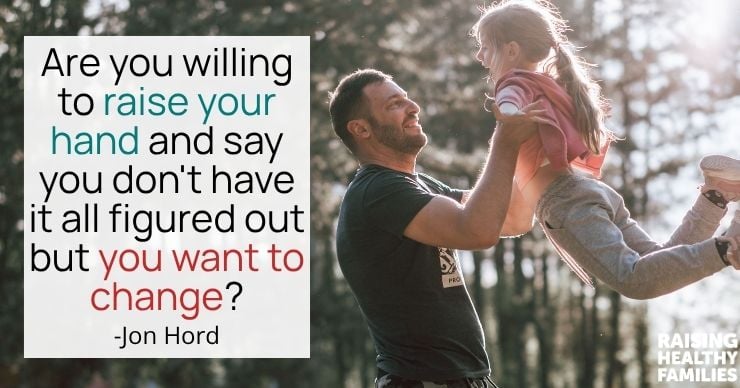
...
Making Repairs When Dad Blows Up
What happens when you mess up as a parent?
Because let’s be honest… no matter how intentional you try to be, no matter how many goals you set, there are still going to be moments where you lose your patience, react in a way you regret, or just plain get it wrong. The real question is not if that will happen, but what you do next.
In this second half of my conversation with Jon Hord, we move from awareness into action. Jon shares what it actually looks like to repair those hard moments with your kids, how to model growth instead of perfection, and why those “mess up” moments can become some of the most powerful connection points in your family.
This episode is incredibly practical, but also deeply encouraging. You are not stuck in your patterns. You are not defined by your worst moments. And you have more influence than you think in shaping your relationship with your kids moving forward.
In this episode, we cover:
- What to say after you lose your temper or handle something poorly
- Why apologizing to your kids builds respect instead of weakening authority
- How to turn parenting mistakes into opportunities for connection
- The difference between working on yourself silently and involving your kids in the process
- A simple way to help kids learn compromise and ownership (using dinner!)
- Why the dinner table is one of the most powerful connection points in your home
- The impact of removing phones and distractions during family time
- One mindset shift that can instantly change how you respond to your kids
The Dad Shift: How to Become the Father Your Kids Actually Need
Do you think you could be vulnerable enough to ask your kids, “How could I be a better parent?” Even the thought of that makes my chest tighten a little bit, but in this episode, Jon Hord is going to encourage dads—and moms—to do just that.
This conversation is such a powerful look at what it means to parent with intention instead of just reacting to whatever the day throws at you. Jon shares his own story of going from stressed, overwhelmed, and not showing up the way he wanted… to becoming a dad who is actively creating a new version of himself. And the best part? This is not about perfection. It is about awareness, small shifts, and having the courage to grow.
If you have ever felt like you are just trying to get through the day without losing your patience, or wondered if you are really showing up the way your kids need, this episode will hit home in the best way.
In this episode, we cover:
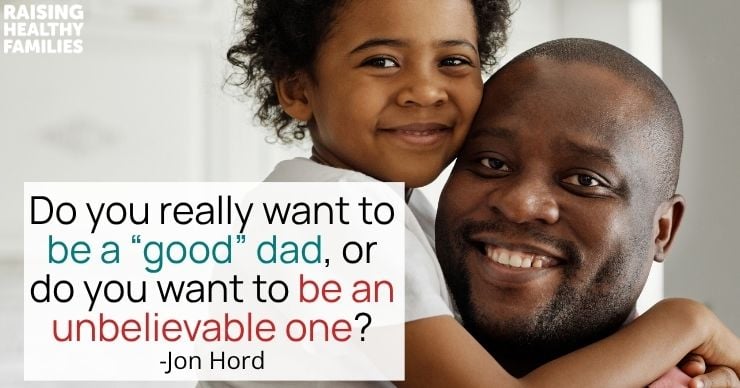
- Why “being a good parent” might actually be aiming too low
- The simple but uncomfortable question that can transform your relationship with your kids
- What to do when your child gives you honest feedback… and it stings
- How stress (especially from work) quietly shapes the parent you become at home
- The difference between reacting to your kids and actually leading them
- Why your childhood patterns show up in your parenting, whether you realize it or not
- A practical way to pause in hard moments instead of escalating them
- What it looks like to become the “new version” of yourself as a parent
Eating God’s Way for Christian Families
I love it when a conversation feels like it’s been years in the making. This one really has!
Today’s guest is someone who has quietly, faithfully shaped the way I think about food for a long time—my friend Wardee Harmon from Traditional Cooking School.
And if you’ve ever felt like the world of “healthy eating” is a swirl of contradictions…one expert says this, another says that…you are not alone. (Honestly, it can make your head spin before you even get dinner on the table.)
Wardee has this rare gift of bringing clarity to all that noise.
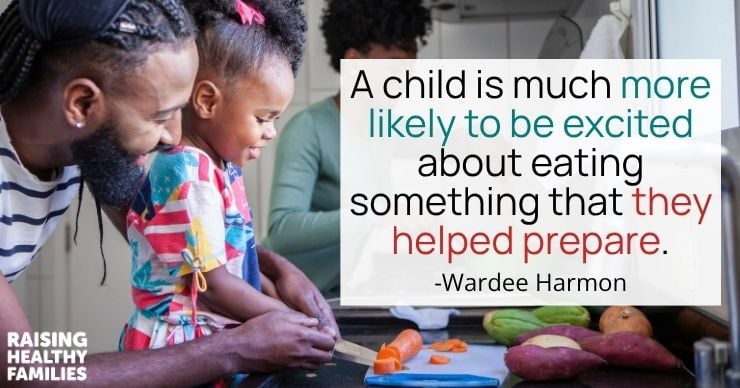
Her Eat God’s Way plan isn’t just another list of rules or trendy swaps. It’s a grounded, thoughtful look at the foods humans were designed to eat, paired with traditional methods that real families have used for generations. Things like soaking, fermenting, sourdough…not because they’re fancy, but because they work.
And I’ve seen firsthand how she teaches. She doesn’t overwhelm. She connects the dots.
She makes it feel doable, even if you’re starting from “we eat cereal for dinner sometimes and I’m just trying to survive.”
I also love that her perspective is rooted in faith, but she holds it with such grace. If that resonates with you, you’re going to feel right at home. And if it’s new or not quite your thing, there’s still so much practical wisdom here to take and run with.
Wardee is also one of our incredible leaders for #LifeSkillsNow (and coming back again in Season 5!)! This year she is teaching a delicious gluten-free Blueberry Oat Cake.
So whether you’re curious about traditional foods, wondering if sourdough is worth the hype, or just hoping to feel a little more grounded in what you feed your family…
You’re in the right place.
Let’s dive in.
...
Make Perimenopause About Gain, Not Loss (& What You Need to Eat)
Let me ask you something. When was the last time you felt genuinely sharp? Not just “I had coffee and I’m functional” sharp, but clear-headed, energized, actually-in-the-room sharp?
If you had to think about that for a second… you’re not alone.
Most of us have quietly accepted a version of ourselves that’s a little foggy, a little tired, a little “off” and chalked it up to getting older, being busy, or just how things are now. But here’s the thing: that fog has reasons. Real, biological, fixable reasons, and most of them have nothing to do with willpower or discipline.
In this post, we’re pulling back the curtain on what’s actually going on inside your body and brain during perimenopause. We’re talking about the surprising link between your gut and your mood, what your sleep problems are really trying to tell you, and why stress is so much sneakier than anyone gives it credit for.
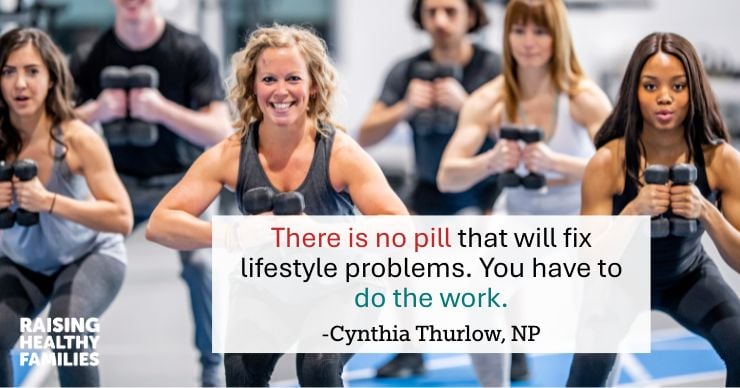
We’ll get into the habits that genuinely move the needle (spoiler: they’re simpler than you think, even if they’re not always easy), why there’s no magic pill and why that’s actually the best news you’ll hear all day, and how the small choices you’re making right now are quietly shaping how you’ll feel a decade from now. Two decades. Three.
Oh, and that thing you’re dreading about getting older? We’re going to reframe it completely.
So grab your drink of choice, get comfortable, and let’s figure out why your brain has been so quiet lately.
...
The Menopause Gut: Understand How to Respond to Changing Hormones in Your 40s
If you’ve ever found yourself thinking, “Why does my body suddenly feel different… and no one warned me about this?” you are absolutely not alone. Today’s episode is one I wish every mom could hear before she hits her late 30s and 40s, because we are talking about perimenopause in a way that actually makes sense.
I’m joined by Cynthia Thurlow, a nurse practitioner and expert in perimenopause and menopause, and this conversation truly feels like a mini masterclass in understanding your body. We talk through what is really going on with your hormones, how your gut plays a much bigger role than you might expect, and why so many of the symptoms we tend to brush off are actually connected.
Here’s what I love most about this episode: It is not about fear. It is about awareness. When you understand what is happening in your body, you can start making choices that help you feel better, not just get through this phase, but actually feel strong and supported in it.
In this episode, we cover:
- What the gut microbiome is and why it affects nearly every system in your body
- Why perimenopause can start earlier than you might expect, sometimes in your 30s
- The first hormone to shift and how it impacts stress, sleep, and mood
- How estrogen changes can lead to symptoms like weight gain, heavy periods, and gut issues
- Why your menstrual cycle is a vital sign you should not ignore
- The connection between hormones and brain fog, anxiety, and mood changes
- Why perimenopause can feel chaotic and how to start understanding those changes
- How learning what is happening in your body gives you more options to feel like yourself again