Money fights are rarely about the money.
They usually start somewhere small. A decision. An assumption. A moment that feels harmless at the time.
And then suddenly you are on a honeymoon, of all places, realizing you are not actually on the same financial page at all. That is exactly where this conversation begins.
Amanda shares a story that many couples will recognize: a beautiful life moment that quietly turned stressful because expectations were never spoken out loud.
Because money is not just math! It is emotion, trust, and more.
In this interview, we dig into what happens when financial communication falls through the cracks and why those cracks often appear during big life events when we least expect them.
You will see how:
- silence around money can create conflict even in strong relationships
- credit cards can blur the reality of spending in stressful moments
- surprise expenses often show up when emotions are already high
- assumptions about “who is paying for what” can quietly derail connection
- financial stress spills into relationship dynamics faster than we think
- talking about goals early can prevent hurt later
- planning together creates more peace than planning alone
- mistakes around money can become powerful growth points
This is not a conversation about budgeting apps or spreadsheets. It is about what happens when two people carry different money stories into the same experience.
And it might leave you wondering:
Where are the unspoken expectations in your own relationship?
What conversations are you assuming will just “work themselves out”?
And what would change if you talked about money before the moment arrives instead of during it?
Love the Handbook?
Find all the episodes of the Healthy Parenting Handbook here, or listen on your favorite podcast player:





Don’t forget to leave us a review on Apple Podcasts too! Thank you!
Can't see the video? Watch on YouTube →
YouTube Shorts for This Episode
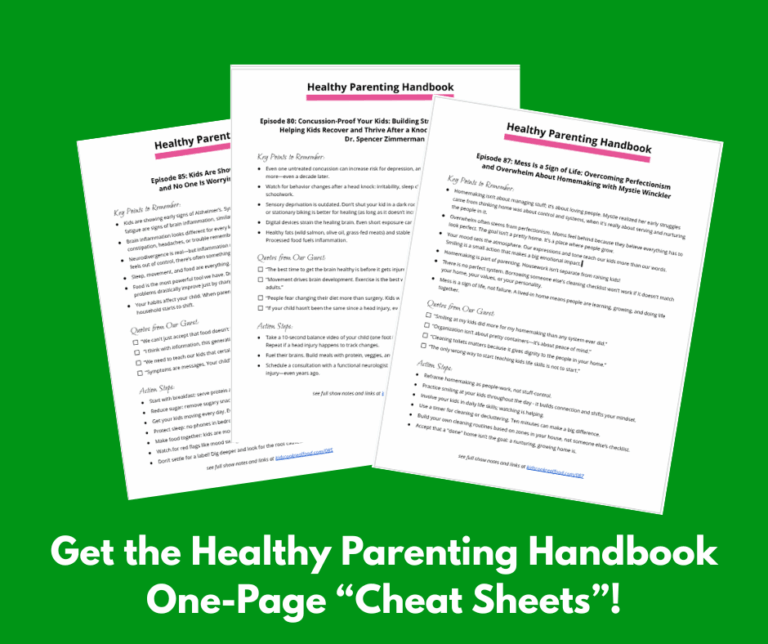
Turn expert advice into a handbook you can actually use.
I’ve interviewed hundreds of incredible experts on the Healthy Parenting Handbook podcast! Out of time to listen? You can skim on your phone!
These one-page summaries give you the highlights of every episode fast, so you can find what you need when you need it (and nothing to download).
100% privacy – You’ll also get Katie’s email newsletter with more practical tools for raising capable, confident kids. Change your preferences easily any time.
Key Points about Financial Literacy for Families
- Kids learn money habits first by watching adults. Before parents teach budgeting, saving, or generosity, they need to let their children see real conversations, real tradeoffs, and real planning around money.
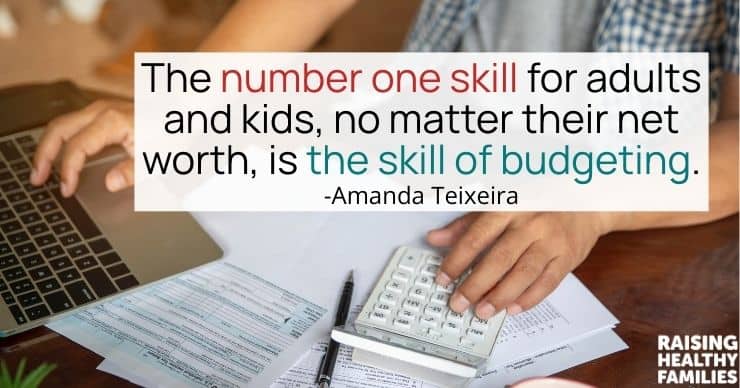
- Budgeting is the foundational money skill. Amanda says that money without a plan tends to disappear, so teaching kids to assign money a purpose early helps them grow into intentional adults.
- Money is not only for spending. Children need to learn from the beginning that money can be used to spend, save, invest, and give, and each of those categories reflects priorities and values.
Kids do not need parents who are perfect with money. They need parents who are trying. – Amanda Teixeira
- Work should be framed as good and meaningful. Kids benefit when they see that work is not a punishment, but a way to contribute, use their gifts, and create value in the world.
- Money lessons should grow with the child. Younger kids need simple categories and visual practice, while teens need real-life responsibility, such as managing part of their clothing, activity, or personal spending budget.
The Picky Eater Playbook: Get Pre-Order Bonuses!

My first traditionally published book releases November 10, 2026! The Picky Eater Playbook: Stress-Free Strategies to Jump Start Healthy Eating Habits in Kids is packed with real-life stories, flexible strategies, and step-by-step routines to turn dinner from a power struggle into something the whole family can enjoy.
If you’ve done the No More Picky Eating Challenge and want to have all my strategies at your fingertips, it’s the perfect resource! Or if you’re just beginning to tackle dinnertime struggles at your house, it will walk you through my whole system for eliminating picky eating.
Pre-order now and get some amazing bonuses!
Learn More about The Picky Eater PlaybookAction Steps to Take as a Family
- Start modeling intentional money decisions out loud. Let your kids hear you explain why you are choosing one purchase over another or why you are saving for something bigger.
- Teach budgeting in a simple, age-appropriate way. For young children, use jars, envelopes, or visual categories like spend, save, and give so they can begin to understand that money has different purposes.
- Give kids opportunities to earn money. Choose a few extra household jobs that go beyond regular family responsibilities and connect those jobs to a small payday.
- Help kids make a plan for every dollar they receive. When they get birthday money, allowance, or chore money, sit with them and talk through what portion they want to spend, save, or give.
- Gradually hand over financial responsibility in the teen years. Consider putting some of their regular spending money into their own account and letting them practice budgeting for clothes, outings, or other personal expenses.
- Build a family culture of generosity and stewardship. Invite kids to participate in giving to causes they care about, and talk about money as a tool for both wise choices and loving others.
Big Takeaway
Financial literacy is not one big lesson. It is a slow, intentional formation process. When parents model healthy habits, teach budgeting early, and gradually pass real responsibility to kids, they help raise adults who can handle money with confidence, purpose, and generosity.
Resources We Mentioned for Financial Literacy for Families
- Check out Wallet Win, the Teixeiras’ courses for kids and teens about finance (and get $10 off with my link), or the Catholic Money Academy for grown-ups
- Teaching Kids the Value of Money and Joy in Spending and Saving
- Teaching Kids about Debt Early
- My reel about Gabe’s blankets for the homeless population
- Teach teens how to budget with Crystal Paine’s One-Hour Budget for Teens (use code LIFESKILLS for a discount!)
- Reducing your food budget while eating real food
- How to make homemade yogurt
- Amanda’s workshop on Allowance vs. Wages is in Season Four of #LifeSkillsNow

In January 2012, FOCUS missionary Amanda Teixeira, and her husband, Jonathan, had $25,000 in debt and a deep desire to break free. A short — and zealous — seven and half months later they wrote their last check to Sallie Mae and closed the doors on debt forever. Since kicking debt to the curb, they’ve focused on saving, investing and giving in a way that set them up for total financial peace for a lifetime.
Upon hearing their story, a few people asked them money questions — and they answered. That snowballed into hundreds of answers, speaking at events, providing financial coaching, and in 2017, founding WalletWin to provide Catholic financial formation for the whole family.
They are authors of How to Attack Debt, Build Savings, and Change the World Through Generosity: A Catholic Guide to Managing Money, hosts of The Catholic Money Show, and creators of The Catholic Money Course, and The Catholic Family Emergency Binder. They have appeared on EWTN, Formed | On-Demand Catholic Movies, Audio Books, Podcasts & More , and are regular guests on Relevant Radio. Their financial formation programs are used by parishes, dioceses, and schools across the country.
Amanda lives in Omaha, Nebraska with her husband Jonathan and their four children.

Leave a Comment