Have you ever looked at a box in your house and felt like it was… talking to you?
Not literally. But emotionally.
Because in this second half of my conversation with decluttering expert Katy Wells, we go deeper than surface clutter. We talk about the hidden reasons we hold onto things. And friends, it is not about storage bins or label makers.
It’s about stories.
Stories about who we used to be. Who we hoped we would become. Stories about guilt, failure, scarcity, and expectations we didn’t even realize we were carrying.
And once you see that, you cannot unsee it.
In this episode, Katy unpacks the three hidden forces that keep people stuck in clutter cycles. These are not the things most organizing shows talk about. But they are the exact things that determine whether decluttering actually works long term.
Here’s what we cover:
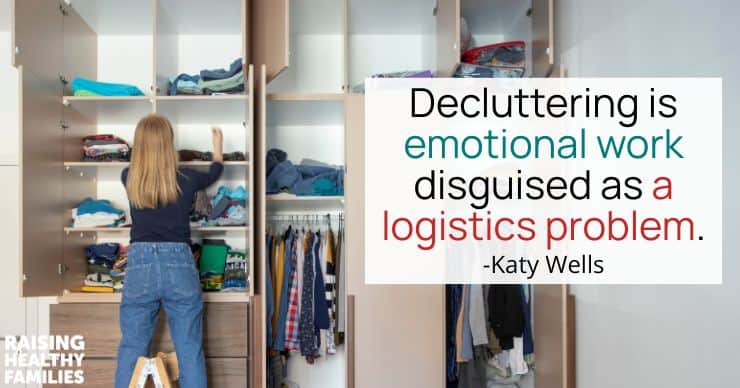
- Why decluttering is emotional work disguised as a logistics problem
- The hidden stories your belongings might be telling you
- How guilt and fear silently control what you keep
- The three pillars that shape your personal “stuff story”
- How childhood beliefs influence adult clutter habits
- The connection between procrastination and clutter
- Why some habits are not problems but personality clues
- The simple 5-second trick that can break overwhelm instantly
You’ll also hear one client story that might stop you in your tracks. Because once you recognize your own version of that box in the garage, you may never look at clutter the same way again.
And the best part?
You do not have to fix everything today. You just have to start.
Love the Handbook?
Find all the episodes of the Healthy Parenting Handbook here, or listen on your favorite podcast player:





Don’t forget to leave us a review on Apple Podcasts too! Thank you!
Can't see the video? Watch on YouTube →
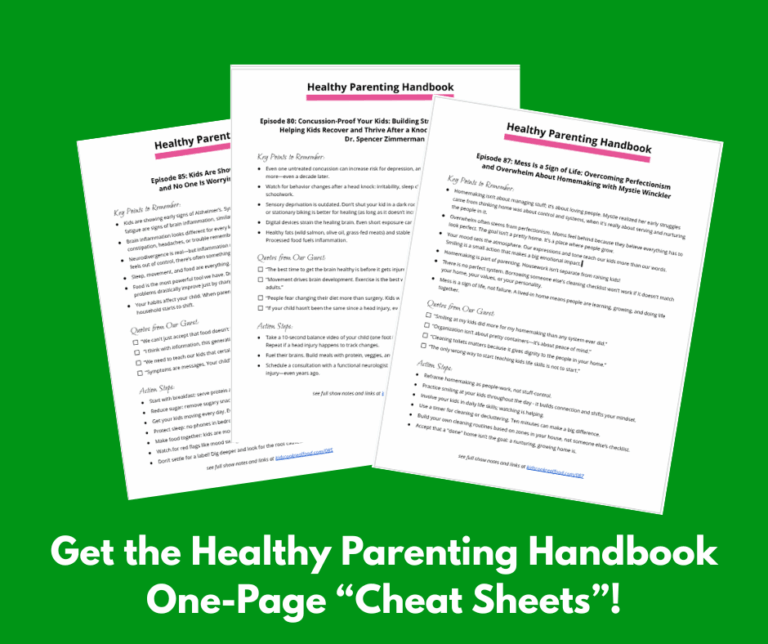
Turn expert advice into a handbook you can actually use.
I’ve interviewed hundreds of incredible experts on the Healthy Parenting Handbook podcast! Out of time to listen? You can skim on your phone!
These one-page summaries give you the highlights of every episode fast, so you can find what you need when you need it (and nothing to download).
100% privacy – You’ll also get Katie’s email newsletter with more practical tools for raising capable, confident kids. Change your preferences easily any time.
Key Takeaways about Decluttering Emotions:
- Decluttering is emotional work, not just logistics. The real struggle isn’t organizing bins. It’s facing guilt, grief, fear, identity, and the stories attached to our stuff.
- Your “stuff story” shapes everything. Childhood messages, personal experiences with scarcity or loss, and cultural pressure all influence what you buy, keep, and struggle to release.
- Physical clutter fuels mental clutter. Unresolved items become constant reminders of old stories, regrets, or perceived failures that quietly drain your energy.
“Decluttering is emotional work disguised as a logistics problem.” – Katy Joy Wells
- Habits and procrastination keep the cycle going. Clutter increases overwhelm, overwhelm increases avoidance, and avoidance creates more clutter.
- Liberation comes from challenging the story. When you question the belief behind the item, you gain clarity and freedom far beyond the physical space you clear.
The Picky Eater Playbook: Get Pre-Order Bonuses!
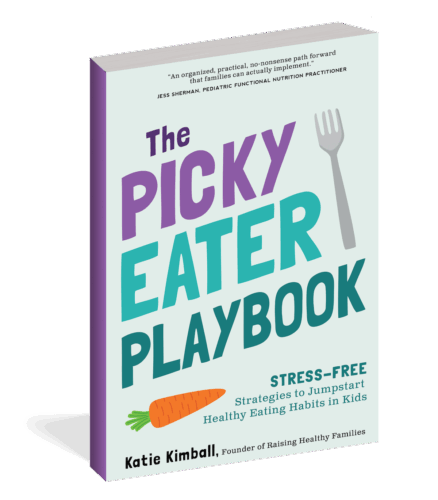
My first traditionally published book releases November 10, 2026! The Picky Eater Playbook: Stress-Free Strategies to Jump Start Healthy Eating Habits in Kids is packed with real-life stories, flexible strategies, and step-by-step routines to turn dinner from a power struggle into something the whole family can enjoy.
If you’ve done the No More Picky Eating Challenge and want to have all my strategies at your fingertips, it’s the perfect resource! Or if you’re just beginning to tackle dinnertime struggles at your house, it will walk you through my whole system for eliminating picky eating.
Pre-order now and get some amazing bonuses!
Learn More about The Picky Eater PlaybookAction Steps from This Episode:
- When you’re stuck, ask: What story is this item telling me? Is that story actually true?
- Identify one belief from childhood or culture that may be shaping your relationship with stuff, and gently question whether it still serves you.
- If you’re a “piles person,” give your piles a boundary like a basket or bin, and schedule a weekly reset to process them.
- Notice where procrastination is feeding clutter and interrupt it with one small decision instead of walking away.
- Start with emotionally lighter items to build confidence before tackling sentimental or identity-based clutter.
- Remind yourself that letting go of an item does not erase your identity, your memories, or your worth.
“Action creates motivation, not the other way around.” – Katy Joy Wells
Tap here for the episode transcript.
Katy Wells 0:00
When you challenge that belief to a point where you can make a call, the liberation you gain from the mental clutter that physical clutter causes is going to provide so much more opportunity for healing and clarity than even just the two boxes gone out of your garage would.
Katie Kimball 0:18
Hey, welcome back. This is part two of an awesome interview with Katy Wells, my favorite decluttering expert in the world. She is the author of a brand new book published February 2026. It’s called Making Home Your Happy Place: A Real-Life Guide to Decluttering Without the Overwhelm.
If you heard part one, you know Katy is all about bringing peace to your home and peace to your heart. We talked about the dual resets. A family reset of your space and the way your nervous system resets, which is only possible if your space allows it.
Today we’re jumping into the clutter loop, and you’ll hear more about her brand new book. Here’s part two of a great interview.
Katy, tell us the title so everyone can search it up immediately.
Katy Wells 1:14
Yes. Making Home Your Happy Place: A Real-Life Guide to Decluttering Without the Overwhelm.
Katie Kimball 1:19
So good. Sometimes it feels overwhelming when people say do it big. I love that you say do it little. Two items. Five minutes. A small chunk.
Your book talks about emotions, beliefs, and habits that keep people stuck. Could we unpack each one? Let’s start with emotions. How do emotions get in the way of being organized?
Katy Wells 1:44
So many methods focus on the stuff. How to organize it. How much to keep. Where to move it. Systems are helpful, but they are not the whole picture.
I kept running into that in my own journey. One step forward, ten steps back. One step forward, fifteen steps back. I kept asking, what’s happening?
The reality is we treat decluttering like logistics when it’s actually emotional work disguised as a logistics problem. Follow this checklist and you’ll be clutter free forever. That’s not reality. We’re human.
We’re not just deciding about stuff. We’re bumping into grief, guilt, fear, and identity.
Guilt is huge. “This cost money.” “I bought this with good intentions.” Fear is big. “What if I need it?” Identity shows up too. “This represents who I used to be.” “This represents who I hoped to become.”
You might know something is clutter. You might know you haven’t used it in six months. But your brain rules here.
That box in your garage isn’t just a box. Maybe it’s your grandmother’s dishes. Baby clothes. Supplies from a business dream that didn’t work out.
I worked with a client who started a business that didn’t succeed. Letting go of the supplies felt like admitting she was a failure.
That’s the weight we’re talking about. We avoid decisions because we don’t want to feel the pain.
If traditional advice hasn’t worked for you, remember this. You’re human. And you can challenge those beliefs.
Katie Kimball 3:42
What was that conversation like with the client who struggled to let go of the business supplies?
Katy Wells 3:50
First I asked, what’s the story you’re telling yourself? She said, “I feel like a failure.”
I asked, is that true? She said no. She could still start another business. She could still succeed. She could buy new supplies.
Then I asked, do you want that story to live?
Her clutter talked to her. Every time she walked into the garage, she saw those boxes and felt that failure message.
We talked through it step by step. I’m not a therapist, but I’m human and I’ve been there.
When she challenged that belief and chose a new story, she felt free. The mental clutter lifted even before the physical boxes left. That was a beautiful moment.
Katie Kimball 5:50
Listeners are going to remember that example when they see a box that talks to them.
She was afraid to let go because it meant failure, but keeping it hurt her every day.
I love your questions. Identify the story. Ask if it’s true. Then dismantle what isn’t.
Let’s talk beliefs. What kind of beliefs are we talking about?
Katy Wells 6:45
Beliefs you absorbed growing up. They’re like background programming.
Maybe your family believed wasting things was morally wrong. Now donating feels wrong.
Maybe you grew up without much, so now you overbuy to give your kids what you didn’t have.
Maybe you believe a good mom keeps a perfect home. Every mess feels like proof you’re failing. That one was personal for me.
These beliefs run like an operating system. You don’t see them, but they drive your relationship with stuff.
I call this your “stuff story.” Everyone has one. It shapes what you buy, what you keep, and what you struggle to release.
Your stuff story has three pillars: history, personal experience, and culture.
How you were raised. Experiences like loss or scarcity. And culture telling you you’re not enough unless you buy something.
Awareness is key. You can’t change what you can’t see.
Katie Kimball 9:14
I can already see one of mine. I hate throwing things away because of environmental concerns. That definitely affects my decisions.
Let’s talk habits. I’m a piles person. Could that be keeping me stuck?
Katy Wells 9:43
It depends. If it’s a regular pain point, it’s worth exploring. Some people are visual processors. Many neurodivergent people need visual systems. That’s okay.
Work with your personality.
I had a client who created piles everywhere because she didn’t want to decide. We gave her one clear system and a decision anchor. She started processing everything.
If you like piles, give them boundaries. Use a bin. Set a timer. Create a weekly habit to process them.
There’s also a strong link between procrastination and clutter. More clutter leads to more procrastination because our brains crave order.
Katie Kimball 11:43
Tell us something behind the scenes about writing your book. Was it hard?
Katy Wells 11:59
It was a roller coaster. High highs and low lows. I questioned my life choices many days.
I never planned to write a book. It felt like a calling. But putting your words in a book feels vulnerable. It feels permanent.
At the same time, it feels like legacy. That can feel overwhelming. I had to work through a lot internally to do it. But I’m glad I did.
Katie Kimball 13:47
That legacy piece is powerful. Your great grandchildren might read it someday.
Katy Wells 14:09
I should include a note telling them it’s okay to donate it when they’re done.
Katie Kimball 14:31
Go buy the book today. Then put a note in it that says, “When you finish, give this away.”
Katy Wells 14:52
One practical tip. Use the five-second rule.
When you’re overwhelmed staring at clutter, say out loud: 5, 4, 3, 2, 1, go. Then start.
Nine times out of ten, you will begin. I use it myself when I don’t feel like starting something.
Katie Kimball 16:05
Say the title again so everyone hears it in your voice.
Katy Wells 16:05
Making Home Your Happy Place: A Real-Life Guide to Decluttering Without the Overwhelm.
We go deep into brain-based strategies to help you move past procrastination and see lasting results.
Katie Kimball 16:37
You can hear your smile when you say it. I’m inspired to do a five-minute declutter right now.
Katy Wells 16:58
You can do this.
Katie Kimball 17:01
Thank you for listening to the Healthy Parenting Handbook podcast. I hope your brain feels fed and your heart feels full. Please leave a review and subscribe so other parents can find this resource. You can also find shorts on Instagram at Katie Kimball Kids Cook or on YouTube at the Healthy Parenting Handbook Shorts channel.
Resources We Mention for Decluttering and Emotions
- Order Katy’s new book, Making Home Your Happy Place, on Amazon or Bookshop.org
- Check out her courses if you need help at home: Toy Clutter Cure System, Home Management Mastery, Clutter Challenge
- Get the one-page handbook episode guides at raisinghealthyfamilies.com/handbook
- Here is Katy’s earlier episode of the podcast: Expected Mess Vs. True Clutter – What’s the Difference and How to Solve Them
- More on decluttering and working together as a family in my interview with Tidy Dad

Katy is a leading voice in the decluttering space, known for redefining how families approach their homes with more clarity, ease, and compassion. She is the host of the top-rated podcast The Maximized Minimalist, with over 5 million listens and reaches listeners around the world. Katy is recognized for offering a refreshing, real-life alternative to the exhausting “do more, try harder” approach that’s dominated the home space for decades.
Through her podcast, teaching, and community, Katy has helped thousands of families reduce overwhelm, restore ease at home, and create supportive habits that last. Her work has been featured on NBC News Daily, Martha Stewart, Real Simple, Southern Living, and more. She lives in Asheville, North Carolina with her husband and two sons.

Leave a Comment