There’s a moment in this conversation I can’t quite shake.
A mom drops her child’s favorite stuffed animal into the trash while her four-year-old begs her not to. If that makes your stomach tighten, you’re not alone.
Because even if you’ve never had a “trash can moment,” you’ve probably had that moment. The one where you hear yourself and think, “Wait…is this how I want to parent?”
That’s exactly where this conversation with Wendy Snyder begins. Not from perfection, but from honesty, growth, and a deep desire to do better than what we were handed.
And the surprising part? She doesn’t just share what went wrong. She shows us what to do instead in a way that feels doable and hopeful.
If you’ve ever wondered why punishment doesn’t work, why strong-willed kids push every button, or why you keep reacting in ways you swore you wouldn’t, this episode will meet you right there.
Inside, we talk about:
- The story behind that “trash can moment” and why it changed everything
- What’s really happening during power struggles
- The discipline belief most of us inherited and why it backfires
- A simple 4-step process to set limits without yelling or shame
- Why connection changes everything
- How to support strong-willed kids without breaking their spirit
- What breaking generational cycles actually looks like
- The long game of parenting and what success really means
Underneath it all is a quiet shift. Maybe parenting isn’t about controlling our kids better, but understanding them and ourselves more deeply.
If that’s the kind of change you’ve been craving, you’re in the right place.
Love the Handbook?
Find all the episodes of the Healthy Parenting Handbook here, or listen on your favorite podcast player:





Don’t forget to leave us a review on Apple Podcasts too! Thank you!
Can't see the video? Watch on YouTube →
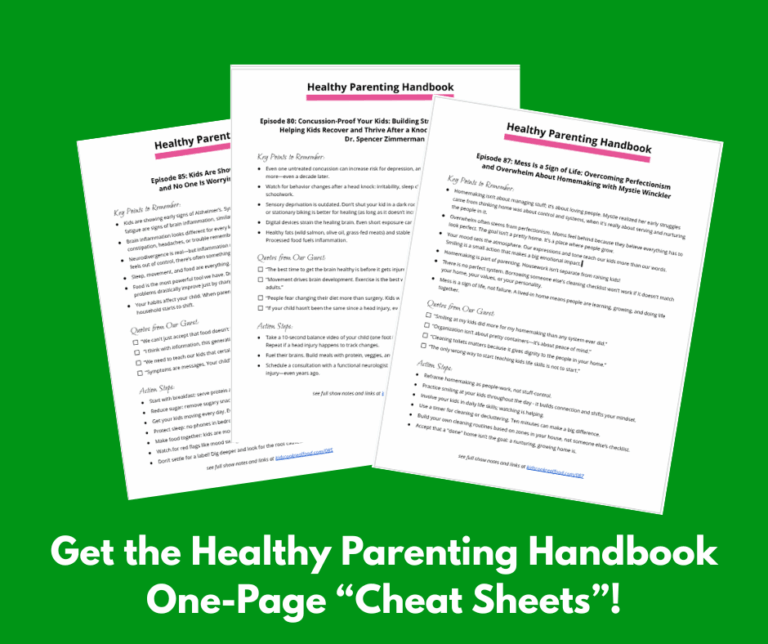
Turn expert advice into a handbook you can actually use.
I’ve interviewed hundreds of incredible experts on the Healthy Parenting Handbook podcast! Out of time to listen? You can skim on your phone!
These one-page summaries give you the highlights of every episode fast, so you can find what you need when you need it (and nothing to download).
100% privacy – You’ll also get Katie’s email newsletter with more practical tools for raising capable, confident kids. Change your preferences easily any time.
Key Takeaways about Respectful Discipline
- Parenting defaults often come from how we were raised. Many parents rely on punishment because it is familiar, not because it is effective.
- Punishment and shame do not teach kids how to behave better. They may stop behavior temporarily but do not build long-term skills.
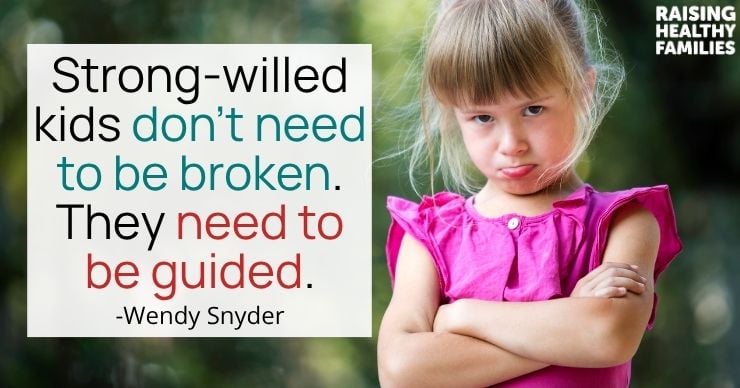
- Strong-willed kids especially need guidance, not control. When supported well, their traits can become strengths rather than struggles.
- Creating proactive agreements during calm moments helps prevent power struggles before they start. Kids are more likely to cooperate when they understand the “why.”
Punishment might stop behavior in the moment, but it doesn’t teach kids what to do instead. – Wendy Snyder
- Empathy is a powerful tool for connection. When kids feel understood, they are more open to listening and cooperating. (Learn more about helping our kids learn empathy too from Michele Borba!)
- Giving kids limited, acceptable choices builds independence while still holding firm boundaries.
- It is okay for kids to feel upset about a limit. Parents can stay calm and confident without trying to fix or avoid those emotions.
- Discipline should focus on teaching life skills, not punishing mistakes. Logical consequences help kids learn responsibility in a respectful way.
The Picky Eater Playbook: Get Pre-Order Bonuses!
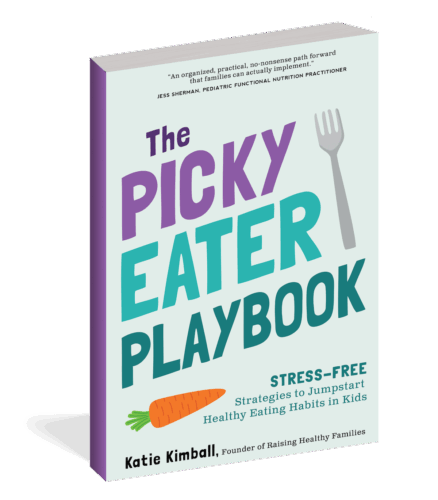
My first traditionally published book releases November 10, 2026! The Picky Eater Playbook: Stress-Free Strategies to Jump Start Healthy Eating Habits in Kids is packed with real-life stories, flexible strategies, and step-by-step routines to turn dinner from a power struggle into something the whole family can enjoy.
If you’ve done the No More Picky Eating Challenge and want to have all my strategies at your fingertips, it’s the perfect resource! Or if you’re just beginning to tackle dinnertime struggles at your house, it will walk you through my whole system for eliminating picky eating.
Pre-order now and get some amazing bonuses!
Learn More about The Picky Eater PlaybookAction Steps to Take from This Episode
- Identify one recurring challenge in your home, such as not listening, bedtime struggles, or technology use, and focus on improving just that pattern.
- Have a calm conversation with your child to create a clear agreement about expectations before the issue happens again.
- When the moment comes, respond with empathy first so your child feels understood before you reinforce the limit.
It’s okay if your child doesn’t like the boundary. Your job is to hold it with calm confidence. – Wendy Snyder
- Ask your child to recall the agreement instead of repeating instructions or lecturing.
- Offer two acceptable choices that both meet your boundary to give your child a sense of control.
- Allow your child to feel upset without trying to fix it, while calmly holding the boundary.
- Replace punishment with a logical consequence that teaches responsibility and connects directly to the behavior.
Tap here for the episode transcript.
Wendy Snyder 0:00
I remember just being like, okay, that’s it. And I marched upstairs, and I got this little stuffed animal, and I, you know, put it—I just walked by her, and I was like, it’s going in the trash. And I walked downstairs, and she starts screaming at the top of her lungs, “Please, Mama, please,” begging me not to throw it away. I threw away the toy because I had grown up in a home where punishment was just the way, right? Like standard autocratic or authoritarian parenting is, you know, if you get in trouble, if you disrespect your parents, then something bad is going to happen, right? Something bad. And so punishment was just in my nervous system, and I threw that stuffed animal in this giant gray trash can in our garage, and this little four-year-old girl lost her mind.
Katie Kimball 0:46
Hey there. If you’ve ever thought, “Where’s the handbook for this?” when it comes to raising your kids, you are in the right place. You’re listening to the Healthy Parenting Handbook podcast. I’m your host, Katie Kimball from Raising Healthy Families, and every week I interview experts to bring you the information you need to raise truly healthy, independent future adults. Thanks for joining me to consult this healthy parenting handbook, your guide to raising kids intentionally. It is so helpful if you have a moment to drop an honest review wherever you listen to your podcast. That helps other people find me and trust that I’m a real person and not some weird AI voice. And you can tell I’m a real person because I’m not perfect, guys. If you’re listening on the go and you can’t take notes, or you’re folding laundry, or your hands are in raw meat or dishes, or all the things that parents do, check out our Healthy Parenting Handbook one-pagers, a quick summary of the best points each guest makes. You could literally old-school print your own healthy parenting handbook or just check it to remember what someone said. It’s one document available to all my email subscribers. Go to raisinghealthyfamilies.com/handbook to get them all.
Katie Kimball 1:56
My guest today is a returner. She was in Episode 18 on raising cactus kids. Wendy Snyder is a certified positive parenting educator, family life coach, and founder of Fresh Start Family, where she helps families ditch fear-based discipline and raise strong, emotionally healthy kids with compassion and confidence. Through her podcast, her courses, or her coaching programs, she’s guided thousands of parents to break painful generational cycles and create homes rooted in connection, peace, and purpose. She is the author of the brand new upcoming book, Fresh Start Your Family: Powerful Parenting to Restore Peace in Your Home. Wendy lives in Southern California with her husband, Terry, who is her high school sweetheart, aww, and their two kids, where they’re rewriting their own family legacy one grace-filled day at a time. I know you’re going to love this conversation with Wendy. She is so skilled, she is so full of wisdom, and she’s got some amazing kids and some incredible stories. Wendy, it is always good to see you in all your cuteness with your hats and your California vibe, and I just want you to come to Michigan and we can hang out, but this is—we’re stuck virtually. But thank you for being here.
Wendy Snyder 3:12
Katie, thank you for having me. I always enjoy spending time with you. We’re going to have a great chat today, and I am just really thankful to be here so good.
Katie Kimball 3:21
And some of our listeners might recognize your name because you’re a past Life Skills Now camp leader. You were on Episode 18 of the Healthy Parenting Handbook. So if you want to get to know Wendy even more, dial back to Episode 18. But today we are talking about the new book, Fresh Start Your Family: Powerful Parenting to Restore Peace in Your Home. So I want to start out, though, with really being able to connect you with our audience, because I know that’s important to you. Like your whole teaching, everything you do, is about connection. So tell us this very vulnerable story, my dear, about the trash can moment, the trash can.
Wendy Snyder 3:55
Moment, oh my goodness. Well, I love to teach through story. I think it is so wonderful to be able to learn and grow, but do it in a way where you’re having real-life examples from someone who doesn’t act like they are better than thou, right? So through my years of teaching, I’m now going on 15 years of doing this work. So we found this work when my little girl was three, and she is my beautiful, strong-willed, incredibly persistent, committed, justice-button kid. And I thought I was going to lose my mind when she was three. And now fast forward 15 years. Thank God we were introduced to this body of work that I now teach. Fifteen years later, she’s 18 years old. She’s an adult, which is just the most wild feeling to have an adult child. Just reached her lifelong goal to be a Division I beach volleyball player in college. She’ll be headed out next year. She used that strong will for good, and thank God we were able to support her with that strong will and build her up instead of break her down and break that will that so many people told us to do when she was three or four years old. So it’s just a really fun season of life right now as the book comes out, and kind of a full circle moment, you know, as we really have put all of these strategies to the test, and now we get to see this beautiful child just thriving in the world and accomplishing something that only 1% of high school athletes attain, that kind of goal. So pretty wild what a strong will can do when it’s supported.
So back to the trash can story. Yeah, that was one of those pivotal early moments where I felt like I hit rock bottom, and I finally admitted, okay, I think I could probably use some help, more than just asking my neighbor and a friend and my boss, like, “Hey, what should I do? My kid’s out of control.” That’s what I had been doing up until that point. And this was one of those moments. There were a few, but this was one of those moments that actually caused me to say yes when I walked through the preschool doors and there was a sign that said, “Hey, you want to come to a free parenting class?” And I said yes.
So Stella was about three and a half at the time. She was obsessed, because strong-willed kids are very, very competitive, and she was obsessed with this grabber game at the pizza parlor. So every time we go to the pizza parlor, she would have to play this game, and she would save up her money all week, and she was, like, intense about the game, but she was really good at it, and she would often walk away with one of these little stuffed animals. This was one of the first ones she had won, and I knew how prized that possession was for her, and I didn’t know what else to do at the time. As we often say, as parents, all of us are doing a great job, but many of us are under-supported, and so we just do what we’ve inherited as far as the strategies until we learn a better way, right? As Maya Angelou says, we do the best that we can until we know better, and then we do better.
So in this moment, Stella had done something—I really don’t even remember what—but she had, air quotes, misbehaved. She was not listening, and I decided to threaten her: if you don’t listen or stop doing that, then I’m going to throw away this prized stuffed animal. And she did not listen, and she did the thing. And I remember just being like, okay, that’s it. That’s it. And I marched upstairs, and I got this little stuffed animal, and I, you know, put it—I just walked by her, and I was like, it’s going in the trash.
And I walked downstairs, and she starts screaming at the top of her lungs, “Please, Mama, please,” begging me not to throw it away. I threw away the toy because I had grown up in a home where punishment was just the way, right? Like standard autocratic or authoritarian parenting is, you know, if you get in trouble, if you disrespect your parents, then something bad is going to happen, right? Something bad. And so punishment was just in my nervous system, and I threw that stuffed animal in this giant gray trash can in our garage, and this little four-year-old girl lost her mind, and she dragged the step stool out. She’s screaming, and it’s in the bottom of the trash can, so she can’t reach it, and I’m sitting there going, well, that’s what you get when you don’t listen. And really, the entire time, my insides are just boiling. My nervous system is on fire.
I walk in, and she’s got this step stool. She’s leaning over the trash can, and she’s about to fall in, because if you can imagine this little four-year-old body, and I had to grab her so she didn’t actually fall into the trash can. And it was just one of those moments that I’m like, well, this sucks. Like, how did we get here? And then, of course, I still don’t know what to do, so I just sit her down. I’m like, hey, that’s what you get. Maybe next time you’ll listen. And I let that trash can go. I let the trash truck come pick it up.
And it’s still, to this day, Katie, one of my most regretful moments as a parent, because she can laugh at it, but she will tell the story from a very traumatic lens of like, I still can’t believe you did that to me. And I have so much compassion for myself now because I just didn’t know what to do, right? And so I did the best that I could. But now I realize that that was a classic example of using punishment and shame to try to teach this little girl how to make a different choice tomorrow, and it was so ineffective because it didn’t work. Surprise, she didn’t stop misbehaving. She kept misbehaving, and I kept butting up against a wall, so to speak, wondering why nothing I was doing was working. And it wasn’t until I got into an education and a formal classroom setting that I was able to start learning new tools and realizing my contribution to the dance, understanding why punishment is so ineffective, especially with all children, but especially a strong-willed child.
And thank God we got on a new path, and things just really changed. The light came back to my day. But I find that those low moments where you’re just like, how did I get here? I’m actually miserable—I might put on a happy face at the grocery store, but I’m actually really stressed—those are the moments that often are the pivotal ones that finally have you accept the help and change and learn a new way. Would you agree, Katie?
Katie Kimball 10:23
Absolutely. I mean, that’s how we grow, is out of our pain. We tend to learn, and we’re willing to take that next step. And you say in that story that you finally learned the four-step process for setting limits that would have changed that day. The trash can story wouldn’t even be a story. It wouldn’t have a trash can in it. What—do you want to give us, like, the super quick intro to the four-step process?
Wendy Snyder 10:46
Yes. The four-step process is one of those more strategy or tactical things we teach here at Fresh Start Family that I love. We have so many of these in our work, but then we combine it with the deeper work—what’s actually underneath your triggers, right? What are the limiting beliefs and the thought patterns that we inherited? Like, in order to make a child behave better, we must first make them feel worse, right? That’s an example of a belief system that many of us inherited that causes us to take away technology, do timeouts, punishment, shame, yelling—all those classic power-over strategies.
But the four-step process is more of a tactical thing, that if you can memorize these four steps and understand the reasoning behind them, then you end up reaching a place of cooperation so much easier without all that heavy-handed stuff.
So what it looks like is, whenever you have a pattern in your home—so let’s just say you’re in a season right now where you’re like, yeah, my kid doesn’t listen, right? Not listening can be a pattern. Having trouble sitting still at the dinner table can be a pattern. Bedtime being drama can be a pattern.
Katie Kimball 11:56
Does this apply to teens and tweens too? Because a lot of times our behavioral examples tend to be younger-kid oriented, but I feel like my kid won’t put their smartphone down or they’re sneaking it at night—that’s equally applicable?
Wendy Snyder 12:11
Equally applicable. Yes, this works with all ages. Most of the strategies we teach work across ages—you just tweak the application a bit.
So when you can clearly see a pattern, that’s actually good news, because then you can do something about it. The one-offs are different. But patterns—those are where you can be proactive.
The thing with patterns is you want to make agreements with your kids. Agreements are very different than compliance statements. A compliance statement is, “You’re going to turn off the phone when I say so, and if you don’t, you’ll lose it for three days.” That’s the classic approach.
But with proactive agreements, instead of “Do it because I said so,” it looks like, “Hey, let me help you understand why we have firm boundaries around technology.” You explain the why. Then you say, “Can we make an agreement that we’ll do one hour, then take a break?” And you have them repeat the agreement back.
Then when the moment comes, you move into step two, which is empathy. “I get it. You love talking to your friends.”
Step three: “What was our agreement?” You wait. You let them think.
Step four: give a choice. “Do you want to plug it in or put it on the table?”
And that’s how you guide cooperation without threats or punishment.
Katie Kimball 16:54
What I noticed about the two choices is that they’re both acceptable choices. I think with knee-jerk parenting, we would say, “Do you want to put the phone away, or do you want this punishment?” That feels like a choice, but it’s not really.
Wendy Snyder 17:28
Exactly. They might not like the boundary, and that’s okay. Kids don’t have to like the boundary. That’s where emotional literacy comes in. They might feel mad, sad, or hurt—and that’s okay.
We teach parents to allow those emotions without making them a problem. You stay firm and calm. You don’t escalate.
We also teach a fifth step, which is more advanced. That’s using a logical consequence. It’s agreed upon ahead of time and focuses on teaching a life skill, not punishing.
Logical consequences are related, respectful, reasonable, and responsibility-building. That’s what replaces punishment.
Katie Kimball 20:34
You do such a great job with that mirroring. Can you give some “say this, not that” examples?
Wendy Snyder 21:14
Yes. Instead of saying “Be careful,” say exactly what you want: “Go slow and watch your feet.”
Instead of “Be good,” say something specific like, “Use your words instead of your hands.”
Instead of vague reminders, be clear about the behavior you want based on your child’s patterns.
Katie Kimball 24:10
That makes so much sense. It takes more thinking at first, but then it becomes automatic—and it actually works.
Katie Kimball 25:34
Thank you. Thank you for listening to this episode of the Healthy Parenting Handbook. I’m Katie Kimball from Raising Healthy Families, and I certainly hope that your brain feels fed, your heart feels full, and you feel connected knowing that there are other parents out there also trying to raise healthy, independent future adults. And now you know where to find the handbook, friends. Look up the Healthy Parenting Handbook podcast wherever you listen, download some interesting sounding episodes, subscribe, subscribe, subscribe—that’s so helpful. I very much appreciate it. And if you’ve got 60 seconds, thank you in advance for leaving an honest review on iTunes, Apple Podcasts, wherever you listen to this one.
And remember that if you prefer reading or you just don’t have time to listen to an episode, or if you heard something in today’s episode and thought, what did she say? I need a cheat sheet for that—oh, we make those too. Get those quick skim notes, those one-pagers at raisinghealthyfamilies.com/handbook. When you are an email subscriber, you get them all, all the time.
Resources We Mention for Respectful Discipline
- Pre-order Wendy’s new book at Amazon, Bookshop.org, or wherever you find your books, and then grab the preorder bonuses here.
- Listen to Michele Borba’s interview about helping our kids build empathy.
- Scripts for calm connection with Bryanna Kappadakunnel
- Listen to Wendy’s episode on parenting “cactus kids”
- My episode on the Fresh Start Family podcast about building connection through cooking

Wendy Snyder is a Certified Positive Parenting Educator, Family Life Coach, and founder of Fresh Start Family, where she helps families ditch fear-based discipline and raise strong, emotionally healthy kids with compassion and confidence. Through her podcast, courses, and coaching programs, she’s guided thousands of parents to break painful generational cycles and create homes rooted in connection, peace, and purpose. She is the author of the upcoming book Fresh Start Your Family: Powerful Parenting to Restore Peace in Your Home. Wendy lives in Southern California with her husband Terry—her high school sweetheart—and their two kids, where they’re rewriting their own family legacy, one grace-filled day at a time.

Leave a Comment