Ever wonder how to handle picky eating at parties without creating food battles? Or how to set healthy screen time boundaries when screens feel like the only babysitter?
In this Ask Me Anything episode of the Healthy Parenting Handbook podcast, I’m answering your real-life parenting questions about dessert rules for kids, the Division of Responsibility in feeding, raising independent children, and building healthy family habits that actually stick.
We’re talking about practical strategies for limiting screen time for toddlers and young kids, alternatives to screen time that encourage creativity, and how involving kids in chores builds responsibility and executive functioning. I’m also sharing how to create a real food family culture without labeling foods as “bad,” how to monitor sugar and food dyes without being extreme, and how to gradually pass ownership of health to your kids so they can make wise choices when no one is watching.
If you want less pressure around food, more confidence in your parenting decisions, and a clear path toward raising healthy, independent future adults, this episode is for you!
Love the Handbook?
Find all the episodes of the Healthy Parenting Handbook here, or listen on your favorite podcast player:





Don’t forget to leave us a review on Apple Podcasts too! Thank you!
Can't see the video? Watch on YouTube →
YouTube Shorts for This Episode
Key Takeaways from Q&A with Katie
Picky Eating & Dessert at Parties
Key Point: Requiring a child to eat something before dessert turns dessert into the prize and real food into the obstacle. That pressures their autonomy and can quietly damage their long-term relationship with food.
Action Step: Feed your child before the party. Offer a nourishing, protein- and fat-rich snack or mini meal so you don’t have to negotiate dessert when emotions and distractions are high.
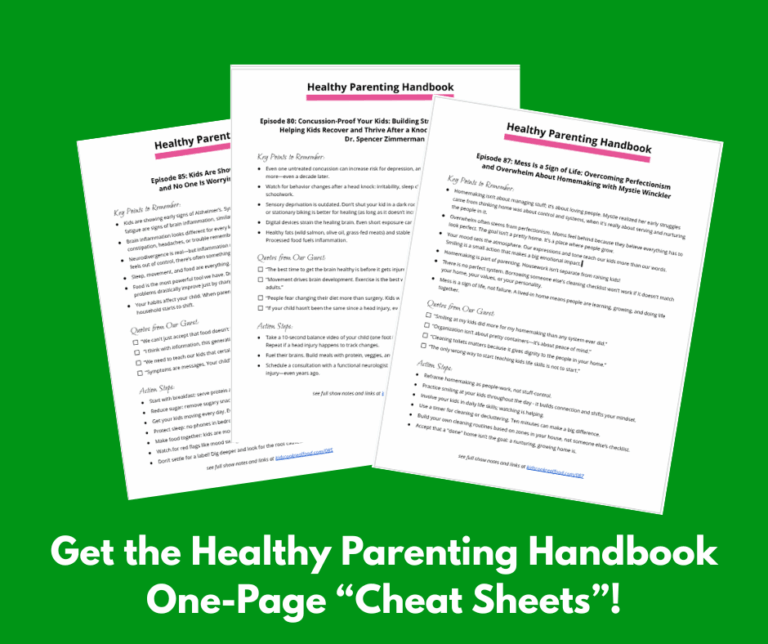
Turn expert advice into a handbook you can actually use.
I’ve interviewed hundreds of incredible experts on the Healthy Parenting Handbook podcast! Out of time to listen? You can skim on your phone!
These one-page summaries give you the highlights of every episode fast, so you can find what you need when you need it (and nothing to download).
100% privacy – You’ll also get Katie’s email newsletter with more practical tools for raising capable, confident kids. Change your preferences easily any time.
Using Screen Time as a Babysitter
Key Point: Screens are the easy babysitter, but kids crave engagement and connection. If you invest five minutes helping them start something meaningful, their attention can shift from passive to creative.
Action Step: Try the “Yes/And” method. First ask, “What do I want them doing instead?” Then spend five minutes launching them into that activity before turning off screens. When possible, invite them into housework so you get productivity and connection at the same time.
Involving Kids in Chores
Key Point: Inviting kids to help may slow you down slightly, but it trains capability, builds executive function, and strengthens your relationship. You get double-duty time: connection and productivity.
Action Step: Hand them a real job. Give a preschooler a dust rag, make them the “trash runner,” or have them carry laundry. Keep your attitude positive and focus on training, not perfection.
Personal Daily Health Practices
Key Point: Habits stick when they are stacked onto something you already do. Long-term health culture is built through small, consistent actions, not radical overnight change.
Action Step: Choose one healthy habit and attach it to an existing routine. Drink lemon water before breakfast. Put on blue light glasses after bedtime tuck-in. Start small and stack intentionally.
If you’ve ever said…
“I just want my kids to eat what I make!”
This free 5-day challenge was made for you.
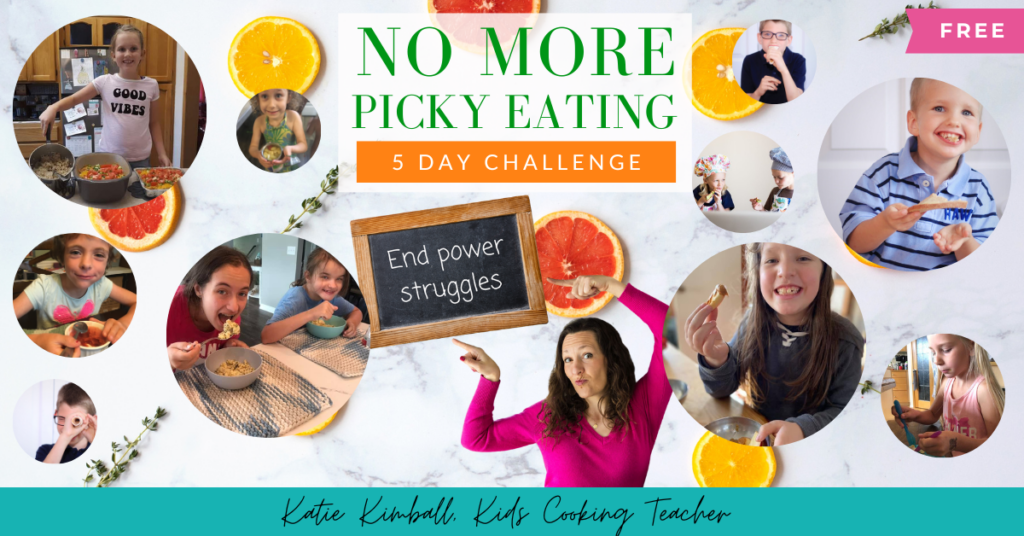
Spend just 30 minutes a day learning practical strategies that reduce mealtime battles and help kids build confidence with food.
Building a Real Food Family Culture
Key Point: Healthy habits don’t happen in a week. They are built through years of small choices, repeated consistently, until they become family identity.
Action Step: Pick one upgrade. Stock more produce. Make broth monthly. Have one child cook one meal per week. Build gradually and let habits compound over time.
Monitoring Sugar & Food Dyes without Being Extreme
Key Point: You control what comes into your home. Beyond that, your job is to teach kids how to think about food, not to label foods as good or bad.
Instead of “suckers are bad” or “suckers are unhealthy,” we can say, “Well, suckers don’t really help us grow, but they are fun, aren’t they?” – Katie Kimball
Action Step: Talk about food as fuel. Ask, “How did that make you feel?” or “What do you need energy for today?” Help them connect nourishment to performance and well-being.
Passing Ownership of Health to Kids
Key Point: Passing ownership is an 18-year process. The goal is not control. It is equipping your kids to make wise choices when you are not there.
Action Step: Start building family identity statements. “We eat real food.” “We bring our own water bottles.” Gradually shift from directing choices to asking thoughtful questions so they learn to decide for themselves.
Tap here for the episode transcript.
0:00
Will it potentially slow you down? Yes. That’s always the fear. But it’s probably going to slow you down 5, 10, 15% tops, and you get double-duty time. You’re getting something productive done, and you’re spending quality time with your kids. As long as you have even a halfway positive attitude about it, they’re having a blast. They don’t feel like they’re being made to do chores. And you are training them that they are capable of doing chores as they get older. I think it’s the best thing you can do, to invite them to help you.
0:36
You’re listening to the Healthy Parenting Handbook podcast. I’m your host, Katie Kimball from Raising Healthy Families, and every week I bring together experts in the fields of health, nutrition, parenting, and more to help you truly raise healthy, independent future adults.
0:50
This week we’re doing a little Ask Me Anything with yours truly. We had a podcast birthday party almost one year ago, which means the podcast is two years old now. We collected some Ask Me Anything questions from the community, that’s you out there, and today I’m going to grab a few and answer them here on the pod.
1:11
If you’re a regular listener, or if you’ve listened to an episode and loved it, please take a quick second to leave an honest review on Apple Podcasts or wherever you listen. That helps others find us. Huge thanks for that.
Also remember you can get our cheat sheets, our one-pagers, at raisinghealthyfamilies.com/handbook. These are the key takeaways each guest shares in a quick, one-page format. There’s nothing to download. You can view it on your phone. It’s free for all email subscribers.
1:46
We’ve got a few different questions today. We’re tackling picky eating, screen time as a babysitter, cooking, healthy habits, and passing ownership of health to your kids.
Picky Eating and Dessert at Parties
1:59
The first question is about picky eating. Is it okay at a special event or party, when your child is distracted and not eating, to require that they eat something off their plate before having dessert?
2:16
I empathize with this mom. Desserts are tricky. I can tell she’s been in my world, maybe even taken the No More Picky Eating Challenge, because she knows one of the rules is that you can’t pressure a child to eat. Whether it’s a reward, threat, or expectation, we never say, “You need to eat X before you can get Y.”
Why? First, we’re leaving our lane in the Division of Responsibility. We’re infringing on their autonomy. We should never require that our kids put something in their mouths, because we can’t follow through respectfully. If they truly say no, we’re not going to force them to eat.
Second, when dessert becomes the prize and broccoli becomes the drudgery, we set up a dichotomy. The broccoli is the terrible part you have to get through to earn the exciting ice cream. We don’t want to train their brains that way.
3:43
If this happens once at a party, it won’t rewire their brain forever. But there is a better way.
If your kids are not picky, you might say, “You need to get some nourishment before dessert.” Focus on how they’ll feel. “You’ll feel yucky if you only eat dessert. Let’s get some fat and protein so you feel balanced.” Use words like fuel. Help them understand the why.
4:56
Best practice? Feed them before you go. Even if it breaks your usual eating window. Give them a nourishing, meal-sized snack before the party. Then you don’t have to battle over dessert.
5:30
The No More Picky Eating Challenge is a fantastic introduction to the framework I teach parents. It’s about building a lifelong healthy relationship with food, not just getting a morsel in their mouth at dinner.
You can find it at raisinghealthyfamilies.com/picky. Once you sign up, you have seven days to watch the five videos. It’s on demand, but there’s a deadline, because we all need one.
Screen Time as a Babysitter
6:46
Next question: A mom with four kids ages zero to seven works part time and has documentation to do at home. She relies on screens to keep them occupied and wants better boundaries.
First, you are not alone. Screens are the easy babysitter.
Here are two tips: the “yes” and the “and.”
7:55
Instead of focusing on “no screens,” ask, what do you wish they were doing? Board games? Blocks? Outside play? Creative toys? Take five minutes to get them started on something engaging. Once they’re immersed in something creative, their attention span can rival a screen.
The screen is just the quick and easy option. But cutting them off mid-screen causes friction.
9:23
Try a couple days with zero screens. Invest five minutes to launch them into something meaningful.
Now the “and.” How can you get your work done with them?
Housework jumped out at me. You may not be able to do documentation with them, but you can do housework with them. Invite them in. Even at ages three, four, five, six, seven.
They want to be with you. They want to be like you. Hand them a dust rag. Make them runners for decluttering. Have them put trash in the bag. They’re eager to help.
Will it slow you down? Yes, a little. But you get double-duty time. Productivity and connection.
11:28
You’re training them to be capable. They’ll sometimes be helpful and very rarely be hurtful. A little kid with a dust rag will get more dust than no one.
If you want structure, I have a free chore system at raisinghealthyfamilies.com/chores. It builds executive functioning and ensures the house gets cleaned weekly.
Personal Daily Practices
13:26
Another question: What daily practices have become so integrated you almost never skip them?
I’m a big habit stacker. I attach new habits to existing ones.
When I wake up, I know I’ll eat breakfast. Before breakfast, I have warm lemon water. I add collagen for hair, skin, nails, and joints, and a little whole-food vitamin C powder to help with assimilation and immunity. That all stacks onto one moment.
14:48
Blue light glasses are another. After bedtime tuck-in between 8:00 and 8:30, I walk into my bedroom, turn on my salt lamp, and put on my orange glasses. The environment cues the habit.
Beyond that, eating real food is more family culture than routine. We make homemade broth and yogurt. I’ve trained my kids to help in the kitchen. Three of my four kids each make one meal per week. That’s three fewer meals for me.
We stock produce. We limit processed foods. We always have raw vegetables and salad. Broth is always in the freezer.
17:13
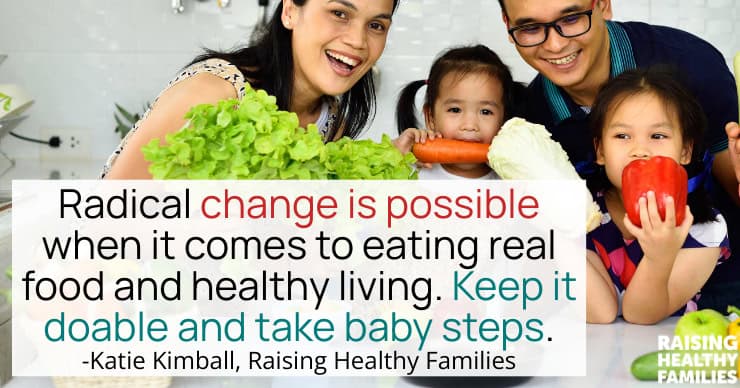
This didn’t happen overnight. It was years of small, intentional choices stacking up. Radical change is possible, but it comes through baby steps.
Passing Ownership of Health
18:05
How do we monitor food dyes and sugary foods without being over the top? And how do we help kids make healthy choices when no one is watching?
First, control what you can control. What you buy determines what’s available at home. You can pack your own snacks and lunches. That retains your autonomy.
We also need to teach kids how to think. Avoid labeling foods as “bad.” Be honest. A sucker doesn’t nourish you. It’s fun. It doesn’t help you grow.
21:25
Ultimately, we must gradually release responsibility. This is an 18-year process.
Start asking questions:
Why do we eat this?
How did that meal make you feel?
What do you need energy for today?
Help them connect food to fuel. Fuel for a test. A soccer game. A fort in the woods. A chapter book.
Build a family identity. “The Kimballs eat real food.” “The Kimballs don’t use disposable plastic water bottles.” Family culture matters.
26:03
Passing ownership is hard. But it’s worth it.
I have a 20-year-old who loves ice cream and also loves vegetables. A 17-year-old who meal preps, counts protein, and goes to the gym because she understands long-term health. I take a tiny bit of credit. We had good conversations. We set good habits.
Keep trying. It’s worth it.
27:17
Thank you for listening to this episode of the Healthy Parenting Handbook podcast. I hope your brain feels fed and your heart feels full. Please leave a review and subscribe. You can also find our shorts on Instagram at @raisinghealthyfamilies or on YouTube at the Healthy Parenting Handbook Shorts channel.
The Picky Eater Playbook: Get Pre-Order Bonuses!
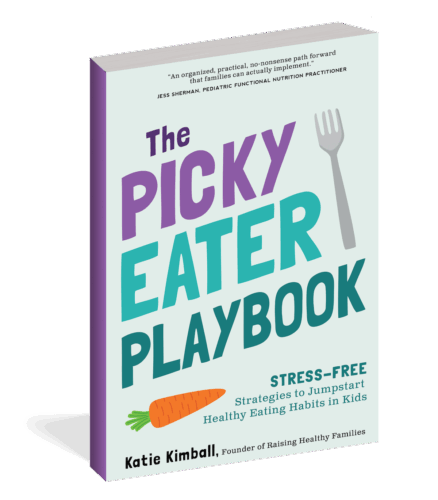
My first traditionally published book releases November 10, 2026! The Picky Eater Playbook: Stress-Free Strategies to Jump Start Healthy Eating Habits in Kids is packed with real-life stories, flexible strategies, and step-by-step routines to turn dinner from a power struggle into something the whole family can enjoy.
If you’ve done the No More Picky Eating Challenge and want to have all my strategies at your fingertips, it’s the perfect resource! Or if you’re just beginning to tackle dinnertime struggles at your house, it will walk you through my whole system for eliminating picky eating.
Pre-order now and get some amazing bonuses!
Learn More about The Picky Eater PlaybookResources We Mention in This Parenting Q&A
- Get the one-page “cheat sheets” at raisinghealthyfamilies.com/handbook.
- Register for the No More Picky Eating Challenge
- Check out my chores system here
- For my lemon water: collagen and vitamin C powder
- The blue light glasses I have
- Starting to eat real food is easier with the Monday Missions!
- The risks of synthetic food dyes
- Some ways we deal with sugar and desserts at the Kimball house
- Tap over and see the YouTube shorts channel

Leave a Comment