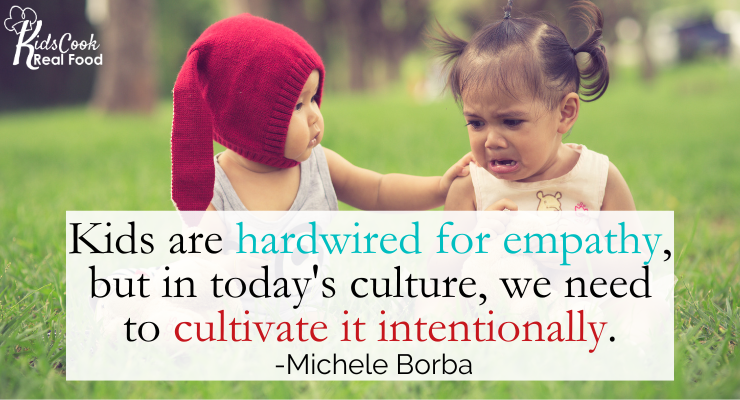
With everything we juggle as parents, wouldn’t it be nice to know the MOST important skill to pass on to our kids?
Is it academic success? (nope)
Is it staying organized? (nope)
Could it be speaking up for ourselves? Managing stress in healthy ways? (nope and nope)
Yes, all those are important to varying degrees, but it turns out that kids who truly thrive excel in certain traits, and one of the more important “gateway” traits is EMPATHY.
Returning guest Michele Borba is a delight to listen to, so encouraging, and so filled with wisdom. I couldn’t wait to have her back!
Today as we talk about empathy, one of the 7 traits of “Thrivers” from Michele’s book of the same name, be ready to learn a LOT, including:
- What empathy means and why it’s so critical for our kids
- What’s happened with empathy the past 30 years (spoiler: disaster!!)
- How and where we as parents can foster empathy in our kids
- The real work WE have to do on ourselves before we can help our kids
- Some simple scripts for conversation that you can borrow from Michele
- An easy way to teach empathy during your normal read-aloud time with your little ones
- How chores and family responsibilities/contributions (whatever you like to call them!) play a big role in raising kids who thrive
- The beauty and power of the family dinner for parents to raise Thrivers
- How we can talk about feelings more, and why we need to (especially with boys)
Michele is a PRO at helping parents understand exactly why something is needed and then really practical methods to integrate that thing into family life, without overwhelm! I always love when interview guests tell us parents exactly what to say and when to say it, and Michele delivers in spades on that one.
If you want to raise successful kids who are grounded and stable as they move through childhood, adolescence, and into adulthood, empathy and the other Thrivers traits are your keys. Time to choose to focus on this in your home!
Can’t see the video? Watch Teaching Empathy for Kids here on YouTube!
No time for the video? Here are the notes!
- 0:00: Michelle is one of the elite few who have come on the Healthy Parenting Connector twice. You can see her last interview on “thrivers” here. You can see her TEDx here.
- 2:18: What is empathy and why is it so important for kids?
- 3:45: What is happening in our society that is making empathy go down? Screens are a big factor, pushing academic success instead of “soft skills” like getting along with others, adults aren’t modeling empathy well for the younger generation and we just don’t talk about it much in our culture.

- 5:36: As our kids get older, our quality time with them is less and less and we’re in a way substituted with screens and peers. A screen-free table is a great first step to building connection with your family and forming a solid foundation for future relationships. More on the importance of family dinners here.
- 8:19: Empathy is taught by weaving it into our daily life. If you read good literature to your kids that’s great for building empathy because the kids can step into the shoes of the characters. Reading together is also an opportunity to form connections as a family.
- 9:31: We are more likely to empathize with others like us. So make sure you mix it up in your child’s reading. Choose books that show different income levels, races, cultures, and ages from what the child is. Your library’s child reference librarian can be a huge help in this.
- 10:08: Volunteering is fantastic for helping kids develop empathy for others and look for ways to serve their community. Michele has a few practical ways to implement this.

- 12:13: I can already hear the pushback from parents who don’t have time. Michele has some encouragement if this is you.
- 13:00: It’s critical to start with face-to-face giving with kids. This is called concrete empathy. Later it can become more abstract and they’ll be able to better understand giving to people on the other side of the world for example.
- 13:34: Ask feels + needs questions. “How would you feel if that happened to you?” “What would you need to make you feel better?” As they get older you add on “What can you do?” and can switch from asking “How would you feel?” to “How do you think she/he feels?”
- 15:23: I encourage an attitude of service within our own family. Chores or family contributions teach kids to consider the needs of others. If you thank with a noun (i.e. “thank you for being a helper” vs. “thank you for helping”) it’s more likely to be internalized.
Kids act how they see themselves to be, so look for moments to praise your child’s character. -Michele Borba
Kids don’t need plastic knives. They need real skills.
Teach safe technique, focus, and confidence in the all-time fav lesson from our kids cooking class! (ages 2-12)
- 16:28: Chores foster responsibility, diligence, accountability, kindness, goal setting, and focus. Of course, I believe that teaching kids to cook is vitally important to learning these skills!
- 17:10: Goal setting is one of the most highly correlated traits of success. Michele shares some questions we can ask to help our kids learn how to set goals.
- 19:04: Michele recommends paying attention to the color of the talker’s eyes when you’re conversing with them to help maintain eye contact. You’ll have better posture and appear more confident and get better insight into their facial expressions to read their emotions.
- 21:40: Empathy leads into other traits of thrivers. They all play off each other and multiply each other.
We need to talk about feelings more, especially with boys. -Michele Borba
- 23:44: It’s fine for kids to disagree with you, as long as they do it respectfully. Especially since COVID kids are more risk-averse and they’re less likely to be outspoken about disagreements with adults and peers.
- 24:26: You can have family meetings or talk around the dinner table and let your kids practice asserting their opinion, explaining their reasoning, and backing it up with evidence. Get tips for a family meeting here.
- 27:23: Don’t get overwhelmed! Choose one thing Michele talked about today and start implementing that in your family until it’s a habit. Then you can add the next thing.
- 28:00: We end with one practical step you can take today to get a quick win.
“I just want my kids to eat what I make!”
This free 5-day challenge was made for you.

Spend just 30 minutes a day learning practical strategies that reduce mealtime battles and help kids build confidence with food.
Resources We Mention for Growing Empathy
- Michele is a camp leader for Life Skills Now Summer Camp 2023! Register here for free!
- Get Michele’s books: Thrivers, Unselfie
- My last interview with Michele on “thrivers”
- Watch Michele’s TEDx here
- More on the importance of family dinners
- Get tips for a family meeting
- Find Michele online
- Follow her on social media: Facebook, Twitter, Instagram
 Michele Borba, Ed.D. is an educational psychologist, former teacher, and mom recognized for offering research-driven advice culled from a career of working with over one million parents, educators, and children. A frequent Today Show contributor and recipient of the National Educator Award, she is the author of 25 books including UnSelfie, and her latest, THRIVERS: The Surprising Reasons Why Some Kids Struggle and Others Shine. She also appears on Dr. Phil, The View, CNN, The Doctors, Dr. Oz, and featured publications, including U.S. News & World Report, The Chicago Tribune, TIME, and The NYTimes.
Leave a Comment