Can't see the video? Watch on YouTube →
Somewhere between “I can do hard things” and “Can you order for me?” is a whole lot of teen growth waiting to happen.
Arthur C. Woods has spent decades working with teens, and he brings a refreshingly practical take on leadership that starts way earlier than a title, a team captain badge, or a future resume. We talk about why teens are more capable than we think, why they are not always being challenged to prove it, and how everyday life skills at home connect directly to leadership, resilience, and work readiness.
Also, if you have a teen who melts down at the first sign of conflict or wants to quit at the first awkward moment, you are going to love Arthur’s approach to adaptability. It is simple. It is doable. And it is exactly what employers (and roommates, and future spouses) are hoping our kids learn before real life starts keeping score.
In this episode, we cover
- Why many teens are entering adulthood less prepared, even with more resources than ever
- The surprisingly common “Can you order for me?” moment (and how to coach through it)
- A better definition of success than grades, sports, or trophies
- How to raise “work ready” teens before they ever clock in for a first job
- Why adaptability is both a mindset and a daily practice (especially when things change)
- A simple definition of leadership that makes every teen a leader right now
- Arthur’s SPARK framework for emerging leaders (and what “singularity” means for teens)
- How chores and life skills build leadership (not because of the task, but because of the skill of learning skills)
- A surprisingly powerful connection tool: asking your teen for advice (and why it works)
We loved Arthur in #LifeSkillsNow Season Two, and I know you’ll love hearing from him today!
Find all the episodes of the Healthy Parenting Handbook here, or wherever you get your podcasts:





Don’t forget to leave us a review on Apple Podcasts too! Thank you!
Can’t see the video? Watch here on YouTube!
No time for the video? Here are the notes!
Raising Work-Ready Teens Time Stamps
3:04 – Arthur explains how he got into youth ministry as a teen because he assumed it was mostly pizza and volleyball! He describes the path from that early interest to degrees and decades of working with students.
5:05 – Arthur describes a conversation with a college professor who has noticed incoming freshmen seem less prepared each year. He notes there may be many reasons, but the pattern is concerning. (Start building life skills in your teens now!) He points out the irony that teens have more resources than any generation before them, yet many are not arriving more prepared. He suggests the same tools that educate can also distract, especially through the internet and social media.
Turn expert advice into a handbook you can actually use.
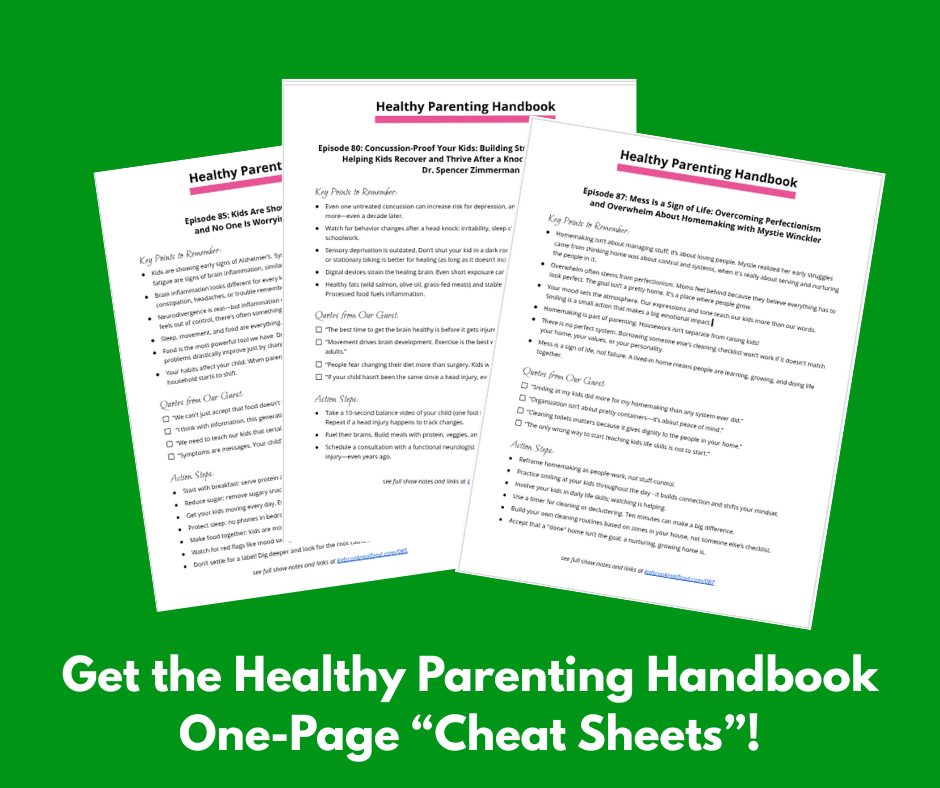
I’ve interviewed hundreds of incredible experts on the Healthy Parenting Handbook podcast! Out of time to listen? You can skim on your phone!
These one-page summaries give you the highlights of every episode fast, so you can find what you need when you need it (and nothing to download).
7:25 – It is not only academics. I also hear concerns about independence and basic functioning without parents doing everything for them. Teens are capable and need to be lifted up.
8:03 – Teens often are not being challenged to do simple, doable tasks! Arthur had to make students he traveled with order their own food at McDonald’s! He encourages parents and mentors to empower teens to act, while staying close enough to support them if needed.
A Better Definition of Success for Teens
9:42 – Here I ask Arthur how parents can define success beyond grades and sports.
10:12 – Arthur offers a broad framework: success is becoming who you want to be and doing what you want to do. He adds a faith-based layer for families who share it, asking whether the teen is also becoming who God wants them to be. He clarifies that “doing what you want” still needs wisdom and boundaries. His course Trusting the God of the Gospel is specifically for parents of adopted and foster kids.
11:22 – I highlight the power of parents asking teens who they want to become, what gifts they have, and whether their current actions line up with where they want to go. These conversations can build intrinsic motivation.
Work-Ready Skills Start at Home
12:07 – Arthur explains that professionalism, punctuality, work ethic, and time management can be taught at home long before a first job. He encourages families to treat these as life skills, not job skills.
12:48 – Arthur shares a funny and honest story about being a disaster at his first job, including a moment bad enough that the fire department had to be called. His Work Ready Teens course exists so teens can learn workplace expectations without learning them the hard way.
14:46 – I think narrating real-world consequences with teens can make a difference, like how being late for work impacts employment and coworkers, not just the family schedule.
Adaptability, Flexibility, and Staying Out of the Complaint Circles
15:40 – Arthur defines adaptability as choosing to flex when workplaces change, even when you did not expect the change or agree with it. He suggests teens can use a simple mindset statement like “I am adaptable” to prepare for inevitable pivots.
16:51 – A practical tip: avoid the toxic workplace conversations that revolve around complaining about bosses or changes. He says choosing not to join those circles can protect a teen’s mindset and make them stand out to leadership.
17:55 – I agree that constant complaining trains the brain toward negativity.
Kids don’t need plastic knives. They need real skills.
Teach safe technique, focus, and confidence in the all-time fav lesson from our kids cooking class! (ages 2-12)
Leadership Is Influence, So Teens Are Leaders Right Now
19:24 – Arthur shares his foundational definition from John Maxwell: leadership is influence. He tells teens they are leaders because they already influence people around them.
20:10 – Arthur explains that teens can influence siblings, friends, and even adults. He says the key question is what they will do with their influence, because everyone can choose to lead well or lead poorly.
You have influence, you’re a leader, and you have responsibility to be an extraordinary leader! – Arthur C. Woods
21:31 – I reflect on a high school leadership camp experience that taught me a leader is not simply someone who tells people what to do. “Influence” is a powerful lens for teens and parents.
SPARK for Emerging Leaders and the Surprising Path from Chores to Leadership
22:34 – Arthur explains the origin story of his book. He read Spark by Dr. Tracey C. Jones, loved the framework, and reached out to create a teen edition. He shares that the collaboration took about two years and recently released. His book is SPARK for Emerging Leaders. We chat about what SPARK stands for.
27:40 – Let’s talk about life skills and leadership! Arthur says teaching teens skills like cooking and cleaning does more than build competence. It also teaches the skill of learning skills, which is a leadership advantage.
Life skills are not “small stuff.” They teach the bigger skill of learning skills, which sets teens up for real adulthood. – Arthur C. Woods
29:23 – AI can’t do everything. I’m gonna argue that learning is part of being human, and that great leaders combine a deep well of knowledge with humility about what they do not know.
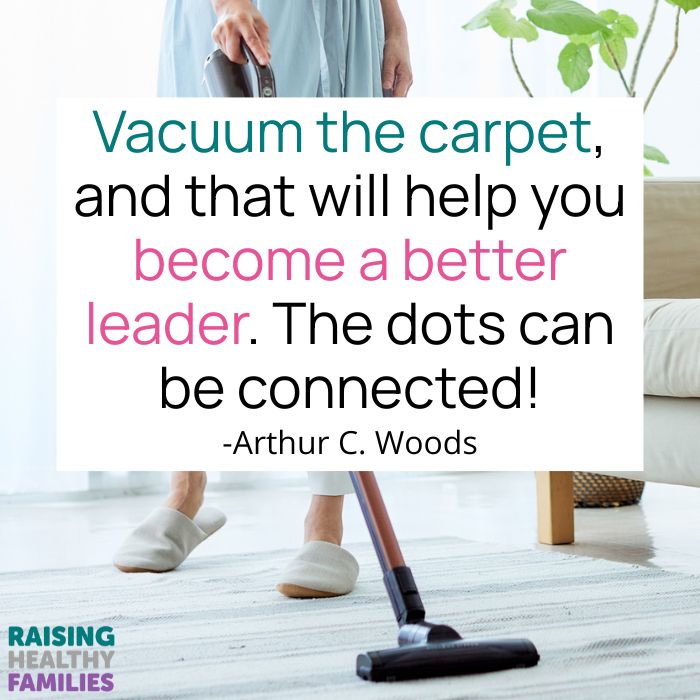
30:39 – Doing everything for kids can contribute to the “flailing college freshman” problem. Life skills matter!
One Practical Step to Build Connection and Leadership Today
31:24 – Arthur shares a strategy he has used with his own kids and teen foster kids. He encourages parents to ask their teens for advice about a real, appropriate problem the parent is facing. Here’s why this works: it lowers a teen’s defenses because the interaction is not the parent telling the teen what to do. It opens the door to conversation and connection, even if the advice is not perfect.
33:46 – Don’t forget to check out Arthur’s book SPARK for Emerging Leaders and his course, Work-Ready Teens.
“I just want my kids to eat what I make!”
This free 5-day challenge was made for you.

Spend just 30 minutes a day learning practical strategies that reduce mealtime battles and help kids build confidence with food.
Resources We Mention for Work-Ready Teens
- Check out Work-Ready Teens from Arthur C. Woods and use code KCRF for $30 off!
- Grab Arthur’s book SPARK for Emerging Leaders (Amazon/Bookshop.org)
- Start building life skills with #LifeSkillsNow
- Interview with Amy Carney on launching your teens and teaching them life skills
- I talked with Noel Foy about strengthening executive function
- John Maxwell has written all kinds of books on leadership
- Teach teens cooking and cleaning right now!
- Visit Arthur at his website Arthur C. Woods, or check out his socials: Facebook, Instagram, YouTube, LinkedIn
 Arthur is an experienced speaker, trainer, and certified life coach, with over a decade of experience working with individuals and teams. He is the author of SPARK For Emerging Leaders and holds a master’s degree in student and family ministry. Additionally, he sits on the board of directors of Camp Orchard Hill in northeastern Pennsylvania. He and his wife, Elizabeth, live in Lancaster County, Pennsylvania.

Leave a Comment