Here’s how to get started with your new chores system:
Watch this short video walkthrough to see how we’ve made this system work in our household for over a decade. You’ll see exactly how to implement it in your own home—without perfection, but with progress.
This system is simple, flexible, and has worked for over a decade in Katie Kimball’s home with four kids. It’s not fancy, but it works consistently.
Here’s how to set it up:
1. Make a master list of chores
- Weekly chores (vacuuming, laundry, bathroom cleaning, etc.)
- Monthly chores (cleaning fans, baseboards, deep-cleaning areas)
- Personal weekly chores (cleaning bedrooms, changing sheets, sweeping floors)
Tip: Leave out daily habits like making beds or putting dishes in the dishwasher. This system focuses on weekly and monthly cleaning.
2. Decide who’s involved
The Kimballs have 4 kids. Each child is responsible for 6 weekly chores, and everyone does their share of monthly and personal tasks.
You decide if parents will take on chores too or just manage the system.
3. Use the chore tracker
The printable chore chart lives in a sheet protector so it can be reused each week with a dry-erase marker.
Kids write their names next to 6 chores they claim for the week (or parents assign them). When they complete a task, they check it off.
If kids are younger, an adult should inspect and approve their chores before it’s considered done.
4. Give kids agency
Kids can complete chores anytime during the week.
Some do one each day. Others stack them all on the weekend. Either is fine.
5. Set a clear deadline
For the Kimballs, the deadline is after brunch on Sunday—a natural touchpoint that happens every week.
This makes it easy to remember and enforce.
6. Use a simple consequence
If chores aren’t finished by the deadline, the Kimball family’s rule is:
“No recreation until your chores are approved.”
That includes screen time, reading, hanging with friends—anything considered “fun.” It’s not a punishment, it’s just the natural order of things.
7. Adapt it to your family
This system is not:
- A payment system (though you can add allowance if you want)
- Rigid or perfectionist
- Meant to cover every possible chore
It’s a lightweight structure that promotes ownership, accountability, and life skills—without turning your house into a battleground.
Where to Find Your Printables
Check your inbox for your customizable system you can print for your family!
To keep things organized (and make sure you can come back to them anytime), I’ve sent you the printables by email.
Look for the email from me, Katie Kimball at Raising Healthy Families.
Be sure to check your spam or promotions folder if it’s not already in your inbox.
Thanks for investing in your kids’ life skills. You’re already doing amazing work. This system is just one more way to make it all a little smoother.
Super quick note – if you signed up with a school email address, there’s a strong chance your school has a “block bulk emails” setting on, which means my email system won’t be allowed in your inbox. 🙁 If you don’t see an email within 10 minutes, we’re stuck. (Same with some Hotmail addys.) Try another email address?
Still Thinking About the Chores Video Workshops?
Psst… Want to go one step further in making this system work?
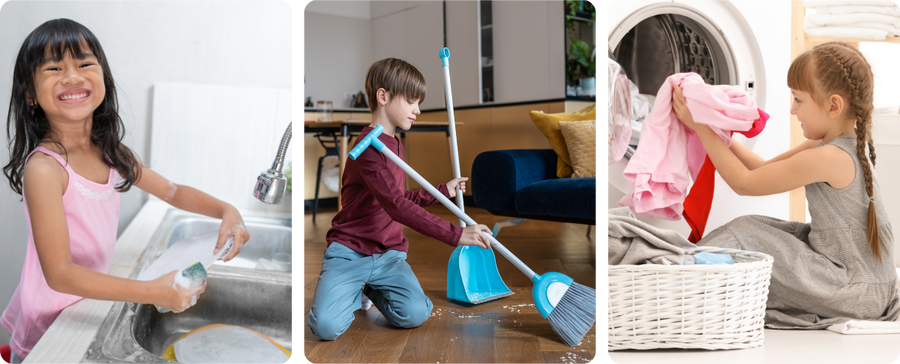
The Mastering Household Skills #LifeSkillsNow Mini-Series teaches kids HOW to actually do the chores, so the “training” part of your job becomes FUN.
Grab the video workshops now for 50% off, just $19 for lifetime access.