
If your child has ever thrown a tantrum…
If you’ve ever reacted, let’s say, “imperfectly” to that tantrum…
If you’ve ever wondered why your toddler or teen is having a meltdown over something seemingly inconsequential…
My friends, then this interview is a MUST LISTEN.
Ann is an incredible teacher – let’s learn about:
- The impact of childhood experiences on adult relationships and parenting
- How to protect our kids from being “wounded” in childhood and acting that out as adults!
- Why empathizing with a child’s big emotions is NOT the same thing as letting them get their way (with some super fun examples)
- How to play detective when your child has a meltdown (and how to soothe them faster than usual!)
- Why “mental health” probably isn’t even an accurate term to use
- How going outside to throw a ball against the wall might make you a better parent
- What to say to boys who still cry about frustrating events when you feel like they’re “too old” for that
- How eating plays into nervous system regulation – and believe me, this one is NOT what I expected but rather almost the opposite!
I couldn’t stop asking Ann questions, so this episode is a little longer than usual but SO worth it.
Find all the episodes of the Healthy Parenting Handbook here, or wherever you get your podcasts:





Don’t forget to leave us a review on Apple Podcasts too! Thank you!
Can’t see the video? Watch Regulating Your Nervous System here on YouTube!
No time for the video? Here are the notes!
Tuning in to Your Child’s Nervous System
- 1:21: Today I have Ann Odom with me on the Healthy Parenting Handbook. Ann helps parents understand their kids’ nervous systems. She tells us how she got interested in helping families in this way.
- 6:05: Ann worked as a therapist with families and children and she realized that trauma psychology isn’t integrated into parenting education at all. She found that parents had many barriers and emotional blocks from their own childhood that held them back from implementing effective tools with their children.
- 8:12: The pattern Ann saw was that someone with a rough childhood would later have trauma reactivated unconsciously by either their spouse or one of their children.
- 9:34: Mothers are so eager to “get it right” and it’s intertwined in our nervous systems that we can’t make mistakes or deserve to be punished if we do. As a child, Ann was accused of doing things intentionally that were just honest mistakes which caused her to have a really hard time allowing herself to make mistakes as an adult.
- 11:12: Parents can be guides to help their kids work through their big emotions or uncomfortable emotions rather than pushing back or labeling them as “negative.”
- 12:17: You can carry some of these hangups from childhood even if you didn’t experience big T Trauma. Some of the prevailing parenting styles in the 80s and 90s left many parents in our generation with some of these emotional barriers that Ann has mentioned. Here is another interview on how trauma is stored in the body.
- 13:03: Lowercase T trauma absolutely has an impact. Our nervous systems are working all the time to keep us safe. Here are the two books Ann mentioned: The Body Keeps the Score, Adult Children of Emotionally Immature Parents
- 13:40: Our nervous system should be operating in a calm and alert state most of the time where we feel connected, creative, curious, and compassionate. Then we pop in and out of survival physiology when there is a threat to our safety.
- 15:00: In this modern world, thankfully most of us don’t have literal threats to our safety right now, yet we can relate to that feeling when someone cuts you off while driving. You may feel that same wash of cortisol when your husband is in a bad mood or one of your kids is having a meltdown. It’s your nervous system trying to protect you.
- 15:59: When you have a little baby in your arms, you have to show them with your nervous system that they are safe in this world because you are relaxed and attuned. The baby doesn’t read the environment for safety signals, they read you.
Understanding Childhood Emotions and Nervous System Health
- 17:29: If you are getting this information as a parent with older kids, don’t worry! There is attachment nervous system work you can do if you struggled when your kids were young.
- 17:57: We all hear ages 0-3 are the key years for brain development, but the strength of our attachment system is still at play in older kids even into the teen years. Around 10-11 there’s a leap in brain development that’s a great window for a second chance.
- 18:24: Work with the brain development that’s occurring already. Our culture doesn’t quite understand the teenage brain, it’s another window to rewire connection. There’s always time to repair and rewire.
- 19:22: The nervous system is always working. It’s always interpreting information through what’s been learned throughout your lifetime.
- 20:23: Because our nervous systems have a hard time adapting to our modern world, we perceive safety and non-safety as what makes us worthy or what doesn’t rather than literal survival threats. That all gets wired in our childhood.
- 20:51: Our children are now growing up in a culture where they are safe to emote and express themselves. As parents, we’re trying to hold boundaries and validate, but our emotions can be triggered and suddenly we feel unsafe and out of control. It’s our protective physiology trying to get us back to a place of power and safety. Ann references Dr. Becky from Good Inside – find her on Instagram.
- 22:19: Perhaps your child has a tantrum and it brings you back to being spanked as a 4-year-old, or their big emotion reminds you of a parent who was volatile and it was scary for you as a child. Now you’re a scared child in an adult body.
- 22:56: Another common example is that something stressful happens, and then our fight or flight is triggered and another person unrelated to the situation, say a child, asks a question, and because you’re already in a fight or flight state you fight against the child, but you aren’t actually upset with them. This tends to happen with the people closest to us, usually in our household.
We weren’t really taught how to experience pain and how to move through it without causing harm to others. -Ann Odom
- 23:53: When you’re stuck in that fight or flight state, the quickest way to get out is to do something physical with your body. We think we need to be calm, but really what you need is to feel safe. How can you tell your body that you’re safe? Think of a toddler, when they feel a big emotion their whole body experiences it. They move the emotion through their body.
- 25:23: When you use language and name the emotion you reduce the intensity by 50%. You do this for yourself, but also for your children who are watching. Say out loud, “I’m feeling very angry. I need to go outside and grab a basketball and throw it against the wall a million times and that will feel good and get the anger out of my body in a way that doesn’t hurt anybody.”
- 26:00: You don’t need to have a scary, yelling type of interaction to have fight or flight triggered. Maybe you feel jabbed at, hurt, or shamed in a conversation. We learned as children to stuff it down and ignore those feelings. Then later it comes out sideways.
- 26:56: As parents, a great way to start parenting differently is to talk about our nervous systems, brains, and bodies in your home. Explain how your nervous system works to protect you, acknowledge their feelings, and help them understand why they feel that way.
Teach constantly as you’re living your life about how your physiology is responding to the world without judgment so that your child can be an expert in themselves and start to learn how to do that on their own. -Ann Odom
- 28:24: When you have a baby you have to read their cues and make assumptions to figure out what they need because they can’t speak. You can tell if your baby is tired, hungry, or uncomfortable. Once they start talking, we throw that out the window and expect them to tell us what’s wrong. Being able to identify their needs and communicate can take years of attunement, mirroring, and matching language. We need to keep teaching even as our kids get older, even into the teen years. Use language like I’m noticing, I’m wondering, etc.
- 29:04: When a child feels seen safe and connected to you it will de-escalate a lot of conflict. Narrate what you see and the emotions you think the child is feeling to validate them. Accept them without judgement and teach them those skills for themselves.
Kids don’t need plastic knives. They need real skills.
Teach safe technique, focus, and confidence in the all-time fav lesson from our kids cooking class! (ages 2-12)
- 31:12: Many parents in our generation feel like they can’t teach these skills because they weren’t taught as a child. For many of us, having big emotions was shamed. Then as a child, we adopt the view that we are bad because we have bad emotions. So many unhelpful messages got paired with our natural and healthy emotions and responses.
- 32:26: See them where they are, understand that they’re feeling some big emotions, acknowledge those, but still have boundaries in parenting where you’re not giving in to everything. You’re just accepting their emotion, helping them move through it.
- 33:50: Ann shares some practical phrasing to use when explaining to your child why you can’t just give them what they want all the time.
- 34:48: Humor is game-changing in your parenting. You can play with your kids with language by being silly, weird, and funny. Laughing regulates your nervous system too!
The Body-Mind Connection and Mental Health
- 35:26: We shift gears a bit and discuss the future of health. There have been so many advancements in understanding our brains and how integrated our mind and body are. The old model of talk therapy and medication just isn’t cutting it with the epidemic of mental health problems we are experiencing today.
- 35:52: If you’re struggling with dysregulation due to childhood memories stuck in your body, there are practitioners who can help you work through those and release them. Mental health can’t just be treated in the mind, it’s in the body as well.
- 39:46: I just want to reinforce what Ann said that if a child’s tantrum feels terrifying to you, that’s a red flag that you have a wounded child inside you who needs some work.
- 41:14: We tend to say that kids are so resilient and they bounce back so fast after a difficult situation, but later they may react really strongly to a random occurrence because they’re trying to process the emotion from earlier. What we see happening externally doesn’t always match what they’re processing on the inside.
- 43:49: We can project this same idea onto teens. When your teen comes home from school and is angry and combative with you, they most likely aren’t mad at you, it’s something that happened at school.
- 44:23: Parents need to break the habit of asking their children to tell them what’s wrong. “If you’ll only tell me, then I can help.” Tell me, tell me, tell me…they don’t know how to articulate what is wrong so often! Here’s the Brene Brown video Ann mentioned.
- 45:01: We tend to try to fix (“Hey you can build another block tower, you can have a bunch of them, it’s not a big deal that it fell down.”) instead of getting down on their level and feeling their disappointment. We can all tap into the feeling of working on something and losing the work whether that’s a project gone wrong or an email that didn’t save.
- 46:26: The example scripts Ann is using all follow the pattern of I feel you, I’ve been there, this will be okay.
“I just want my kids to eat what I make!”
This free 5-day challenge was made for you.

Spend just 30 minutes a day learning practical strategies that reduce mealtime battles and help kids build confidence with food.
Creating a Family Culture for Nervous System Health
- 47:56: Adults have been encouraging kids to suppress emotions and not cry for generations. This leads to adults who are out of tune with their emotions and bodies and it leads to addictions and isolation.
- 51:11: We need to touch on food and eating since we’re Kids Cook Real Food™. The kitchen provides ample opportunities for tuning into our bodies, providing safety and connection. It allows kids to get out of their comfort zone and be challenged in a safe place.
- 52:04: Here’s a great tip. If you are eating, your body gets the message that you must be in a safe place, because you’re taking the time to sit and eat. This can help soothe and regulate. Especially something with a strong temperature like a cup of hot cocoa or a cold popsicle will help a child slow down and relax if they’re struggling.
- 54:01: Ann shares the most important thing you can do as a parent to raise emotionally regulated kids.
Resources We Mention for Nervous System Regulation
- Here are the two books Ann mentioned: The Body Keeps the Score, Adult Children of Emotionally Immature Parents
- Here’s the Brene Brown video Ann mentioned
- Here is another interview on how trauma is stored in the body
- Follow her on Instagram
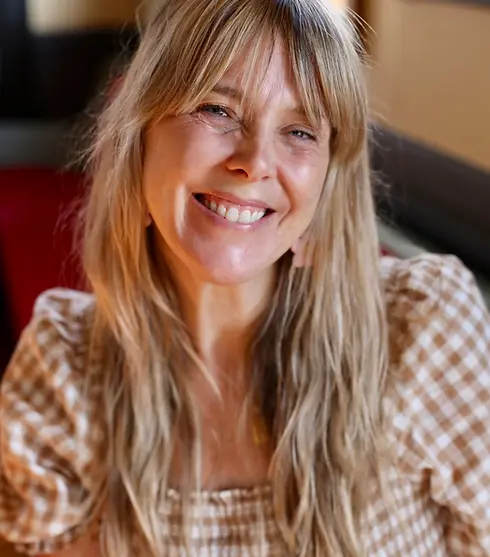 Ann is a licensed child therapist, a mother of two children under 10, and a cycle breaker.
She received her Master’s Degree in Social Work from UNC Chapel Hill in 2009 and is a licensed clinical social worker. She has worn many hats in her 20 years working with children and families, including community organizing and grant writing for a children’s non-profit in Haiti, investigating child abuse and neglect for the county, working in community mental health, and now creating her own private practice working directly with parents to heal the parent-child relationship.
Her approach is a unique blend of somatic experiencing, nervous system healing, and inner child and parts work to address the implicit memory stored in the body from our lived experience. She supports parents in understanding how this primal nervous system is meant to thrive, and how to take our power back by harnessing this physiology to send signals of safety and empowerment for our healing and then thriving.

Leave a Comment