I see a lot on social media about the “mental load” that women especially carry.
Meal planning, grocery shopping, cleaning the house, getting kids where they belong on time, making sure they have proper snacks and meals if they won’t be home for dinner, homework, emails from everywhere…
It’s a LOT.
And a lot of the mental load we home managers carry has to do with FOOD.
We gotta keep that family nourished!
I’m pleased to share a bit of advice on one time-tested way to reduce your own mental load – by sharing it.
In my own home, I admit that the mental load still falls mainly on me, but since I’m doing less of the physical work, it all feels lighter. Eventually, I think others in the family will think, “What IS for dinner tomorrow? Did someone plan dinner?” but I’m still working on that part.
The secret to sharing it is good training, and in this episode, I’ll teach you how to pass on some cooking skills to the young people in your household so that your load is lighter – and honestly, their load over the long run of life is lighter too, because they won’t have to “figure it out” through trial and error once they’re mired in adulthood.
Find all the episodes of the Healthy Parenting Handbook here, or wherever you get your podcasts:





Don’t forget to leave us a review on Apple Podcasts too! Thank you!
Can’t see the video? Watch Sharing the Mental Load of Cooking here on YouTube!
No time for the video? Here are the notes!
Sharing the Mental Load of Cooking
- 1:05: Welcome to the Healthy Parenting Handbook! Today we’re talking about sharing the mental load of cooking and kitchen work with your family.
- 1:20: Let’s jump in with a story from our family.
- 2:05: I paint a picture of what the mental load of cooking encompasses. Here are just a few of the included aspects: meal planning, grocery shopping, deciding which store to go to, will my kids eat this?, food allergy considerations, is there a container clean for leftovers?, thawing the meat beforehand, finding the recipes, learning new recipes, is this meal nutritionally balanced for my kids?, clean up, and more.
- 3:34: There’s a difference between checking a chore off a list as a child and keeping all the details in your mind to manage and make sure they get done.
- 3:46: A huge part of parenting is teaching our kids to do things for themselves and passing off responsibility to them until they’re competent adults.
- 4:26: Technically, it isn’t really possible to offload much of the mental load of cooking. Someone needs to be the household manager and oversee the big picture of the family meals, but some of the mental load can be shared and a good deal of the execution of the plan can be delegated.
Share the Mental Load by Teaching Kids to Cook
- 5:09: Teaching your kids how to cook helps them build skills they’ll need for life and it can reduce the physical and mental load on you as the CEO of your household.
There’s no substitute for experience. -Katie Kimball, KCRF Creator
- 6:53: Three of our kids now cook one dinner a week! That means I only have to cook four nights each week and it’s amazing! For the last seven years I’ve been teaching my kids to cook and it’s taken a lot of time, but now we’re reaping some pretty great benefits.
- 8:17: The first big benefit I see to teaching kids to cook is teaching them a good work ethic.
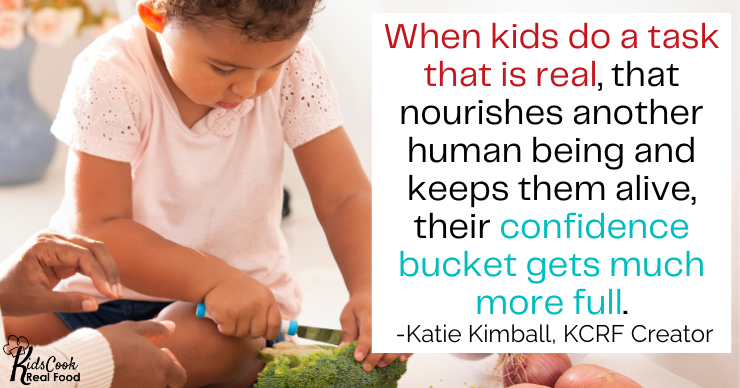
- 9:50: My favorite side-effect of teaching kids to cook is building confidence.
- 12:24: Sociologists talk about the confidence competence loop. When you gain competence, it raises your confidence, and that becomes a loop or a snowball effect, because when your confidence goes up, you want to learn more, so you increase your competency in another area, and so on.
- 13:27: Kids who learn how to cook become more responsible, independent, and generous. I tell a story from a KCRF family from a time when one of the kids saved the day with her cooking skills.
Kids don’t need plastic knives. They need real skills.
Teach safe technique, focus, and confidence in the all-time fav lesson from our kids cooking class! (ages 2-12)
- 14:56: We know that building strong bonds with adults helps prevent risky behaviors like suicidal tendencies, depression, and alcohol and drug use. Bonding through creating can help heal trauma as well.
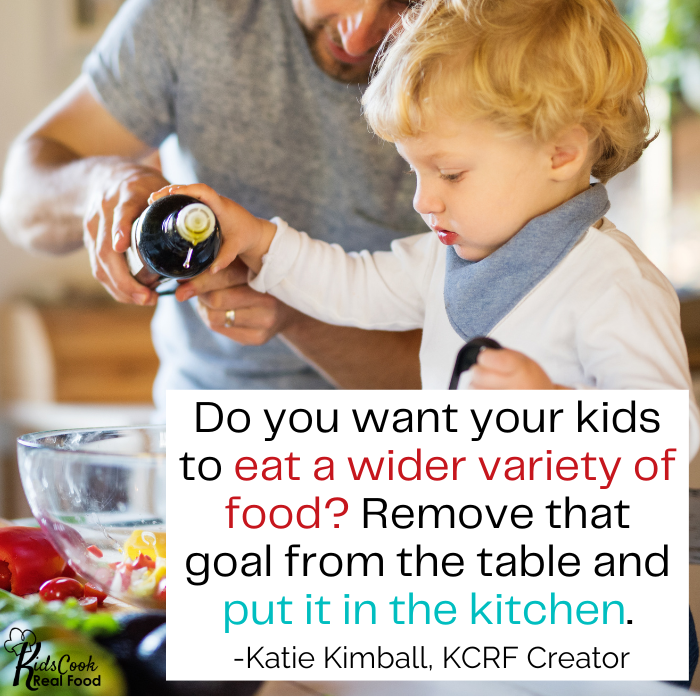
- 16:26: Can learning to cook help picky eaters?
- 18:12: Several years ago my youngest got a concussion and my older kids did something truly heartwarming that evening. Here are some tips for helping a child heal from a concussion.
Tips for Teaching Kids to Cook
- 20:33: So how do we get to the point where your kids can cook entire meals? Your number one tip is to teach transferable skills not recipes.
- 21:16: Break skills down into smaller steps.
- 22:10: Do not teach new skills during that witching hour right before dinner. We want to keep our kids’ experiences in the kitchen positive so that they are motivated to come back and learn more. You can do this after school snack, or at breakfast or lunch on a weekend.
- 22:49: Once you’ve taught skills in bite-sized chunks, provide opportunities for repetition and practice.
- 23:18: Finally, once your kids have a whole playlist of skills you can work towards them cooking whole meals.
- 23:43: I explain how we’ve managed the process of handing off meals to kids. We start by having them make the same meal each week until they master it (we start with tacos).
- 24:43: If you’re ready to jump into teaching your kids to cook you can check out Kids Cook Real Food™ today! If you want to test it out you can watch our free knife skills class here.
Resources We Mention for Mental Load
- Check out Kids Cook Real Food™ today!
- You can watch our free knife skills class here
- Bonding through creating can help heal trauma
- Here are some tips for helping a child heal from a concussion

Leave a Comment