Snacks…sweets…treat…more snacks…
Sometimes it feels like it’s never-ending, both the requests from children and the other people feeding our kids!
Dietician Edwena Kennedy joins me today for her second appearance on the show—which means she’s fantastic and brimming over with practical and surprising tips!
We’re talking all things sweets and snacks, including:
- The 2 reasons snacks become such a problem for families (and the antidote to both!)
- Why cheese on a plate is different than string cheese (when it comes to training kids’ brains)
- An easy method to balance a satiating snack (that should be used once you dial in the 2 mistakes most parents make)
- How we figure out “how much” a child should eat (and this starts in toddlerhood and needs us to do LESS, not more!)
- Why teaching kids to reduce distractions during meals is primary
- What Edwena coaches parents to call things like cookies and cake—and when that language matters
- Whether we should teach our kids to avoid sugary foods…or not
- The most important single step to take to reign in your child’s snacking
Edwena is always a delight to listen to, and I can’t wait to hear what you think about her message!
Can’t see the video? Watch Snacks, Sweets, and Schedules here on YouTube!
No time for the video? Here are the notes!
Managing Healthy Snacks for Kids
- 0:30: If you love Edwena make sure you go back and watch her first interview about feeding picky toddlers. Today we’re talking about snacks and sweets.
- 1:27: Edwena shares how she became interested in nutrition and started working specifically with toddlers.
Children learn quickly that snacks are yummy and they’ll always get one when they ask. -Edwena Kennedy, RD
- 5:16: Why are snacks the bane of parents’ existence? We never want to be caught out without a snack. Kids learn very young that snacks are good and they can ask for them any time. Get more tips for avoiding hangry meltdowns here.
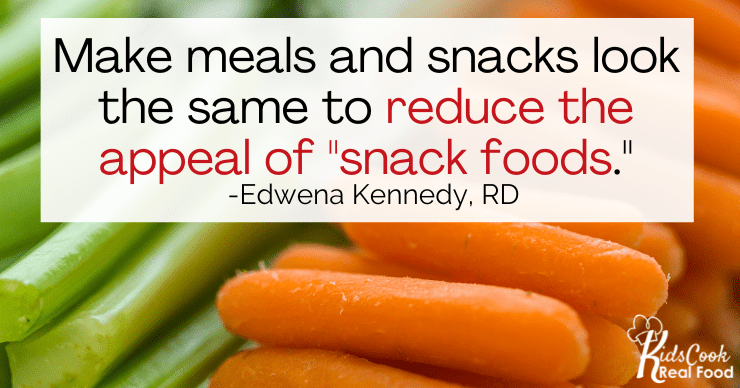
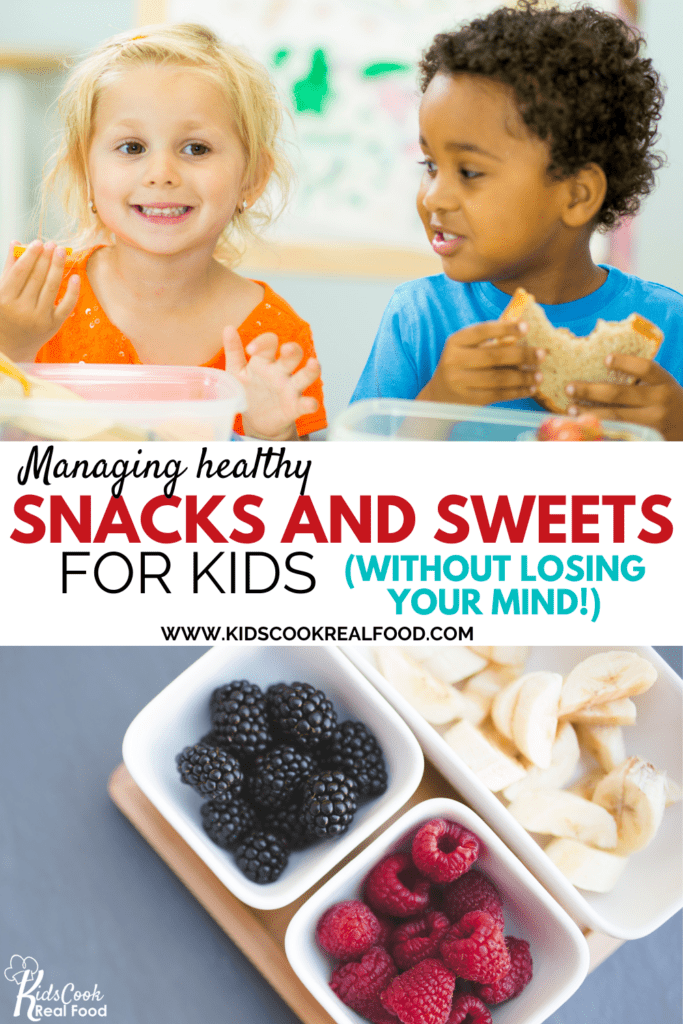
- 6:59: Prepackaged snacks are made to be super appealing to kids. Make snack food as similar as you can to meal food to remove this “special food” factor. Make a list of foods with simple prep like cheese slices, fruit, vegetables, and peanut butter toast. Put it on a plate to make it look more like a meal.
“Mooooom, I’m hungry!!”
How many times do your kids ask for snacks each day? Wouldn’t it be a relief if they were empowered to prepare their own snacks, instead of coming to you and whining about how hungry they are?
Download and print:
- 9:50: Set boundaries around snack times. We don’t want eating when bored or as a distraction to be the norm. Snacks are to satiate hunger between meals. Most kids under 5 can last 2-3 hours between eating. Teach your kids what hunger is so they aren’t asking for snacks out of boredom.
- 12:10: Parents also worry about snack size. With babies, they’re eating the same amount every 2-3 hours, but as they get older (around preschool age) they can start having 3 larger meals and smaller snacks. You don’t want snacks to fill them up so much that they aren’t eating their meals.
When it comes to meal sizes, your child should be eating according to their hunger and fullness cues. -Edwena Kennedy, RD
- 13:57: Parents want to know exactly how much their child should eat at each meal, but it’s varied. Allow your child to learn what hunger and fullness feel like and take cues from their bodies. If you’re worried about your child skipping meals, look at what they eat over the course of a week and it usually balances out.
Planning Healthy Satiating Snacks
- 18:00: Edwena uses the FFP method to help parents plan snacks. FFP stands for Fiber, Fat, and Protein. You want each meal or snack to have a good helping of each. Fiber includes fruits, vegetables, beans, whole grains, and seeds. Fat options include avocado, olives, healthy oils, fatty fish, egg yolks, seeds (like flax and chia), nuts, and nut butter. Protein would be any meat, eggs, greek yogurt and cottage cheese are high protein dairy options, beans, lentils, and chickpeas. Always choose something from each category.
Serving fiber, fat, and protein together for snacks keeps your blood sugar balanced. -Edwena Kennedy, RD
Kids don’t need plastic knives. They need real skills.
Teach safe technique, focus, and confidence in the all-time fav lesson from our kids cooking class! (ages 2-12)
- 23:20: In America, we’re eating lots of low fiber, low protein, low-fat snacks that are devoid of nutrients, but contribute to high-calorie diets.
- 25:10: Many adults struggle with snacking between meals, or eating when bored or stressed. We lose our innate ability to listen to our hunger and fullness cues and let external factors determine what, when, and how much we eat. We unknowingly do this to our children from a young age.
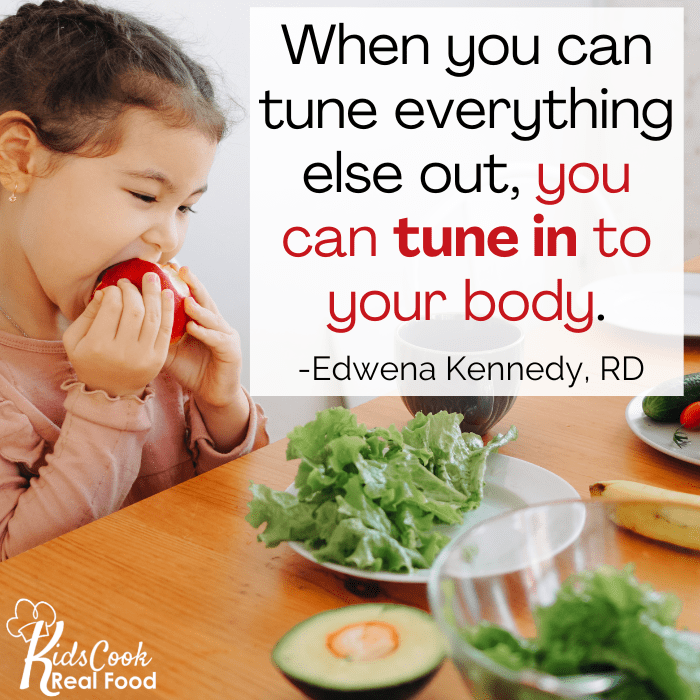
- 27:20: Remove distractions and screens and allow your children to be mindful and present when they’re eating to help them tune into their satiety cues.
- 29:50: What about bedtime snacks? We want to look at the FFP rule to ensure this is the most satiating snack possible. Amp up the protein and fat at bedtime. Keep it pretty boring so that they aren’t asking for it to have a fun treat before bed, but because they’re truly hungry. These mudballs check all the boxes.
Keep snacks similar to meals so that they’re serving the purpose of fulfilling hunger and nothing else. -Edwena Kennedy, RD
Sweets and Treats for Kids
- 33:28: Let’s talk dessert and sweets. For younger kids (under 6-7) you can make these foods pretty neutral instead of making them seem “special” and “better” than other foods. As they get older, there’s not much you can do to prevent them from picking up that attitude from the culture around them. Fostering a healthy relationship with food in your kids.
- 35:44: As kids become aware that treats and sweets exist, introduce those foods in small amounts. Make it frequent enough that they don’t feel deprived. 2-3 times a week is a good place to be, but if your family norm is dessert daily, that’s ok as well.
If kids feel restricted with sweets, they will feel no power or control over them when they do encounter them. -Edwena Kennedy, RD
“I just want my kids to eat what I make!”
This free 5-day challenge was made for you.
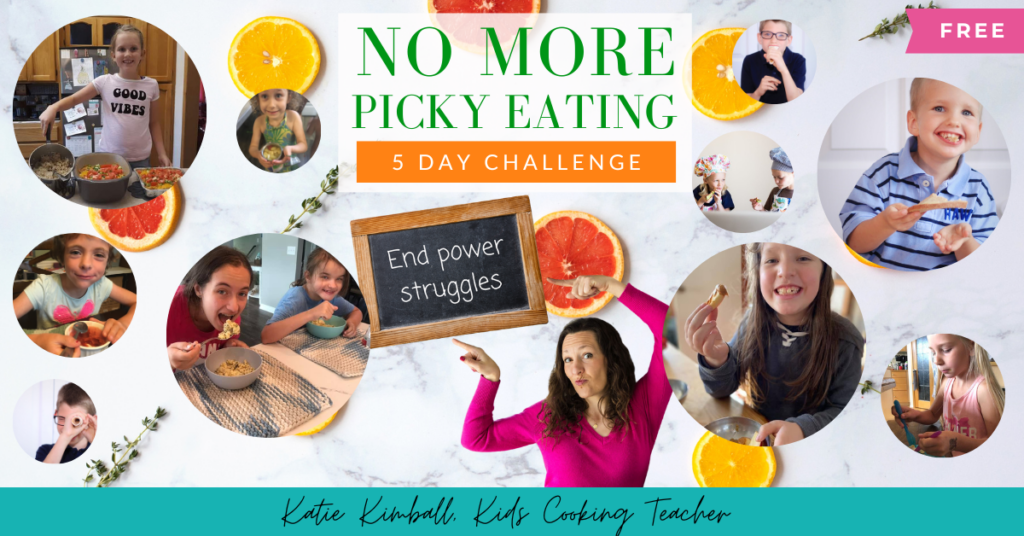
Spend just 30 minutes a day learning practical strategies that reduce mealtime battles and help kids build confidence with food.
- 37:55: Once your kids are middle school/high school age they need to take some ownership over their own food choices. As parents, we have to let go and rely on the foundation we gave them.
- 40:50: Once kids are about 10+ you can start teaching them nutrition and balance. Edwena has some great examples of questions to ask to help them notice how different foods affect them.
- 44:26: If you’re feeling overwhelmed, here’s the one step you should do first today.
A set meal and snack schedule will go the longest way to help your child be hungry for the nourishing meals you’re providing them. -Edwena Kennedy, RD
Resources We Mention for Managing Snacks and Sweets
- Sign up for our next FREE no more picky eating challenge here
- Get tips for balancing blood sugar and avoiding hangry meltdowns here
- Implement the FFP method with these tips for getting flax and chia seeds in your kids
- These mudballs are great snacks with fiber, protein and fat
- Fostering a healthy relationship with food in your kids
- Edwena’s website
- Follow Edwena on social media: Instagram, Facebook
- Edwena’s course: Feeding Toddlers
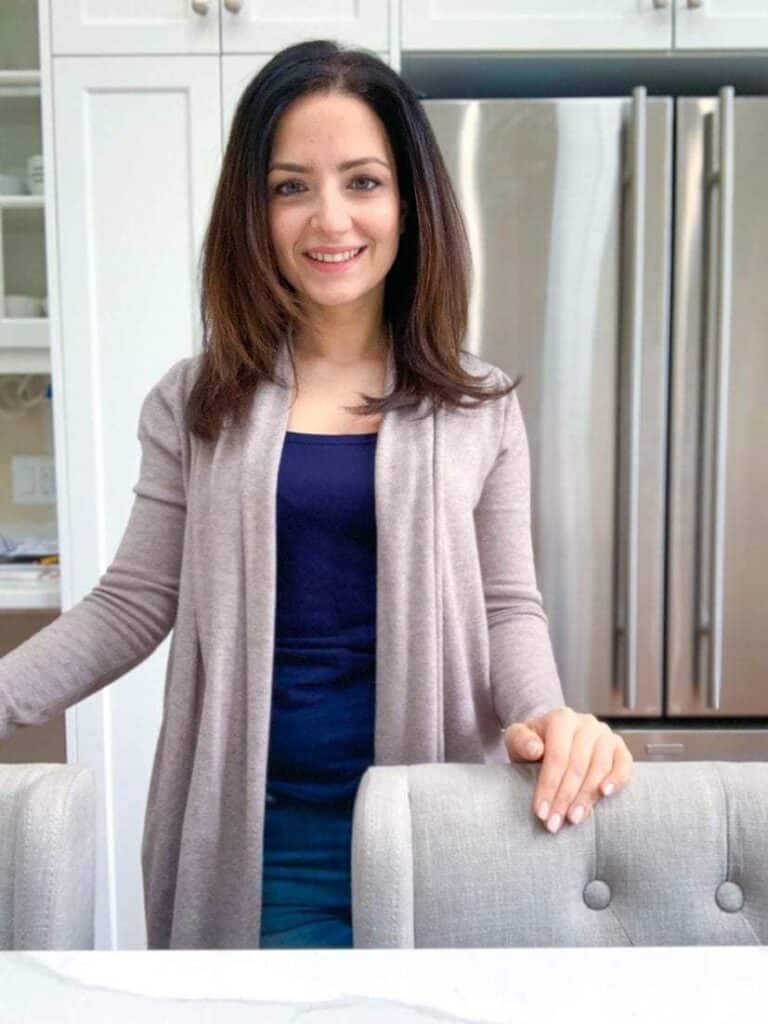 Edwena Kennedy, RD is a mom of two and the registered pediatric dietitian behind My Little Eater™, a platform that helps families feel confident raising healthy little eaters. She offers online courses for Baby Led Feeding and Feeding Toddlers and has helped thousands of parents reduce stress and set the foundation for lifelong healthy eating.
Leave a Comment