
Understanding is power, and when we understand the way our brains (and our kids’ brains!) work, we have the power to improve behavior, help our kids feel safe, and see what’s really going on “under the hood” when we’re trying to help our kids grow into people we’re all proud of.
My guest today is Deborah McNelis, the founder of the Neuro-Nurturing Model, and she’s going to help you:
- Understand how babies learn and what that means for parents (to do and NOT to do)
- Dispel a big myth about babies and their development and needs
- Realize why play and touch are so important to brain development
- Capture a brain-dead (ha!) easy way to give kids choice even in the midst of your busy day (and sometimes letting them choose makes tasks move FASTER)
- See why kids fidget and whether we should allow it, encourage it, or make it stop
- Appreciate the beauty of differences (and how we can parent our kids better by acknowledging that)
- Find the best state for kids to learn (and it’s not about the books and writing, spoiler alert!)
- Insert good brain activities into your daily chores and cooking (without adding extra time to packed schedule)
- Nail down how to give the best focused attention (and why some compliments fall flat for your kids’ brains)
Your kids will benefit from this Neuro-Nurturing crash course, and guess what? The adults in the family might just need a little brain balance as well. 🙂
Can’t see the video? Watch Neuro-Nurturing for Balanced Kids here on YouTube!
No time for the video? Here are the notes!
Neuro-Nurturing 101
- 0:26: Today I’m speaking with Deborah McNelis, the creator of Neuro-Nurturing.
- 1:46: Deborah shares with us how she became fascinated by children’s brain development.
Wish you could control your stress instead of feeling like it’s controlling your life, your sleep, and your temper?
Women react to stress differently than men and need special strategies!

This FREE Challenge is VERY quick, consumable, and full of support to make it work in your busy life!
Join me for 20 minutes a day for my FREE Stress Mastery Challenge where I will teach you baby steps to less overwhelm.
- 6:30: Let’s start at the very beginning. Are babies born ready to learn?
- 8:25: Deborah just developed a program called the First 60 Days to help parents focus on healthy neuro-nurturing from the very beginning of their baby’s life. She goes through 21 myths about babies and what the truth is.
- 8:50: One of the top myths is that you’ll spoil your baby if you pick them up too much. It’s really just the opposite, responding in a nurturing way helps their immature brains develop.
Early Brain Development vs. Neuro-Nurturing
- 11:01: Deborah doesn’t like the term “early brain development” listen in here for her take on it. There are two common misconceptions she pushes back against. Here’s the interview I mentioned about kids being pushed too far in our culture.
- 12:43: So what should we do instead? Deborah teaches a method called Neuro-Nurturing. Yes, you are impacting the neural development of the child, but you’re doing it in a holistic, nurturing way.
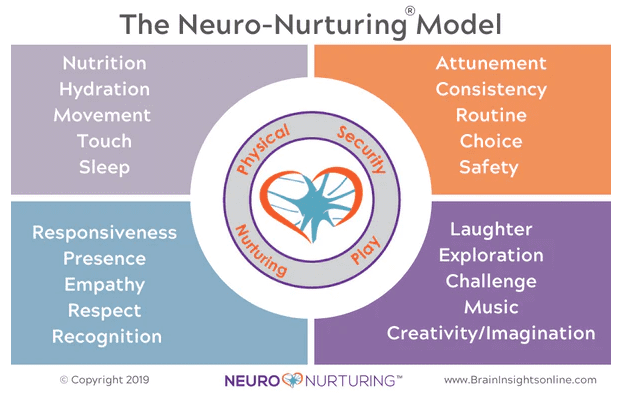
- 13:47: Children have four categories of needs: physical, security, nurturing, and play. Keep it simple.
It’s not complicated to understand what a child needs. -Deborah McNelis
- 16:22: Deborah shares the sub-categories within these four areas of children’s needs. Her chart can really give parents some peace of mind when they look at this list and see how they are providing for their child’s needs.
- 20:09: Here are some practical words about providing “play” for your children. Spending time on the floor playing with your kids is important, but it’s also about creating an environment that allows for self-directed, exploration and play. Here’s the post that Deborah mentions about children playing.
Kids don’t need plastic knives. They need real skills.
Teach safe technique, focus, and confidence in the all-time fav lesson from our kids cooking class! (ages 2-12)
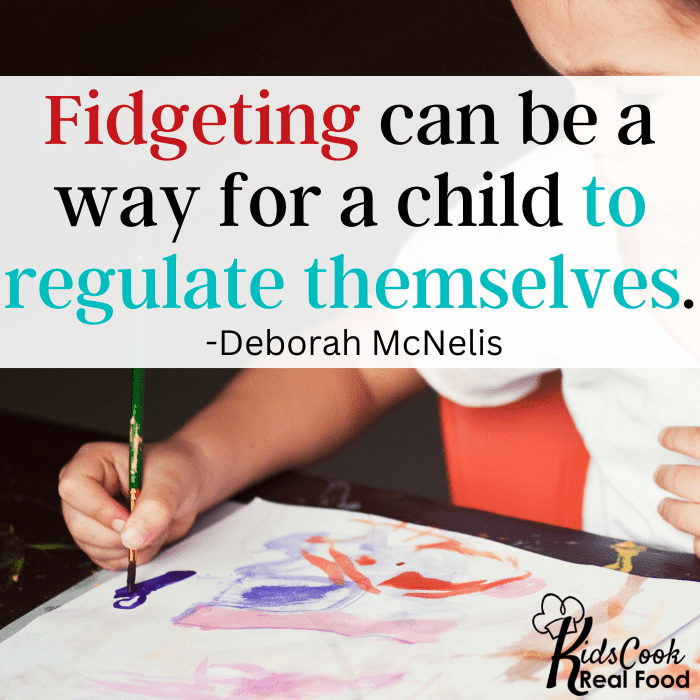
- 23:16: Is fidgeting necessary for all children all of the time or for some children? How do we know what to allow and when? Kids will naturally gravitate toward what they need.
- 27:43: One of the four categories is nurturing. What does that look like practically? The 5 components are responsiveness, presence, empathy, respect, and recognition.
Nurturing relationships give a child calm and then they can learn. -Deborah McNelis
- 31:07: Security is the final category. These all intertwine together so you’ll see overlap between some of the categories. Offering choices is actually a way to create security. I love the examples she gives.
Healthy Balanced Kids with Neuro-Nurturing
- 33:57: Of course, here at Kids Cook Real Food™ we want to talk about being in the kitchen. Deborah’s Neuro-Nurturing packets have activities to do in the kitchen relating to food and nutrition.
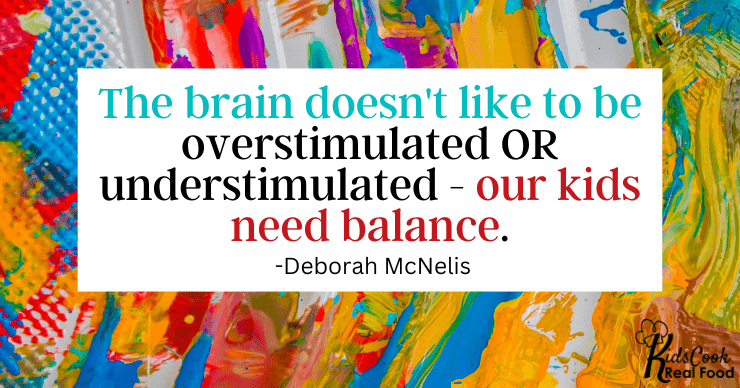
- 38:50: Deborah also talks about the balanced brain. She explains what this means.
“I just want my kids to eat what I make!”
This free 5-day challenge was made for you.
Spend just 30 minutes a day learning practical strategies that reduce mealtime battles and help kids build confidence with food.
- 40:15: For parents of older kids, it’s not too late to implement some of Deborah’s methods. She mostly focuses on birth-6 but that doesn’t mean the information doesn’t apply to older kids.
- 43:48: We leave you with a practical step you can take today based on this information. As parents, we often focus on what new skills we need to work on with our kids, but what would happen if we refocused our attention on positives, what they’re doing well and what they’ve improved in lately?
You do a million positive things every day, focus on that. -Deborah McNelis
Resources We Mention for Raising Balanced Children
- Deborah has a free gift for you! The Neuro-Nurturing e-guide
- The First 60 Days
- The post that Deborah mentions about children playing
- The interview I mentioned about pushing students too hard
- Find Deborah online
- Follow Deborah on social media: Facebook, Instagram
 Deborah McNelis, M.Ed is an author, speaker and creator of Neuro-Nurturing®. As an Early Brain Development Specialist and founder of Brain Insights LLC, she has developed the unique Neuro-Nurturing Interaction Packets and the digital Brain Basics Quick Start Guide: Nurture the Brilliance within Children. She has also published Transitions and Balanced Stimulation development packets in collaboration with Redleaf Press. She has been seen in publications, heard on radio interviews and webinars worldwide and receives rave reviews for her engaging and insightful presentations and keynotes for communities, schools, organizations and companies. Her enthusiasm for making a difference is said to be contagious.
Leave a Comment