I have a vague, fuzzy recollection of learning the Sleep Lady Shuffle when I was a young mom. I don’t think I did it quite right, hence the fuzzy brain from lack of sleep, but I love everything about it!
If you’re in a phase of parenting where sleep is a challenge, whether you have babies and toddlers waking, or grade school kids who are popping out of bed like whack-a-mole, Kim West, “The Sleep Lady”, is the perfect bedtime story for you to listen to today!
You’ll learn:
- Why there’s no such thing as a “no-cry sleep solution”, and why that’s perfectly developmentally appropriate
- How attachment parenting philosophy merges precisely with the Sleep Lady Shuffle
- What age to start sleep coaching and how to personalize it
- The most powerful (surprising!) strategy for those kids who get out of bed at night
- Physical sleep wreckers you should look into before implementing a behavior technique solution
- The vital importance of sleep, and all the ways it helps our kids learn and grow
You might get some tips for YOUR sleep too – I always learn from these experts, and Kim is so great to listen to!
Solid sleep habits for life is an incredible goal, and we’ll get you one step closer today.
Can’t see the video? Watch Healthy Sleep Habits for Kids on YouTube.
No time for the video? Here are the notes!
Healthy Sleeping Habits for Kids with Gentle Sleep Training
- 0:38: Today on the Healthy Parenting Connector I’m talking with Kim West “The Sleep Lady” about sleep coaching without leaving your kid alone to cry.
- 2:41: Kim shares her background and how she came to realize that sleep was such an important part of health. After her first child was born, she created her own method of sleep training that didn’t include crying it out.
- 7:01: If you’ve done cry it out before, Kim isn’t trying to shame you or make you feel like you’ve damaged your baby, her goal is to make sure parents know they have options so they can choose the sleep training method that works best for their family.
Sleep Training and Attachment Parenting
- 7:50: We get a quick overview of what gentle sleep coaching means in relation to other sleep training methods. Kim’s method is called “the sleep lady shuffle.”
- 8:17: The “cry it out” method says to put your baby/child in their crib/bed, leave the room, and don’t go in during the night. It claims to be the most successful but is the hardest to follow through with.
- 8:38: Graduated extinction methods say to put the baby in the crib awake, leave and then go back and check on them in increments. There are variations on whether you can pick up and comfort your baby or not during these check-ins.
- 9:05: Parental fading is where Kim lands. In this type of sleep training, you put the baby to bed, but then you stay in the room and offer physical and verbal reassurance as they learn the skill of putting themselves to sleep. As they learn, you offer less assurance and move farther away until the child can sleep on their own.
- 8:17: The “cry it out” method says to put your baby/child in their crib/bed, leave the room, and don’t go in during the night. It claims to be the most successful but is the hardest to follow through with.
There’s no such thing as a no-cry sleep solution. -Kim West
- 9:52: There really is no way to teach our kids to sleep on their own with no crying. If we’ve taught them that going to sleep requires rocking or holding and then stop doing that, they’re going to cry and protest even if we’re still there offering comfort and support. There are ways to reduce crying and respond in a healthy way.
Basics of Gentle Sleep Training
- 11:37: The ideal age to start sleep training/coaching is 6 months of age.
- 11:46: Sleep training should be flexible and personal to your family and your child. There’s isn’t a step-by-step system that works exactly the same for everyone.
- 12:36: Kim shares the biggest secret to success with sleep coaching. Can you guess?
- 13:26: We won’t dig into newborn sleep today, but Kim’s book has a whole chapter on healthy sleeping habits for newborns.
- 13:35: Kim describes the “Sleep Lady Shuffle” that you can use to teach your baby to sleep. Some highlights: start with bedtime not naps, fill your child’s daytime sleep tank, have a soothing bedtime routine, lay them down awake and aware, stay to offer comfort, and incrementally move farther away.
- 15:09: This method of sleep training is particularly helpful for children who are adopted (not at birth), children with any special needs, and children already in beds rather than babies in cribs.
Fill baby’s sleep tank during the day before teaching them to sleep at bedtime. -Kim West
- 16:31: Kim’s book is targeted towards children up to age 6. An older child can be more involved in the process and be empowered as they learn how to put themselves to sleep.
- 17:35: Connection and attachment parenting are very important to many moms these days. How does attachment parenting fit into the sleep lady shuffle? This method also fits in well with positive discipline methods.
- 19:21: Kim shares a metaphor that she uses to help parents understand their role during sleep coaching.
Kids don’t need plastic knives. They need real skills.
Teach safe technique, focus, and confidence in the all-time fav lesson from our kids cooking class! (ages 2-12)
Sleep Training Older Kids
- 21:02: Let’s shift to older kids in the 2.5-5 year age range. We discuss some of the most common problems parents encounter in this range including repeated leaving their room, won’t stay in bed, and getting up at 4am. Kim shares her best tip to combat these issues.
- 22:06: When we miss our bedtime window, our body starts secreting alerting hormones making it harder to go to sleep and stay asleep. Do the math backward when determining bedtime, and allow time for the bedtime routine and falling asleep.
- 23:23: Having a soothing bedtime routine can make a huge difference. Avoid screens and incorporate reading time for maximum connection and calm down effect.
- 23:47: Kim recommends helping your kids “empty their worry buckets” before bedtime. I love this idea! It doesn’t have to be done as part of the bedtime routine, it could be at dinner or while cooking dinner together, but it’s so important so that our kids don’t lay in bed worrying and working themselves up.
- 25:05: We usually talk about getting a second wind as a positive thing! We are really stealing tomorrow’s energy by missing our sleep window.
Medical Conditions That Disrupt Kids’ Sleep
- 26:12: There are some underlying medical conditions that can cause our child’s sleep problems. So often that isn’t something we look for. The top sleep wrecking conditions are asthma (particularly asthma medications), reflux, constipation, restless leg syndrome, and obstructive sleep apnea. Note: “Growing pains” may actually be restless leg syndrome which can be checked by looking at ferritin levels.
- 27:42: We think of sleep apnea as an adult problem. Look for loud breathing, mouth breathing (my kids’ mouth breathing is caused by dust allergies), snoring, sweating during the night, and restless sleeping for signs of sleep apnea. There was a study done where 25% of the kids studied were diagnosed with ADHD, but they actually had obstructive sleep apnea causing their symptoms. That’s huge! Attention issues at school can also be caused by anxiety.
“I just want my kids to eat what I make!”
This free 5-day challenge was made for you.
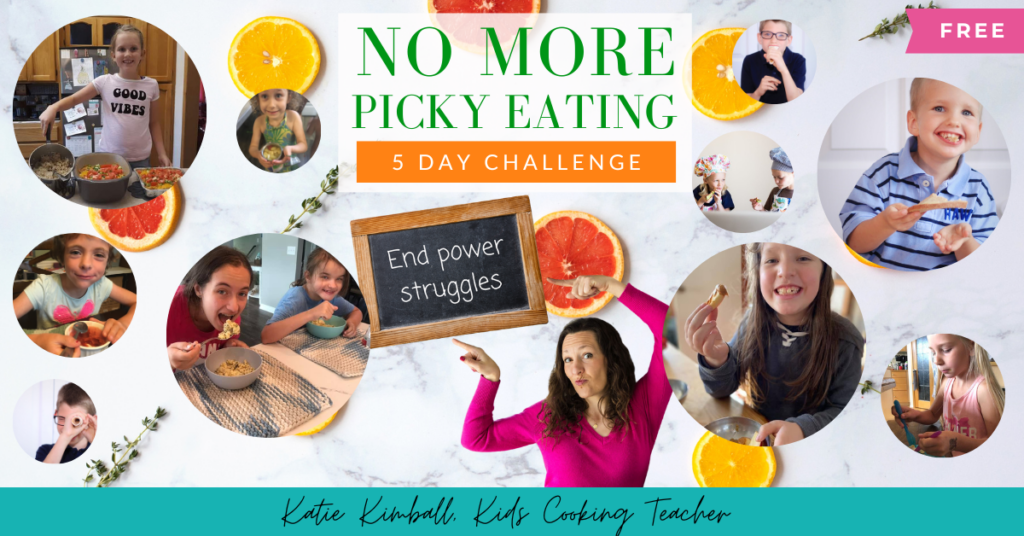
Spend just 30 minutes a day learning practical strategies that reduce mealtime battles and help kids build confidence with food.
- 29:50: We’re all about food here! I like to have at least 90 minutes between meals and snacks, but if you eat an early dinner, you might need a nighttime snack. Kim prefers to avoid bedtime snacks. With older kids, eating before sleeping doesn’t correlate to longer sleep as it does with babies.
- 32:01: Some difficult transitions like weaning, getting rid of the pacifier, co-sleeping changes, changes in feeding schedule, etc can throw off your sleep rhythm, but don’t have to send you back to square one if you are adaptable and keep implementing the shuffle method consistently.
- 32:59: Why is sleep coaching important for families?
- 34:58: Kim has a variety of resources on her website from free articles to working one on one with a coach including books, ecourses, consultations, and newsletters.
- 36:23: We give you one super practical step that you can take today to teach healthy sleeping habits to your kids.
- 37:54: Sleep is when our bodies repair tissue, grow and it’s vital for immune function. We tend to think of sleep as wasted time not doing anything, but our bodies need that time to do so much.
Resources for Gentle Sleep Training
- Kim’s book, Good Night, Sleep Tight
- Magnesium lotion to help kids sleep
- Find Kim online
- Work with a sleep coach
- Follow Kim on social media: Facebook, Pinterest, and Instagram
- Kim’s free guides are on this page
- Your sleep makes you a better (or worse) parent
- Healthy sleep for the whole family
- Ultimate guide to managing dust allergies
 Kim West, LCSW-C, is a mother of two daughters and a Licensed Clinical Social Worker (which is a child and family therapist) for 27 years. Known as The Sleep Lady® by her clients, over the past twenty-five years she has personally helped over 20,000 tired parents all over the world get a good night’s sleep without letting their children cry it out alone.
Kim has appeared on television on shows like Dr. Phil, the Today Show, Good Morning America, CNN, and others, and has been written about in a number of publications including The Wall Street Journal, Parenting, the Washington Post, and more.
She has authored three books: “The Sleep Lady’s Good Night, Sleep Tight: Gentle Proven Solutions to Help Your Child Sleep Well and Wake Up Happy”, “ The Good Night, Sleep Tight Workbook” and “The Good Night, Sleep Tight Workbook for Children with Special Needs”. Her first book “The Sleep Lady’s Good Night, Sleep Tight” is in its third edition and has sold over 130,000 paperback copies, and is available in 4 languages.
Dedicated to providing tired parents with excellent sleep advice and coaching while knowing Kim could not help everyone herself, she started the Gentle Sleep Coach® Training and Certification program in 2010–the first and most comprehensive training program in the world. This program was the start of what is now a global industry- Baby and Child Sleep Consultants. To date, the Gentle Sleep Coach Training and Certification program is available in 4 languages.

Leave a Comment