I thought I’d be interviewing Dr. Aimie about “trauma kids,” like foster kids and adoptions and kids who have gone through horrific tragedies.
Turns out 70-80% of adults need this info and likely more of our kids than that!
😮 😮 😮
This interview was recorded back in the fall, but what a timely message when everyone is feeling more anxiety than usual—for the good of our kids, we need to take time to slow down for them.
“Insecure attachment” can be caused by anything from our genetics to NICU time (or even a rough birth) to a stressed out or distracted mom. (Are you on your phone right now? Are your kids in the room?) Yikes!
Sometimes it looks like rages and tantrums, sometimes it’s learning and focus issues, and it often leads to depression as kids get older.
But there’s GREAT hope because insecure attachments can be fixed, and M-O-M is the most important person to make it happen.
In today’s truly fascinating interview Dr. Aimie and I cover:
- How her adopted son helped her find her true passion in healthcare (and her own health problems brought her to functional medicine).
- Why this isn’t a niche topic just for kids with obvious trauma—and why insecure attachment is increasing at epidemic rates!
- Definitions: What IS trauma and insecure attachment?
- Who should consider attachment recovery, especially if “emotional regulation” is an issue
- Why even a babywearing mama may have a child with an insecure attachment
- How trauma and insecure attachment affects kids’ lives
- What parents can DO to heal kids from attachment trauma
- Why mom must be a leader, even if she has to wear a crown around the house
- Why love can’t just fix these situations (hint: Love does not equal safety)
- The vital role of food and nutrition in Dr. Aimie’s healing programs
- How CONNECTION and CREATIVITY work together in a trauma healing journey
Watch Forming Secure Attachments on YouTube.
No time to watch the whole video? Here are the notes!
Forming Secure Attachments Video Time Stamps
- 0:47: Dr. Aimie is an MD whose life was turned upside-down when she adopted her son from foster care at 4 years old. Her passion is helping people heal from trauma and attachment disorder.
- 1:56: Dr. Aimie shares more of her own story with us.
Connection and attachment play a significant role in our health. Dr. Aimie Apigian
How Your Attachment Style Develops
- 2:26: From a young age, children will become wired for a secure or insecure attachment. Both nature and nurture play a role. We tend to view attachment as psychological, but biology actually influences it as well.
- 4:23: Even a child who hasn’t experienced trauma such as abuse or neglect can experience insecure attachment due to their biology. 70-80% of the general population in the US has an insecure attachment style.
- 5:24: Over the years, studies show that a mother will pass on her attachment style to her children. It becomes wired into your nervous system. It’s basically passing on your worldview and beliefs of connection and relationship.
- 6:54: I initially thought the audience who needs to hear this was small…this expands it to everyone! Every generation shows a higher percentage of insecure attachment, but there’s lots of hope!
- 8:09: Dr. Aimie first learned how to help her adopted son who had experienced trauma and then realized she needed to heal her own attachments as well.
- 8:34: People would say, “Oh he’s only 4. He’s still young and won’t remember the childhood trauma when he grows up.” But that’s not how trauma works. It is wired into your nervous system and programmed into your body even if you can’t remember the specifics.
What is Attachment Trauma?
- 10:00: We backtrack a bit to define attachment trauma. There are degrees of how the trauma presents in children.
- 11:20: Some behaviors that might indicate an insecure attachment style in children are: showing disconnect, neediness, lack of creativity, needing to have in a small safe bubble, acting out in rage and temper tantrums, control issues, disrespect and lack of emotional regulation.
- 12:06: We clarify a bit how an insecure attachment might begin in an infant. Both “too much too fast” and “too little for too long” are ways insecure attachment develop.
- 13:49: Even attached, babywearing mamas with the best intentions can develop insecure attachments if they’re stressed and distracted. There’s a physical touch component and an emotional attention component.
- 14:43: The signs sound like the stereotypical teenager. How do we know if they have an insecure attachment versus anxiety, depression, general stress or something else?
- 15:16: Someone with an insecure attachment style will see themselves as undeserving of love, as “less than,” and view the world as a scary place rather than an opportunity for growth.
Anxiety, depression, ADD and ADHD can be attributed to attachment trauma exhibiting in different ways for different kids. -Dr. Aimie Apigian
- 16:44: Many people aren’t even considering the idea of attachment trauma as the root cause of their anxiety, etc.
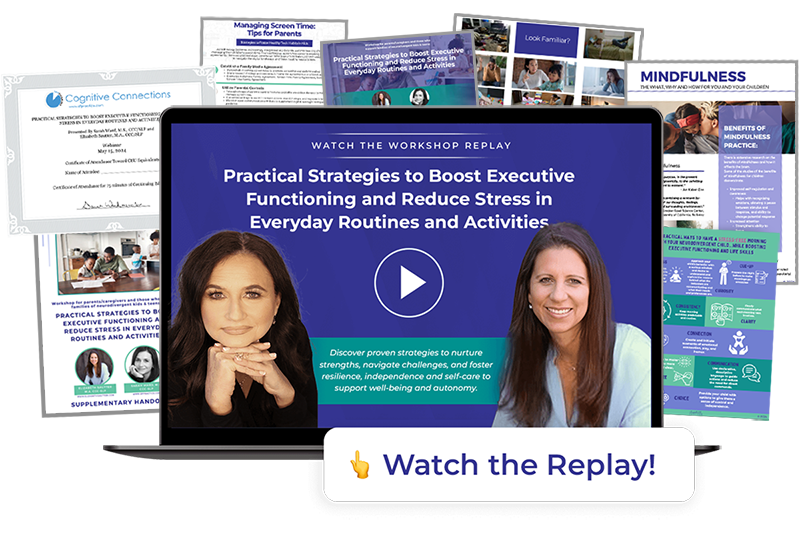
Led by Elizabeth Sautter and Sarah Ward, experts in social-emotional learning (SEL) and executive functioning, this workshop will provide you with practical strategies that can be seamlessly integrated into daily routines and activities, benefiting both you and the children you love and support.
How to Form a Secure Attachment
- 17:14: When the mother is able to do the hard work to heal herself and her children, children will usually respond dramatically within a few months.
- 18:03: Since insecure attachment gets higher with each generation, the percentage is probably even higher than 70-90% if we’re looking exclusively at children. NICU babies are more likely to develop insecure attachment due to physical separation from their mother at birth.
- 19:28: We get into what can be done to heal attachment trauma. It all comes back to rewiring connection in the child. It’s hard work that requires about 3 months of intense dedicated work before huge shifts will take place.
If you want your child to trust you with their vulnerabilities and big feelings, then you need to show that you are able to handle that. – Dr. Aimie Apigian
Kids don’t need plastic knives. They need real skills.
Teach safe technique, focus, and confidence in the all-time fav lesson from our kids cooking class! (ages 2-12)
- 21:05: Dr. Aimie has a tip for a physical reminder that you are the secure leader as the mom.
- 22:25: As moms help their children overcome insecure attachment, they often heal themselves along the way. They take ownership and step into confidence that they never had before.
- 23:11: I grab some examples from my own life to ask Aimie’s opinion.
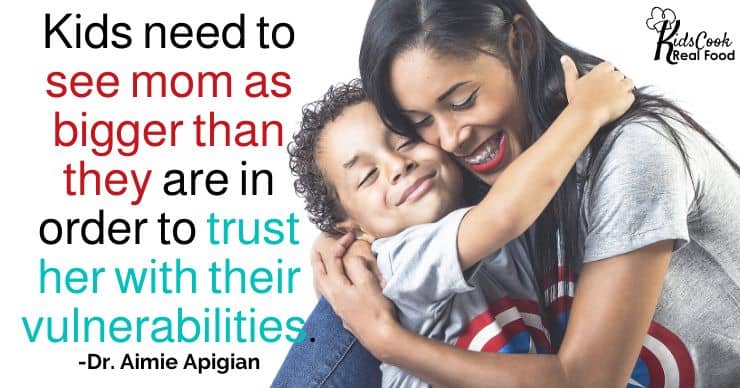
- 24:24: Kids need to know that mom is strong and can control her own emotions in order to trust her with theirs. When they don’t know what to do they can depend on her.
- 26:34: Once the trust starts to develop, introduce accountability. Everyone is responsible for their actions. Many moms are scared of their child’s behavior. They tiptoe around the kids rather than standing firm in their choices. Kids pick up on that.
- 28:48: Dr. Aimie shares how she helps kids take accountability for their actions.
- 30:14: Big shifts happen when you get to the stage of relationship repair.
- 31:13: Dr. Aimie works with kids who have more extreme behaviors as a result of trauma. If you think your children could benefit from these strategies but they aren’t in that category, try it and see how it goes. If there is a lot of resistance from your child, that’s a sign that more intense focus is needed.
Connect with Your Kids in the Kitchen
- 32:29: Of course at Kids Cook Real Food™™ we have to talk about the kitchen! Food is a big part of Dr. Aimie’s program. Mom providing meals for the children is a reliable way to promote trust. We share several strategies to connect families over food.
- 35:37: The more strategies you incorporate in your family, the more connection you will see.
- 35:57: You may be asking, “why can’t love fix these situations?” That’s where Dr. Aimie started, but she discovered it was not enough.
- 37:37: Dr. Aimie shares an analogy she uses to show why you need more than love.
A person with an insecure attachment fears love itself. They can’t receive it and let it change them. -Dr. Aimie Apigian
- 40:05: We leave you with a message of hope. Don’t shut off the video before you listen to this part!
“I just want my kids to eat what I make!”
This free 5-day challenge was made for you.

Spend just 30 minutes a day learning practical strategies that reduce mealtime battles and help kids build confidence with food.
Resources for Building Secure Attachments
- Dr. Aimie’s website and courses
- Resources to help you master your own stress and emotions
 Dr. Aimie is an MD whose life was turned upside down by Miguel, her son whom she adopted from foster care when he was 4. She always goes beyond diagnoses and asks “why” with her patients, since she also became trained as a functional medicine practitioner after traditional medicine didn’t have answers for her own health issues.
But Miguel has inspired Dr. Aimie’s real passion, which is helping families heal from trauma and attachment disorder. She’s the founder of Family Challenge Camps, a program that helps families grow through trauma and learn attachment and trust through specific steps and protocols.

Leave a Comment