
You’ve heard the figure that most MDs get less than 10-20 hours of nutrition and food training in medical school, and Dr. Katja Rowell (MD!) thinks this is a tragedy.
Worse, she says, is that pediatricians and family doctors aren’t trained at all in HOW kids learn to eat, and many of them help families with feeding issues and make them…worse. 🙁
There are some tough moments to hear in this interview, but important ones as we work to raise healthy, independent kids into adulthood.
We talked about:
- What “extreme” picky eating is and how parents know if they need professional help.
- How bad therapy can hurt a child’s relationship with food and family to his/her great detriment, and how you can identify it.
- Why responsive feeding is different, respectful to the child, and ultimately worlds more effective.
- The big fat bribery mistake many parents make with dessert and Dr. Rowell’s shocking antidote for sweets
- Some of the good doctor’s regrets about her early years in practice – for example, when we accidentally weren’t recording, she said in that version of the interview: “Getting my patients to lose weight did a lot of harm.”
- The perils of diet culture for all ages and how we can begin to protect our youth through using the right language and expectations
- How we need to work with extreme and mild picky eaters differently (Spoiler: we don’t!)
- The 5 foundations a good responsive feeding approach boils down to, and how so many families see success with this gentle, respectful method of teaching their kids to eat
Dr. Rowell (whose name I’m sure I mispronounced at least once, even though I asked how to say it before we hit record) also said that sugar isn’t addictive and doesn’t need to be villainized as unhealthy…and I know of at least 3 prior interview guests who would disagree. With the knowledge and experience I have at this very moment in time, I also disagree.
But I think it’s wonderful that we can learn so much from experts yet also learn to filter everything through our own intellect. I’m totally open to change on this issue and I may be 100% wrong, but I also believe it’s ok to disagree.
I can’t wait to hear your thoughts as well and am so grateful to Dr. Rowell for sharing with our community!
Find all the episodes of the Healthy Parenting Handbook here, or wherever you get your podcasts:





Don’t forget to leave us a review on Apple Podcasts too! Thank you!
Can’t see the video? Learn how to handle extreme picky eating here on YouTube!
No time for the video? Here are the notes! These time stamps align to the video and not the audio podcast, although they should be close.
Extreme Picky Eating
- 0:40: I’m here today with Dr. Katja Rowell to talk about extreme picky eating and how typical picky eating strategies can actually make it worse.
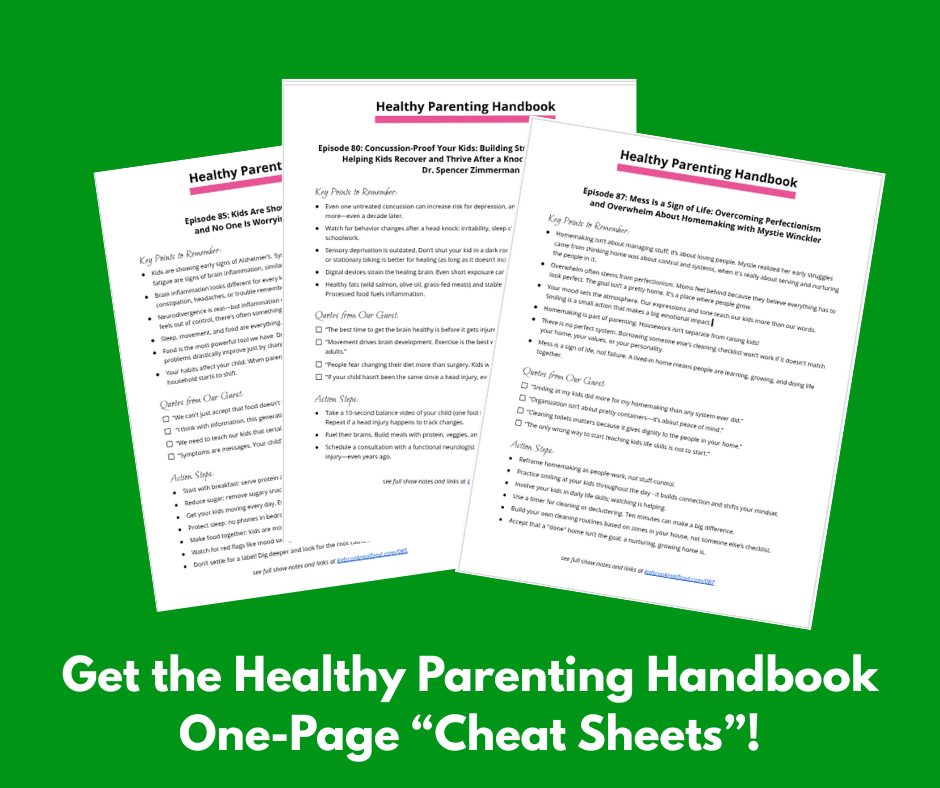
Turn expert advice into a handbook you can actually use.
I’ve interviewed hundreds of incredible experts on the Healthy Parenting Handbook podcast! Out of time to listen? You can skim on your phone!
These one-page summaries give you the highlights of every episode fast, so you can find what you need when you need it (and nothing to download).
- 2:10: I was just told the other day by an MD that she had 17 hours total in her entire training on diet, nutrition, and food combined. Yet we know that what we eat is the foundation of our health. Dr. Rowell shares how she went from MD to a picky eating specialist.
The psychology of how we eat is more important than what we eat. -Dr. Katja Rowell

- 4:52: Dr. Rowell reached a turning point when she discovered Ellyn Satter’s work and started implementing the division of responsibilities with her daughter.
- 6:36: There’s so much misunderstanding among parents and MDs when it comes to growth among children. I’m amazed by some of the things Dr. Rowell has seen in this arena.
What Is Extreme Picky Eating?
- 9:49: Let’s define “extreme” picky eating. Some level of picky eating is normal. When we look at extreme picky eating, we often see eating difficulties before a year, extreme emotions around food (i.e. panic attacks when eating in public), and/or very restrictive eating (usually less than 20 foods). Kids with sensory challenges, neurodiversity, or anxious, sensitive temperaments are also more at risk. If a child is eating so little (quantity or variety) that it’s impacting their development, or causing the parents intense stress, the family needs help.
- 14:00: The parent/child feeding relationship is critical. Many feeding therapies are focused on just the child. Even if there are sensory issues being addressed, the relationship between parent and child is so important to overcoming these struggles. See the following links for more on feeding a child with sensory processing difficulties, highly sensitive children, and autism from a functional medicine perspective.
Responsive Feeding Basics
- 15:46: Dr. Rowell promotes “responsive feeding.” She shares the basics with us here. It’s very relationship-focused and helps parents tune in to their kids and read their cues to respond in a supportive way.

We don’t want to fight children’s natural development and autonomy “I do it!” when we’re helping them eat. -Dr. Katja Rowell
- 17:53: We get into some of the ways traditional feeding therapy actually makes extreme picky eating worse. I had no idea some of these terrible, traumatic “therapies” were being practiced! As one mom told Dr. Rowell “Bad therapy is worse than no therapy.”
- 20:32: Even if the therapy seems playful and fun, if the child is anxious and hates it, it won’t help them. Anything that’s increasing power struggles or making you or your child anxious is not helping. There are other ways to address it!
Kids don’t need plastic knives. They need real skills.
Teach safe technique, focus, and confidence in the all-time fav lesson from our kids cooking class! (ages 2-12)
How to Deal with Sweets
- 22:04: What about bribery? Bribery brings negative energy to the table and it usually backfires in negative ways. The best way to combat this is to make foods neutral rather than put some foods up on the “reward” pedestal.
- 23:42: To avoid power struggles and a “forbidden fruit” effect with dessert, serve dessert with your meal. Your kids will probably eat it first for a while, but then you’ll notice that they start treating it as part of the meal.

- 25:38: We have a “one dessert” rule in our house and as we talk I’m realizing that it isn’t serving me well! We’re in constant negotiation with my 6-year-old over what counts as dessert and how big a serving can be, etc.
- 26:10: Dr. Rowell shares some signs that you need to rethink your strategy around sweets.
- 27:36: I think I disagree with Dr. Rowell when she says that sugar isn’t addictive. Several of the experts I’ve interviewed have talked about the problems with sugar including Dr. Madiha Saeed, Dr. Sam Shay, and Sarah Vance.
“I just want my kids to eat what I make!”
This free 5-day challenge was made for you.

Spend just 30 minutes a day learning practical strategies that reduce mealtime battles and help kids build confidence with food.
Talking to Kids About Food
- 28:02: Dr. Rowell recommends that parents be aware of pairing simple carbs with fat or protein for satiety, but she doesn’t recommend teaching kids about that until middle school. She shares a few stories from clients that illustrate how kids don’t have the context to understand much of the nutrition education they’re getting. Here’s what my contributing writer Mary, a Nutritional Therapy Practitioner, had to say about teaching kids about nutrition.
- 31:41: Once you start seeing your child responding to their body’s signals and asking for vegetables or stopping the ice cream when they’re full instead of when the bowl is empty, it is inspiring to parents who weren’t raised this way.
The best data is your child in front of you. -Dr. Katja Rowell
- 34:02: So how do we talk to little kids about food if nutrition education is too much for them? The responsibility falls on the parent in the early years. There are ways to set boundaries and add balance without making a big deal out of it. Dr. Rowell shares some phrases she uses rather than “that’s too much sugar” or “that’s bad for you.”
- 36:43: Food and nutrition is only about 20% of the health influence pie. There are so many other factors that can affect health. You can support these other areas (like movement, relationships, sleep, etc) to keep your kids healthy even if they refuse to eat broccoli.
- 38:39: Cooking and being in the kitchen is great for kids. Anything that gets them involved, learning skills, developing confidence, having fun in the kitchen, and employing agency will help, especially with kids who are anxious.
When kids feel competent in the kitchen it’s huge for picky eating. -Dr. Katja Rowell
- 39:49: One caveat Dr. Rowell gives is that you need to take the pressure off the child and allow them to experience cooking at their own pace. One great tip for really avoidant kids is to bake pet treats together. There’s absolutely no pressure (even implied) for them to taste the outcome.
- 41:54: The strategies that Dr. Rowell teaches are really the same whether you’re dealing with an extremely picky eater or a “typical picky eater.”
- 43:50: Responsive feeding boils down to these 5 points: child autonomy, connection, don’t moralize food, the litmus test of power struggles, and having reliable, structured meal times.
- 46:34: There is so much hope for these extreme picky eaters. It’s not too late! Take a few things from this interview and implement them in your home. This can be a long-term healing process, so make sure you don’t give up. Seek help if you aren’t making progress on your own.
Resources We Mention for Extreme Picky Eating
- Dr. Rowell’s books: Helping Your Child With Extremely Picky Eating, Love Me, Feed Me, Conquer Picky Eating for Teens and Adults
- Ellyn Satter’s Division of Responsibilities
- More on feeding a child with sensory processing difficulties, highly sensitive children, and autism from a functional medicine perspective
- Our “one dessert” rule that I’m now rethinking
- Several of the experts I’ve interviewed have talked about the problems with sugar including Dr. Madiha Saeed, Dr. Sam Shay, and Sarah Vance
- You can connect with Dr. Rowell online at The Feeding Doctor or Extreme Picky Eating
- Follow her on YouTube
- More resources Dr. Rowell sent me after our interview:
 Katja Rowell, M.D. is a graduate of the University of Michigan medical school and served as a family physician in urban, rural, and university student health settings. During her time in practice, she was struck by the prevalence of disordered eating and feeding, and related health problems. Rowell believes establishing a healthy feeding relationship– in essence– HOW children are fed is the missing piece in addressing disordered eating and weight dysregulation.
Described as “academic, but warm and down-to-earth,” Dr. Rowell teaches the importance of a healthy feeding relationship to health care providers, family therapists, and childcare staff and consults with corporate clients, nutrition education, and public health providers.
Rowell’s second book, Helping Your Child with Extreme Picky Eating: a Step-by-Step Guide to Overcoming Selective Eating, Food Aversions and Feeding Disorders with co-author Jenny McGlothlin SLP is available everywhere books are sold.


Leave a Comment