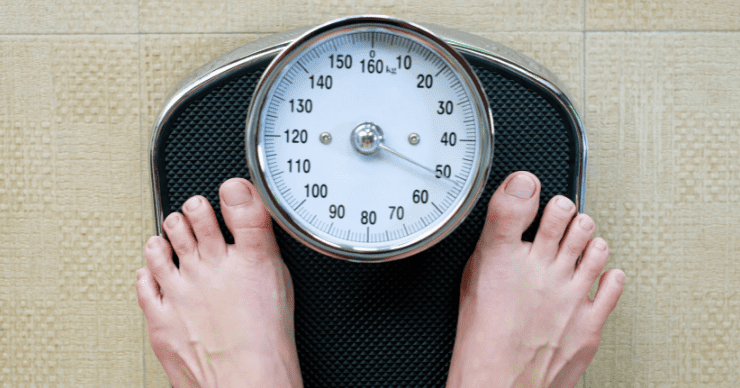
Do any of these sound familiar?
- Picky eating
- Avoiding certain foods
- Emotions around mealtimes
- Tummy issues
Is it sensory issues, clean eating, or disordered eating?
Read on to see if these 13 red flags of disordered eating resonate.
Disordered Eating 101
Disordered eating is on the rise.
Between diet culture’s focus on “clean eating” and not eating (i.e. fasting), the rise of food intolerances, the processed food industry, and the opposite end of the spectrum (gluten-free, dairy-free, soy-free, sugar-free)…by and large, our society’s relationship with food is complicated.
In fact, 3 in 4 girls and women will struggle with some form of disordered eating or an unhealthy relationship with food or their bodies at some point in their lives.1
Moreover, both body dysmorphic disorder (obsession with appearance) and orthorexia (obsession with healthy eating) are just as prevalent in men as they are in women.
Many of our habits, beliefs, and relationship with food and our body start young—before age 18.
Exhibit A: 4th grade recess.

4th Grade Recess: The Day My Eating Disorder Began
Imagine: 4th grade recess.
I was 10-years-old. A pink scrunchie in my frizzy hair that my mom made me wear. All I wanted to do is fit in.
The popular girls invited me to join their gossip circle, gawking over Eric Arthur’s cute freckly face. Then the topic of weight came up.
The Queen Bee said, “Oh my gosh you guys, I weighed myself and I am 69 pounds! I am soooo fat!”—immediately turning to you.
“What do you weigh?!”
One by one, we all had to report to our drill sergeant.
At a healthy 80 pounds, I was by no means a fat kid, but when the circle got to me, I gulped and lied. “I don’t know.”
Thinking: I just want to be good enough.
After school, I went home and stood in the pantry. Turning over my favorite Dorito’s snack pack, I began learning a brand new language—fat grams and calories. At age 10, my life path just took a sharp turn.
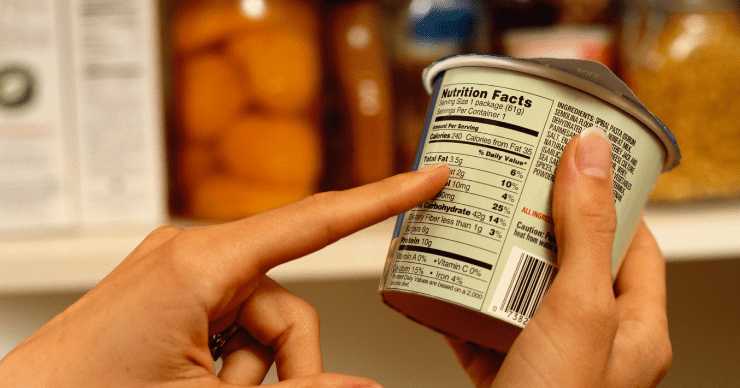
Eating Disorders Don’t Happen Overnight…
There is not one catalyst for eating disorders. Instead, they typically occur from seeds that get planted along the way.
In my own history with disordered eating, some of the pivotal points that “set the stage” included:
- Tummy troubles. Chronic constipation, gas and bloating left me feeling at “war” with my body for as long as I can remember.
- History of sensory “issues.” At a young age, I often chewed on my shirt, my toothbrush, my hair, etc.—a sign of mineral and nutrient deficiencies that would continue for much of my life.
- Ballet class. At age 8, my dance teacher told me to suck in my tummy and taught our class how to do crunches.
- “Big thighs.” My mom didn’t like her thighs. Therefore, I didn’t like my thighs.
- Processed foods. I’m a child of the 90’s. Fruit-by-the-Foot, Poptarts, Lunchables and Doritos were staples (that did not foster a healthy gut-brain connection).
- Diet Coke. During 3rd grade lunch, my best friend Erin told me she started drinking Diet Coke to lose weight and I should try it too.
- People-pleasing eating. I was “rewarded” every night with dessert for finishing my plate and drinking my milk.

- My first heartbreak. My crush Eric Arthur didn’t like me. He liked the Queen Bee.
- “Teacher’s pet.” I was a good student and the other kids called me a “teacher’s pet.”
- Wallflower. Not being asked to dance at the 4th-grade dance party.
- “Early bloomer.” I started developing faster than many of my peers. “Santa” brought me a razor, training bra, and book on puberty. Totally embarrassing! Enough said.
As you can see, disordered eating and a funky relationship with food and your body does not happen overnight.
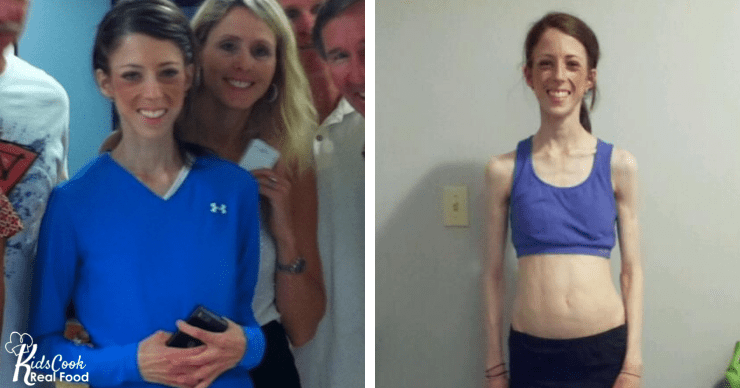
The following 13 red flags may be more like “fire signals” for affirmation, love, and support.
13 Red Flags of Disordered Eating for Kids and Teens
#1. Sensory Issues & “Picky Eating”
The gut-brain connection plays a HUGE role in sensory processing issues and the onset of eating disorders. The gut is the “2nd brain”, where we have over 500 million brain cells, and the majority of serotonin and dopamine —“feel good” brain chemicals—are produced.
Additionally, 80% of all communication to the brain (the thoughts we think) stems from the gut. Hence, if the gut is out of balance, we feel out of balance–sensory issues and disordered eating thoughts included.2
Sensory processing issues, in particular, can pave the way to disordered eating as picky eating behaviors with food are commonplace in efforts to feel calm and in control. As a child grows, picky eating can develop into lifelong disordered eating issues at the risk of mineral and nutrient imbalances, the angst around food, and a disrupted microbiome.
If you’re ready to tackle picky eating, join my next FREE picky eating challenge.
RELATED: Helping kids with sensory processing disorder eat well.
#2. Tears, Fear, or Anxiety Around Meal Time
Tears and emotions are definitely encouraged and ok to show, however, if tears, fear, or anxiety come alive primarily at mealtime, something is up inside.
#3. Nutrient Imbalances & Malnutrition
Anemia, low Vitamin D, brittle nails and hair, dark circles under the eyes, fatigue despite sleeping, constipation, skin breakouts, anxiety, poor concentration, pale skin, depressed mood, and irregular periods may all indicate nutrient needs are not being met.
RELATED: What kids need to have balanced nutrition: interview with a pediatrician.
#4. Isolation or Withdrawn
Eating disorders force the individual to isolate from friends and family and keep to themselves in order to engage in behaviors—like working out, researching and calorie counting, planning out meals, eating “safe” or “binge” foods alone; as well as simply not feeling like themselves to engage like they once did.
#5. Less “Spark”
Their spark seems dimmed—less laughter, less light-heartedness, more seriousness or fatigue. Something is weighing on them.
#6. Tummy Troubles
Constipation, bloating, IBS, gas. “Gut issues” are prevalent in 98% of eating disorder patients—both preceding the onset of eating disorders as well as a side effect from eating disorders.3
RELATED: Better gut health with Buddies in My Belly.
#7. Fixation with Numbers, Timing & Rules
Calorie counting, carb counting, protein counting, or militant-like rigidity with meal timing and schedules. Food rules (ie. ‘Carbs are bad’, ‘no eating until noon,’ etc.).
#8. Tray Gazing
Staring at other people’s plates or being concerned with what others are eating.
#9. Perfectionism
Not just with eating perfectly, but with making good grades, excelling in activities and sports, looking perfect, etc.
#10. Rigidity with Food Choices
No flexibility whatsoever to try new foods or mix things up. Vacations (travel) and eating out are particularly stressful, if not impossible.
#11. Abruptly Forgoing Old Favorites
Foods they once loved, they all of a sudden no longer consume.
#12. Dr. Google Searching Facts About Food (A LOT)
They think about food, their body, or exercise 24/7. “Downtime” is spent researching, working out, or focusing on thoughts about food.
#13. Constantly Comparing
Thanks to social media, comparison is constantly in our faces. This, combined with comparison at school, in sports, the school play, and more, is often enough to add the pressure needed to drive disordered eating.
Kids don’t need plastic knives. They need real skills.
Teach safe technique, focus, and confidence in the all-time fav lesson from our kids cooking class! (ages 2-12)
What to Do About These Disordered Eating Warning Signs
Just like there is no one catalyst that sets the stage for disordered eating, there is not one “aha” intervention to help kids and teens get out of it, but here are 3 steps to get started if you think your child may be struggling or toying with disordered eating.
#1. Do a Heart & Head Check
Simply have a heart-to-heart with your child. What is going on in their life? Where are they feeling overwhelmed, anxious or stressed? What’s going on in their social life? What insecurities are they dealing with at school?
Give examples of yourself as a kid or teen and the things you struggled with. Let them know they are not alone and what they are feeling is normal. Help them get in touch with feelings, emotions, and awareness of these things — something most of us are not taught in school.
Eating disorders are NOT about the food. Instead, the way we use food is often a metaphor (a visual story) reflecting what’s going on in our lives.
For example, binge eat ice cream every night after dinner? In what areas of your life do you feel bored or a lack of ‘sweetness’ (joy) that you may seek it in food?
Sticking to a rigid no-carb diet? In what areas of your life do you feel out of control and thus seeking control in food? Ask questions with compassion and genuine concern for what your child is thinking, feeling, or dealing with inside.
RELATED: Fostering a healthy relationship with food.
#2. Food = Life Battery
Growing up, no one teaches us nutrition in school—at least real nutrition. Diet culture and social media certainly teach us food rules and food fears, however, info on what food can do for feeling our best inside and out, and how food goes far beyond just the 5 seconds in our mouth? Crickets.
You don’t have to be a nutritionist to begin teaching your kids to connect the dots between what they eat and how they feel (in a positive way).
RELATED: Connecting kids with real food.
For example, do your kids or their friends feel tired every day after lunch? (The classic blood sugar dip). Maybe it’s because they aren’t eating enough protein or trying to power up with chips, Oreos, and juice boxes, instead of balance.
RELATED: Balancing blood sugar to avoid hanger.
Is your child’s poop mushy or do they skip days? Are they drinking enough water? Eating fiber — found in veggies— for “golden poo” daily?
RELATED: What’s your kids poo telling you?
Teaching your kids positive correlations between food and feeling their best can be very empowering, from an early age, for kids to connect food with positivity and the “battery” that charges their body to be and feel their best—mentally and physically.
“I just want my kids to eat what I make!”
This free 5-day challenge was made for you.

Spend just 30 minutes a day learning practical strategies that reduce mealtime battles and help kids build confidence with food.
#3. Don’t Go It Alone
If you feel like your child may be fighting their own giants inside that they are unable to process, share or disclose, consider “team” support. I highly recommend a practitioner (nutritionist, doctor, PA, NP, coach, etc.) trained in functional medicine and aware of eating disorders to be able to address any underlying nutrient deficiencies and gut-brain imbalances; as well as an eating disorder recovery coach or therapist who can help your child tap into their bigger visions and goals for their life (outside of the eating disorder), inspire improved self-esteem and confidence and teach them how to gain awareness about their thoughts, emotions, and feelings.
Reach out to me on my website and we can help you game plan the next steps, no matter where you or your child are at, or point you in the right direction.
I hope this helps you build connection with your kids to foster healthy eating habits.
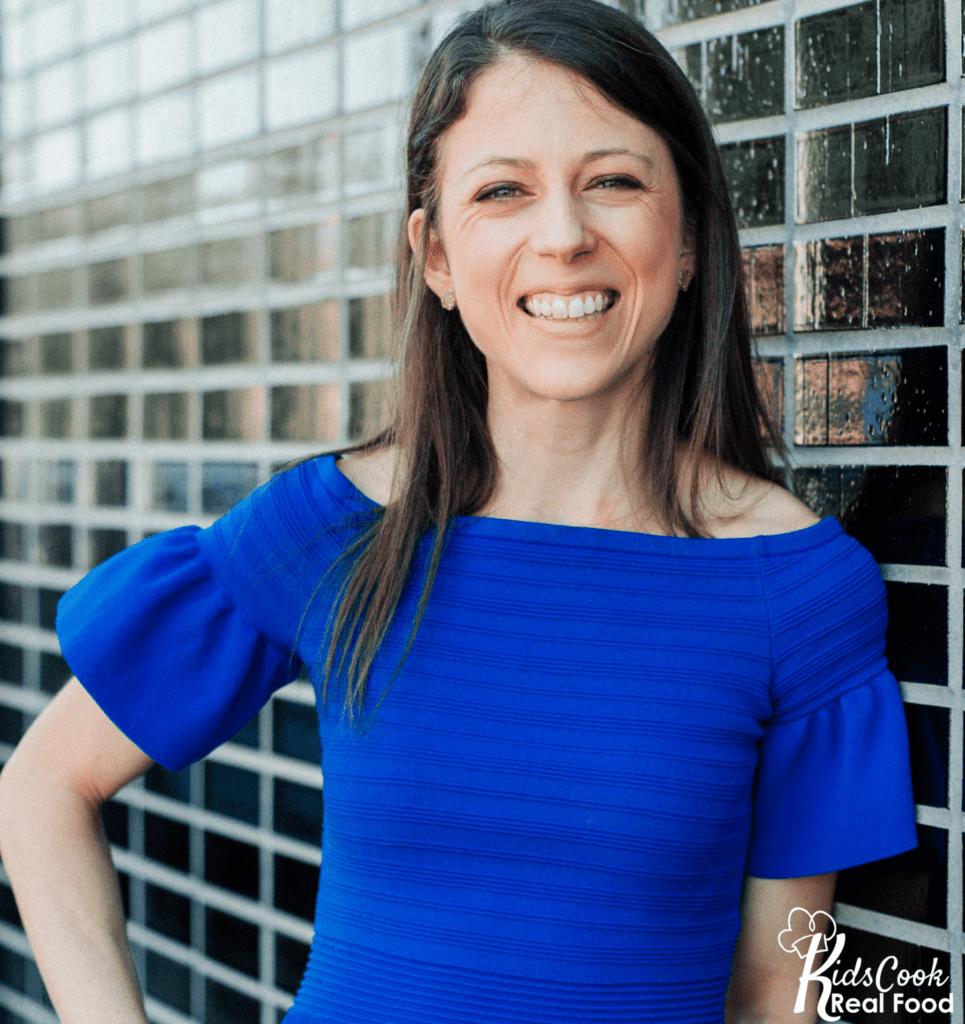 Dr. Lauryn helps people who have “done it all” to get to the root cause and finally work with their body (not against it) so they can reach their highest potential. As a former TV news journalist, gone “health detective” and functional medicine expert, Dr. Lauryn brings over 25 years of clinical and personal experience to the table.
Her death-to-life story on overcoming chronic eating disorders and complex illness has been featured on CBS, ABC, Good Morning America, and USA Today; and today, as a gut health, mindset transformation, and food freedom specialist, Dr. Lauryn empowers clients worldwide to upgrade how they look, move, feel and think (no diet dogmas or Dr. Google included).
You can find out more about her work by reading one of her 8 books, tuning in to “The Health Detective” podcast, or checking out her virtual functional medicine clinic and programs—aimed at tackling diet culture and helping you work with your body (not against it), so you can reach your highest potential.
References
- University of North Carolina at Chapel Hill. (2008, April 23). Three Out Of Four American Women Have Disordered Eating, Survey Suggests. ScienceDaily. Retrieved January 28, 2022 from www.sciencedaily.com/releases/2008/04/080422202514.htm
- Lacorte, E., Gervasi, G., Bacigalupo, I., Vanacore, N., Raucci, U., & Parisi, P. (2019). A Systematic Review of the Microbiome in Children With Neurodevelopmental Disorders. Frontiers in neurology, 10, 727. https://doi.org/10.3389/fneur.2019.00727
- Janssen, P. Can eating disorders cause functional gastrointestinal disorders? Neurogastroenterol Motil. 2010 Dec;22(12):1267-9. doi: 10.1111/j.1365-2982.2010.01621.x. PMID: 21105315.

Leave a Comment