Confession: My house is VERY cluttered.
I have never been good at letting go of things. “I might need that someday!” “What about the grandkids? They’ll want to read that book!”
I’m always a little anxious and yet inspired when I talk to organizers and decluttering experts, and this conversation with Katy Wells will not disappoint!!
Her story was a huge surprise to me and made her all the more believable. Katy is super passionate about keeping a home that allows you to focus on what truly matters, and I love her sense of balance and reality as well.
In this episode, you’ll learn about:
- What clutter really is (and why we might not have heard about decluttering 30+ years ago)
- Women’s biggest clutter pain points (see if these rooms in your house have issues!)
- Why fixing the clutter problem is never as easy as “following a checklist”
- The 3 layers of clutter and challenges that come with the deeper layers (and no, that’s not physical layers as in the piles on your desk LOL!)
- How to teach kids to clean up, declutter, and start life with the right mindset about STUFF!
- A sneak preview of Katy’s brand new workshop in the #LifeSkillsNow summer camp, season 3!
- Why we can find beauty in our messes (a tear jerker!)
Find all the episodes of the Healthy Parenting Handbook here, or wherever you get your podcasts:





Don’t forget to leave us a review on Apple Podcasts too! Thank you!
Can’t see the video? Watch Embracing Messiness here on YouTube!
No time for the video? Here are the notes!
These timestamps align with the audio podcast, not the video (although they’ll be fairly close).
Clutter Management for Moms
- 0:18: My guest today is Katy Wells at the Maximized Minimalist podcast and although we share the same name, we are worlds apart in how cluttered our houses are.
- 3:23: Katy shares her background with us. I’ve never heard her whole story before this. Katy had a serious wake-up call in the form of a severe car accident that led to her decluttering.
Clutter can contribute to a lot of mental health issues, depression, anxiety, and stress, just to name a few. -Katy Wells
- 5:19: Clutter isn’t going to be the sole cause of mental health issues, but it definitely can contribute to depression, anxiety, and general stress.
- 5:36: Decluttering isn’t just about making your home look like it could be in a magazine or on Pinterest. It’s about freeing up your time so that you can be present with your family instead of managing all your stuff. It’s about being able to invite friends over spontaneously because you aren’t stressed or embarrassed about the mess.
Embrace the Messiness of the Everyday
- 8:03: Once you have your “why?” behind decluttering, it can be discouraging to not see immediate and extreme results. Unfortunately, your house won’t magically transform just because you decided you would declutter. You can’t print a Pinterest checklist and overhaul your house in a week. This is a long game and it is worth it.
- 10:09: You can have a messy partner or messy kids, and you can still have a simpler home. It doesn’t have to be perfect. You can find beauty in the everyday messes of your family living in and enjoying your home.
Decluttering is about creating a home that is supportive to you and your family. -Katy Wells
- 11:16: A messy kitchen is a side effect of having time to connect with family or host friends. Maybe your kids turn the living room into a fort: it’s the side effect of play, imagination, communication, and problem-solving.
When Did Clutter Become a Problem?
- 13:05: Where did the word decluttering come from? Our grandparents would straighten, organize, or clean, but I don’t think decluttering or minimalism were words decades ago.
- 13:22: Decluttering goes beyond traditional cleaning, and it’s different than organizing. Simply put, decluttering is reducing the items in your home.
- 14:49: In our current culture it’s normal to only wear a shirt a few times and get rid of it because it’s “only $5” or “only $3.” That “throwaway culture” mentality has really driven clutter up in so many households.
It is a very valuable life skill to know when something becomes clutter. -Katy Wells
- 16:12: Our generation was born into a time when most of our parents had grown up with very little and then as they became adults in the 70s and 80s they had more money so they bought more stuff and you couldn’t pass up a deal. This culture of excess has only gotten worse as the decades pass.
- 18:06: I’ve always taught my kids that clutter is anything that we no longer use, need, or want. Just because something served us well 6 months or years ago doesn’t mean it’s still doing that. We can let go of things that are no longer useful.
- 20:55: Why bother decluttering? If we just have enough bookshelves and baskets why can’t we just keep it all? We are taught we can buy our way out of a clutter problem with organization. If we’re lucky, it’s a temporary fix. The issue is still too much stuff to manage, it’s still overwhelming.
Build Your Decluttering Muscles
- 22:13: Decluttering is like a muscle you have to flex. Your gut reaction is probably, “oh, there’s too much clutter, I need a new file unit, or I need a new bookcase.” We want our default to be “you know what, I can actually just probably let go of a few of these books on this bookshelf.”
Our kids need to hear that we’re actually happier with less stuff. The world says we’re happier with more stuff, more expensive stuff, and more and more and more. -Katie Kimball
- 25:15: Katy works with women all around the world and generally the common theme is that general living space rooms are the biggest pain points when it comes to clutter: kitchens, entryways, playrooms, and “doom rooms.” A doom room is where you stuff things you can’t deal with and store clutter. They tend to be garages, attics, or even guest bedrooms.
- 26:10: You have to address your clutter’s roots if you’re going to eradicate it from your home. If you are a big shopper, you’ll need to stop bringing in so much stuff if you’re going to make a lasting impact in decluttering.
- 29:07: If checklists worked, no one would be here right now. Your home would be great. My home would be great. Sometimes a checklist isn’t going to cut it.
- 29:49: How can we tell what is that expected mess that we can appreciate versus just true clutter that we need to get rid of? Pick a definition that works for you. Some people might say, clutter is anything that leads to a feeling of disorganization, or clutter is anything that I don’t love or use or need, or that doesn’t represent who I am anymore. If it falls in or doesn’t fall in your definition, that’s a really quick guideline.
Kids don’t need plastic knives. They need real skills.
Teach safe technique, focus, and confidence in the all-time fav lesson from our kids cooking class! (ages 2-12)
The Layers of Decluttering
- 31:12: Clutter is like an onion. It’s in three different layers.
- 31:41: First is the superficial outside layer, and that is obvious clutter. It’s easy to let go of. In most homes, this is a very small percentage of the clutter, maybe 10 to 20%. That’s why a week or even a couple of days later, the clutter is back.
- 32:38: Underneath the superficial clutter is scarcity clutter. Scarcity clutter is the type of thing you hang on to just in case. You don’t want to let it go. What if you need it in the future?
- 32:51: At the heart of the matter, the deepest, core layer is sentimental clutter. This is where sentiment, emotions or our identity keeps us hanging on to things that we probably know deep down are clutter through guilt.
- 33:18: If we want to solve a problem, we tackle the easiest thing first. You always have to start with the superficial clutter. If you go about decluttering in a strategic way you build momentum. Check out Katy’s podcast for some inspiration.
Decluttering with Kids
- 35:09: Let’s talk kids stuff. How do you get your kids to help clean up? It seems like such an obvious answer, but teach them how to do it. Katy shares how she used to tell her kids “pick up your toys,” and just expected them to know how to do it. Start small, you teach them how to do it, you support them with ongoing conversation and modeling.
- 36:01: As kids get older you can give them more of the “why” behind cleaning and organizing. We all need to do our part, for example, “you need to bring your dirty dishes to the counter so that I have more time to read your bedtime stories at night.”
- 37:30: The less clutter and toys you have, the quicker that toy pickup happens.
- 37:57: Katy hears from parents who go through her toy course that their kids get along better and play more independently. When we were kids we were sent outside to play with sticks, and now we feel all this pressure to constantly keep our kids entertained. The more simple the better. The dirtier my kids get the better assuming we’re outside.
- 39:24: In uncluttered spaces, we feel safer. Our nervous system feels safer because there’s not so much to look at. Particularly for parents of neurodivergent kids with autism or ADHD, if we can reduce the visual stimuli coming in, they’re going to feel safer, less anxious, and be able to focus better.
- 40:14: Let’s talk about the kitchen. Create different zones in your kitchen, safe zones that kids can reach. You can even move dishes from an upper cabinet just so the kids can help put the dishes away. Here are some tips for organizing kitchens.
- 43:08: You can do all the things, you can do the kids’ laundry, you can clean the baseboards, you can do all the decluttering, but you probably don’t want to do all that stuff. We should teach our kids, not only so they learn the life skills, but so we have more time and energy to be present.
- 45:22: You could do a chore as mom for 20 minutes, and your kids get 20 minutes to play, or four people can do the job in five minutes, and everybody has 15 minutes to be together.
- 45:43: We want to raise kids who see everyone working together as a team.
“I just want my kids to eat what I make!”
This free 5-day challenge was made for you.
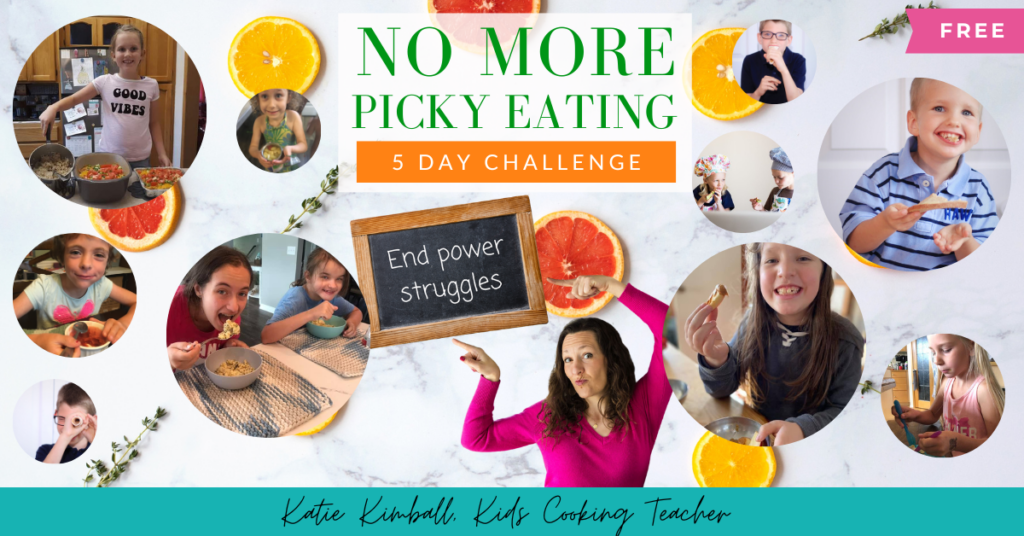
Spend just 30 minutes a day learning practical strategies that reduce mealtime battles and help kids build confidence with food.
Biggest Clutter Hotspots
- 46:08: I teased at the beginning that we’re going to talk about some of my clutter, one of my biggest struggles is that clutter keeps coming into our house. The mail keeps coming, the schoolwork keeps coming home, my kids would bring things home and gifts come in. Katy shares how she deals with gifts that she doesn’t want to keep.
- 47:11: There are things that come into your home and are there temporarily or you’re just not sure what to do with them, the more comfortable you can get with having a temporary home for things the better. There’s value in having a temporary housing spot for things.
- 51:09: Make the decision once. Only handle it once.
- 52:00: We leave you with one quick win for today. Focus on consistently getting rid of stuff. Do a decluttering audit. A decluttering audit is like a micro declutter session you attach to any other habit. Wherever you are doing that habit, you pick just a few things that are easy, superficial, low-hanging fruit clutter that you can put away. Establish a visible and accessible decluttering box.
Resources We Mention for Clutter Management
- Register for free for #LifeSkillsNow Season 3 Summer Camp!
- Katy’s courses:
- Maximized Minimalist podcast
- Tips for organizing a kid-friendly kitchen
- Budget-friendly organization strategies
- Find Katy online
- Follow her on Instagram
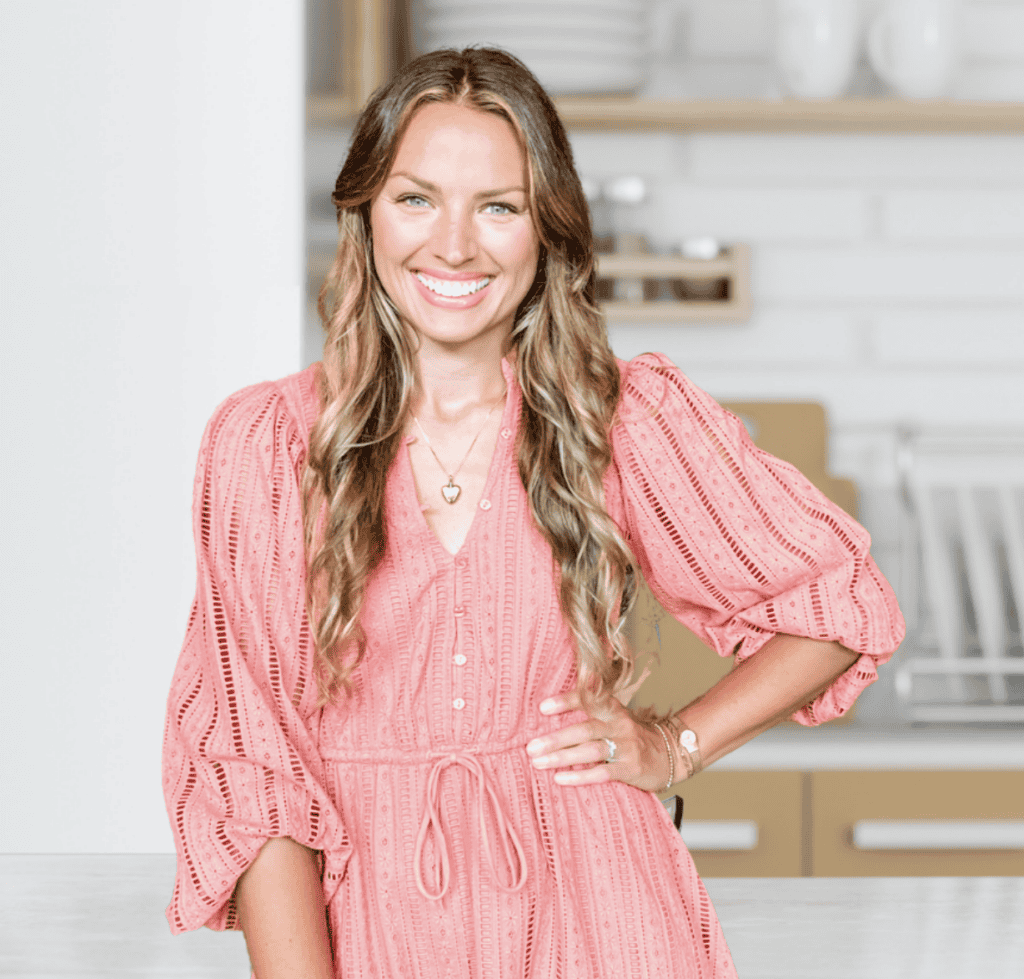 Through her best-selling declutter courses (The Clutter Cure®, The Toy Clutter Cure®, and 14-Day Clutter Crusher Challenge) and globally recognized Top-50 Podcast, Katy inspires a grace-filled, practical, and self-affirming sense of “Wow! I really can do this!” for over 250,000 families across the world.
She proves that by moving away from surface-level strategies and into deeper conversations to solve clutter problems at their root, even beginners can bypass overwhelm and self-doubt and instead generate exciting momentum as they move closer to creating a home they love that allows them to focus on what truly matters.

Leave a Comment