
Today I’m going through my top 5 tips to help you stress less while teaching your kids to cook! Don’t allow overwhelm to prevent you from connecting with your kids in the kitchen while you pass on valuable life skills!
It’s the season for making memories with your kids in the kitchen! Use these tips to keep those memories happy rather than ending in stress and tears.
I recorded this on Facebook live and towards the end it glitched and stopped recording. So if you’re just watching the video scroll down to the bottom of this post to read about the last 2 tips!
Can’t see the video? Watch here on YouTube!
No time for the video? Here are the notes!
5 Tips for Teaching Kids to Cook
- 0:07: We want to spend time together as a family during the holiday season, but I know there’s added stress with having kids home over Christmas break. We want to make memories as we bake cookies with our kids and it doesn’t always go as planned.
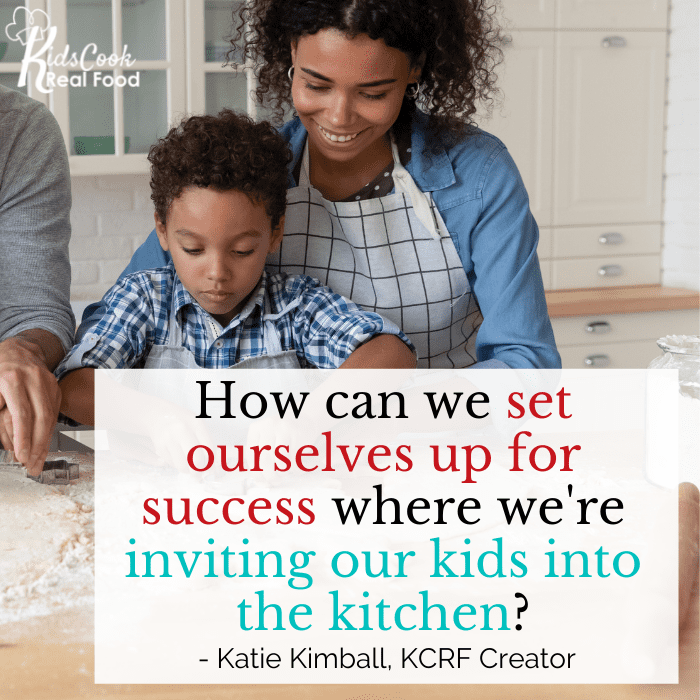
- 1:44: Step number one is to focus on skills, not recipes. Learning a recipe can be a stepping stone to learning to cook, but knowing how to cook means they know the skills to make a variety of recipes. More tips for teaching skills not recipes.
- 3:12: When you’re making a recipe with your kids, intentionally point out and teach the skills involved. I list some of the individual skills commonly used to make cookies.
- 5:05: This may sound more overwhelming, but you can choose only 2. Have your kids alongside you while you cook, and just pick a couple of skills to focus on today.
- 5:56: This leads into step number two which is to break things down into tiny pieces. If you know you’re planning to bake cookies on the weekend, pull a kid aside and teach them how to measure with a teaspoon one day during the week for 5 minutes. Cooking lessons don’t have to be hours in the kitchen.
- 7:37: With little ones, especially 5 and under, expect lots of messes. Their motor skills are just not developed enough to measure or stir without spilling. I have a fun activity you can try to help you build empathy for their lack of fine motor skills.
- 8:26: With bigger kids, we sometimes don’t expect enough of them in the kitchen.
And then…technical difficulties hit!
The last 3 minutes of the video disappeared into the interwebs, so I’ll re-create their magic in text:
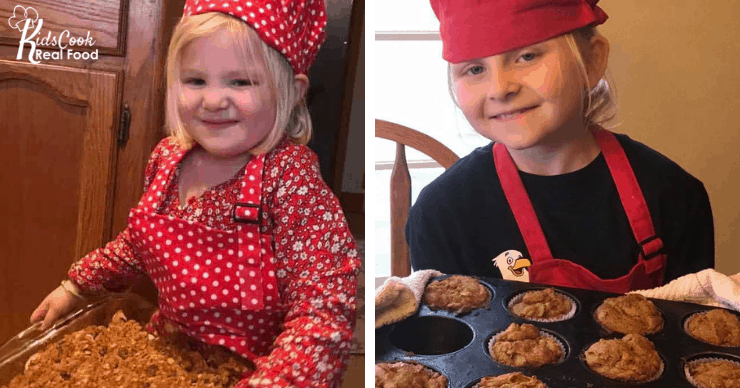
- Once a child can read, we really need to raise the bar in the kitchen. They can be capable of so much more, including sharp knives, working at the stove, and starting to follow an entire recipe by themselves.
- Step four is to keep a positive atmosphere. The last thing we want when we get up the guts to say “yes” to our kids in the kitchen is a stressful, short-tempered, punitive experience. That quickly teaches kids that they don’t actually want to spend time in the kitchen, and you’ve lost their motivation and your helpers. Going into the kitchen with intentional goals, including keeping your emotions in check, is a good start. But the most practical tip to keep it positive is actually step five:
- Don’t teach kids new cooking skills right before dinner! That power hour is often time-crunched and way too stressful. Here’s more about why this is the worst time to teach kids to cook!
- Use a “yes, and” approach instead. “Yes, you may help, and we’re going to plan a time tomorrow right after snack to teach you the skill of ___________. For right now, I’m rushing, but can you set the table for me please?” (or something similar)
- Once you have taught your child a skill, THEN they can get practice on that skill right before dinner and it’s not nearly as stressful, especially if you use the bonus tip: Set up the kids to work at the table. Table height is better for our elementary-aged kids anyway as it hits them at the belly button if they stand, so it’s ergonomic for their arms/hands. For our little ones, being on their knees on a chair at the table is easier and safer than climbing up on a big chair or stool at the kitchen counter.

Just yesterday, my 7-year-old, Gabe, was grumpy and lonely as I was making dinner. I asked him if he wanted to wash some sweet potatoes for me.
This isn’t a task he’s well trained on, but I decided that if the job was done imperfectly, I could still peel the veggies without even “correcting” his work. I washed the first sweet potato so I wasn’t waiting for him, and as he climbed up to the sink, I was able to begin peeling.
He washed the remaining three produce items and asked if he could take over peeling. Because that IS a skill he’s been trained on, although with a long, straight vegetable like a cucumber, I was able to hand him a second peeler and cutting board and let him practice without worry.
Although the sweet potato was a new shape and a big challenge for him, he persevered, I reached over to help him get the right angle once, and he ended up peeling the whole thing.
It didn’t slow me down in the least, and we were able to spend time together instead of me saying, “I’m in a real hurry, Buddy, sorry I can’t read to you. Go find something to do by yourself…”
By the time he finished peeling one sweet potato, I had the rest peeled and cut and was ready for his. His brother and sister walked in and started meal prep jobs of their own, and Gabe wasn’t lonely anymore!
With these five tips and some intentional skill training, your family will be able to work together to get dinner ready without stress (ok, let’s be honest – with less stress some of the time!) and you’re building skills that will last a lifetime!
Resources We Mention for Teaching Kids to Cook
- Get your kids started in the kitchen with Kids Cook Real Food™
- Why you should teach skills not recipes
- The worst time to teach kids to cook


Leave a Comment