Back to school brings a lot of anxiety for kids, and the more they know how to navigate big emotions and master social communication, the better off they are.
It turns out that daily life delivers a plethora of opportunities to help our kids learn how to be social and emotional beings, and my guest today, speech therapist and SEL expert Elizabeth Sautter, will help us see how to be intentional about those opportunities even in the midst of our busy lives.
The dinner table and work in the kitchen are incredible arenas to teach kids just about anything, and social and emotional growth is huge. We’ll talk about:
- Modeling emotional regulation and how we talk to ourselves
- Fascinating strategies to help kids build awareness of their surroundings and other people’s nonverbal cues (one of which might even decrease the number of times you have to answer, “What’s for dinner?”)
- How to set your kids up for success with priming
- What to do when YOU make a mistake or miss an opportunity for social or emotional learning and the additional opportunity that presents
- How to help your children be more resilient to the meanie pants kids out there
- What all this does to support neurodiverse kids (e.g. autism, ADHD, etc)
- A silver lining to life in the pandemic that can give us all hope
Can’t see the video? Get practical strategies for teaching social and emotional learning on YouTube!
No time for the video? Here are the notes!
Teaching Social and Emotional Learning at Meal Time
- 0:15: Today we’re talking about how social and emotional learning happens all the time at the table and in the kitchen. We’re going to keep this practical and simple for you busy parents!
- 2:02: Elizabeth shares her background with us and how she developed a passion for helping kids with social and emotional learning.
Like it or not, we are models for our children. -Elizabeth Sautter
- 4:20: Elizabeth tried doing worksheets and activities with her own son to teach him emotional regulation and social skills, but she realized that worksheets don’t make skills stick. Instead, she incorporated learning into daily life to make a bigger impact.
Teaching Emotional Regulation Skills
- 6:42: Now more than ever, kids need “soft skills” that aren’t taught in textbooks. How do we help our kids navigate big emotions? Hopefully, you’re making an effort to eat dinner together as a family several times a week and this is a great opportunity to practice some strategies.
- 7:49: Teaching emotional regulation starts with the parent. If you struggle to regulate your own emotions, how can you expect to teach your kids? Don’t let this overwhelm you! Start by looking at how you talk to yourself and make sure it’s supportive.
- 9:26: One simple practice at mealtime is to take deep breaths to calm the nervous system before we eat.
- 10:16: Sometimes I’m amazed by the lack of awareness my kids show for their surroundings. How can we develop social awareness in our kids? We want to bring awareness to non-verbal communication and context in people and objects around us. Elizabeth has several tricks to teach non-verbal communication awareness.
- 13:53: I hear from a lot of parents that one of their biggest mealtime struggles is that their kids don’t sit at the table. Elizabeth shares her perspective on this issue. She has some great practical tips.
Set your kids up for success at the table by practicing dinnertime conversation. -Elizabeth Sautter
- 17:37: Kids are experiencing more social anxiety than ever – what are some of the best conversations parents can have with kids that model healthy social interaction? Having a set of daily questions that adds structure to your meal helps ease anxiety.
- 19:45: Sometimes kids can be downright mean to each other. We want to teach our kids to be resilient in these situations so that it doesn’t lead to further anxiety over social interactions.
Kids don’t need plastic knives. They need real skills.
Teach safe technique, focus, and confidence in the all-time fav lesson from our kids cooking class! (ages 2-12)
- 23:03: As a parent, you don’t need to plan ahead in detail how you’re going to implement all these strategies. Give yourself grace. Have the information, and as situations arise, bring them up with your kids.
- 24:44: When you do mess up, apologize to your kids. Acknowledge when you don’t handle something well and model repairing the relationship when you’ve wronged someone. We are not perfect and we want our kids to know that.
- 26:54: Obviously I’m a huge proponent of teaching kids to cook. The kitchen is an excellent classroom for all kinds of learning. Here are some of my thoughts on social and emotional learning in the kitchen.
- 28:25: You can teach kids to consider other perspectives by discussing where food came from and how it got to your home. Model gratitude for all the people who worked to bring the meal from a farm to your table.
- 29:33: Cooking helps kids learn sequence-building skills, and how to plan ahead. Elizabeth shares a strategy called “Get ready, Do, Done” from Sarah Ward.
- 30:57: Systemize meal planning to reduce decision fatigue on your part. Taco Tuesday, Pizza Friday, etc take that decision off your plate.
“I just want my kids to eat what I make!”
This free 5-day challenge was made for you.
Spend just 30 minutes a day learning practical strategies that reduce mealtime battles and help kids build confidence with food.
- 32:27: Mindfulness is key to emotional regulation. If you can manage your own emotions and understand the emotions of others then you can interact socially with more confidence. Start this simple stress relief practice here.
- 33:08: We look at how social and emotional learning strategies work with families with neurodiverse kids.
- 35:40: Elizabeth has a course and community to help parents teach social and emotional skills to their kids. She shares a bit about the program with us.
- 37:00: We leave you with a message of hope today. Include some form of intentional connection every single day with your kids.
Resources We Mention For Teaching Social and Emotional Learning
- Make it Stick Parenting
- Tips to start having family dinners
- Some of my thoughts on social and emotional learning in the kitchen
- Get ready, Do Done from Sarah Ward
- Meal planning is key to healthy eating
- Start mastering your stress today with one simple stress-relieving practice
- Connect with Elizabeth on her website
- Follow her on social media: Facebook, Twitter, Instagram, Pinterest
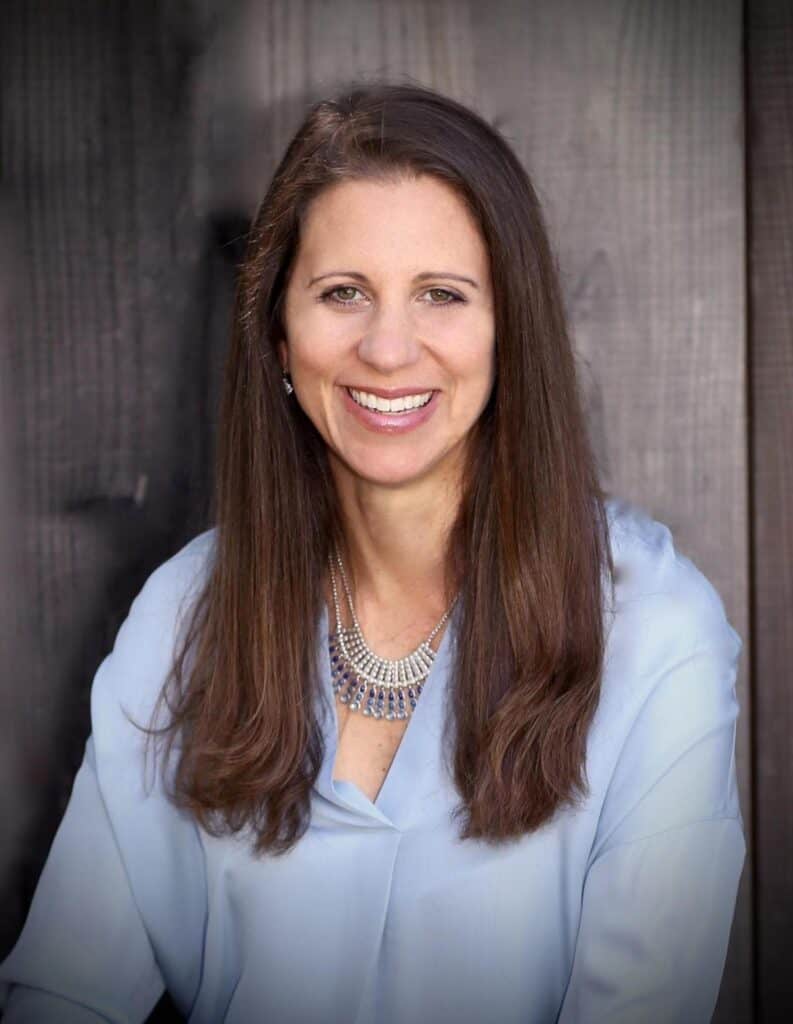 Elizabeth Sautter, M.A. CCC-SLP is a speech therapist, speaker, and author specializing in social and emotional learning since 1996. She is the co-owner of Communication Works which provides speech therapy to schools and individuals in the SF Bay Area.
Elizabeth is the founder of Make Social Learning Stick where she provides consultation, training, and resources, and the co-creator of the Make it Stick Parenting online course and community. Author of the Mom’s Choice award-winning book, Make Social and Emotional Learning Stick: Practical Strategies to Help Your Child Manage Emotions, Navigate Social Situations and Reduce Anxiety, she has also created two card decks that teach what to say & do with your child to build social and relationship skills, as well as co-authored the popular children’s books Whole Body Listening: Larry at Home and Whole Body Listening: Larry at School.
Elizabeth is a Collaborative Zones of Regulation trainer and a co-author of the Zones of Regulation game, storybooks, and card decks.
As a mom of two teen sons with additional needs as well as a therapist (a.k.a. “momathist”), Elizabeth Sautter is passionate about supporting children, teens, and their families with social and emotional learning. Her mission to help kids manage emotions, navigate social situations and reduce anxiety goes beyond a career and is very personal to her.

Leave a Comment