
This is a guest post from Mary Voogt, NTP of Just Take a Bite.
I was making homemade mac ‘n’ cheese and wanted some quality protein to go with it. I typically make some kind of sausage (like this simple homemade sausage). But I realized we only had one pound of ground pork left. How could I stretch that for six people and have everyone get enough?
I couldn’t really. But I decided to play a mental game and make mini sausage meatballs. When my kids see meatballs, inevitably the first question they ask is, “How many can I start with?”
I was happy to be able to still say, “Start with three.” But what I didn’t expect was that they would all go crazy for the meatballs…simply because of the size! Especially my youngest daughter that has had the most feeding challenges.
Why Food Size Matters for Picky Eaters
Believe it or not, food size does matter to kids! Especially picky eaters.
If you have a child that struggles with picky eating, sensory processing disorder (SPD), a tongue tie, or any other feeding challenge, you know that how a food is served or how it looks can be a big deal.
RELATED: Make salad more appealing to kids with the tiny salad trick!
The truth is, we eat with our eyes before our mouths. This means size really does matter.
In addition, a child’s nervous system plays a huge role in how he or she eats. Eating has to feel safe.
If a child struggles with undereating, a big burger or a large bowl of soup can actually cause anxiety or trigger a traumatic stress response. It is too much too soon and the body goes into a freeze state.
This leads to the inability to eat anything and to even think clearly. This is not the time to try to get your child to make a decision about their food. They have already shut down.
A child with oral SPD may associate a large food item with the fear of choking or gagging. Again, the nervous system takes over, preventing the child from eating well. Taking a few minutes to calm the fight or flight response here will be much more effective than trying to help your child take a bite.
Even if there are no true feeding challenges, large items on a plate can be overwhelming to a child – especially a young child. They may associate it with meeting expectations or they simply may eat intuitively and know they can’t eat that much.
Bottom line – for many children, big food equals poor eating.
RELATED: Find your child’s eating style to end mealtime battles.
Choosing Food for Picky Eaters
A simple, yet very effective strategy for feeding picky eaters is to make it mini!
Small portions or small-scale foods feel safer. Plus many kids simply think they are fun!
Even with mini versions of their favorites, kids can get a full serving. You might be surprised that they go for seconds or even thirds when their portions feel manageable and their nervous system does not go into a stress response. It’s the baby steps approach to a relaxed meal.
This approach also works well if you have a snacker – the kid that just wants snacks all day. Mini foods feel more like snacks. You can even call it a snack instead of a meal. They will be more likely to eat nourishing foods for a “snack” instead of the typical starchy, processed options.
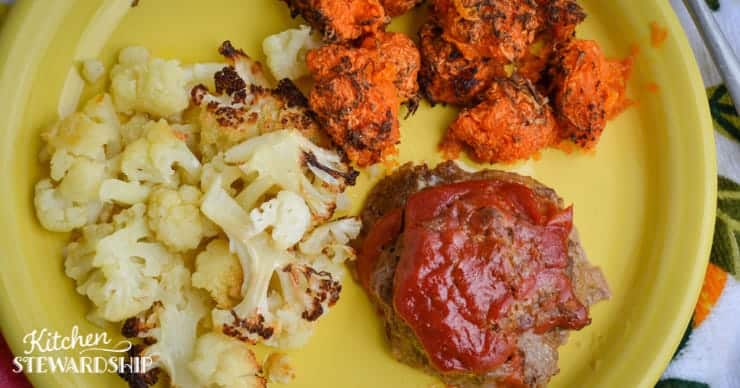
Making Small Food for Picky Eaters
There are many foods that can be served in a smaller version. Some great options include:
- Meatballs
- Burgers
- Meatloaf
- Hot dogs (grass fed beef cocktail sausages are just like mini hot dogs)
- Veggies cut in smaller pieces (serve raw, cooked, or roasted)
- Roasted potato cubes
- Sweet potato tater tots
- Cut up fruit (serve it on toothpicks or popsicle sticks like mini kabobs for extra fun)
- Cubed cheese
- Pureed Soup (served in a small bowl or mug with a straw)
- Muffins
- Egg muffins
You can always just take your child’s favorite food and find a way to make it in a smaller version. Even using small bowls and plates can make a difference.
Mini Meatloaf For Picky Eaters
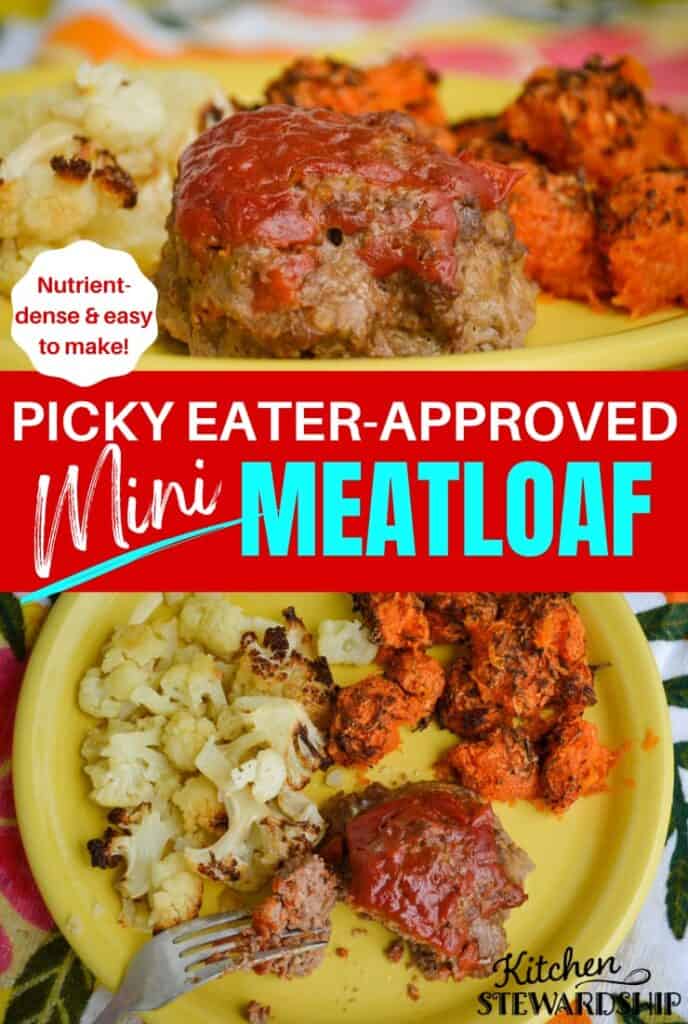
One of my kids’ favorite mini foods is meatloaf. They love the manageable size (and the ability to get seconds for the older kids) and the fact that they can choose their own instead of everyone dishing up from the same loaf.
The prep time is really no different than if you are making a single meatloaf. And the reward of having everyone happily eat dinner is definitely worth it.
This mini meatloaf recipe has a sauce baked on top. If your child does not like the sauce or does not tolerate nightshades, go ahead and leave it off. Or make it a family project to create a few sauce options to choose from. My kids prefer a tomato-based sauce. I personally love my meatloaf served with mayonnaise.
Mini Meatloaf Recipe
Ingredients:
- 2 lbs. grass-fed beef or lamb
- 2 free-range eggs
- ⅓ cup milk, milk substitute, or applesauce
- ½ cup organic quick oats
- 1 tsp. unrefined sea salt
- ½ tsp. organic garlic powder
- ½ tsp. organic onion powder
- 1 – 2 tsp. desiccated liver powder (optional)
- 1 – 2 Tbs. non-fortified nutritional yeast (optional)
Sauce:
- ½ cup organic ketchup or tomato paste
- 1 ½ Tbs. organic mustard
- 2 Tbs. honey or maple syrup
Directions:
- Heat oven to 375 degrees F.
- In a large bowl combine the beef, eggs, milk, oats, seasoning, liver, and yeast. Mix until well-combined.
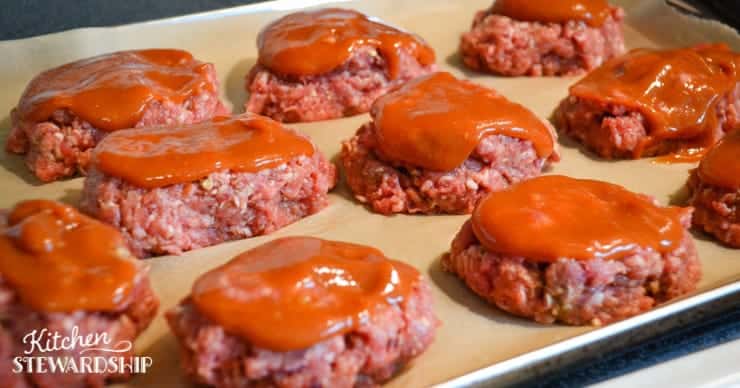
- Shape the meat into 7-9 mini meatloaves and place on a large baking sheet.
- In a small bowl mix the sauce ingredients until thoroughly mixed.
- Top each mini meatloaf with sauce.
- Bake in the preheated oven for 30-40 minutes, until cooked through.
- Serve with additional dipping options if desired.
Kids don’t need plastic knives. They need real skills.
Teach safe technique, focus, and confidence in the all-time fav lesson from our kids cooking class! (ages 2-12)
What are the Best Foods for Picky Eaters?
As luck would have it, the next time I made mac ‘n’ cheese I was in a rush and didn’t have time for rolling mini meatballs.
My daughter asked if we were having mini meatballs again…and was disappointed when I said no. Lesson learned! I now know that she still has unresolved trauma related to her early days of feeding challenges. So small portions help her feel safe around food and calm her nervous system.
We live in a supersized culture. But when it comes to kids – especially picky eaters or problem feeders – bigger doesn’t always mean better! Make mealtimes more pleasant for everyone with mini foods!
What foods could you serve in smaller sizes? Give it a try and see if it changes the way your kids view their food!
 Mary is a homeschooling mom of four with a passion for feeding kids well. She’s been blogging at Just Take A Bite for over 11 years, sharing recipes and advice on feeding kids and working around allergies. With a background in engineering, she loves to solve problems. That means finding root causes and a path forward to good health. She became an NTP, Nutritional Therapy Practitioner, to go deeper into nutritional profiles for children. Her kids have had a ton of food allergies, and through that Mary has discovered that HOW kids eat is even more important than WHAT we feed them. She helps parents work through any feeding challenge to keep their kids healthy. Mary wants to give parents HOPE, no matter how big the struggle. Your child can eat well and feel great!

Leave a Comment