What if one of our most loving parenting instincts is accidentally making our kids less confident?
Oof.
As parents, we’re wired to help. To reassure. To rescue. To make the crying stop in the grocery store before everyone in aisle seven starts judging us. (You know what I mean?)
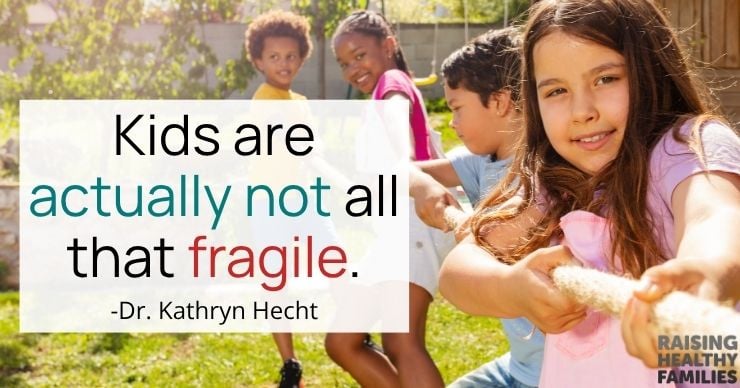
But child psychologist Dr. Kathryn Hecht says kids aren’t nearly as fragile as we sometimes treat them.
In fact, they need age-appropriate challenges to build what she calls “handleability,” that deep-down belief that says: This is hard, but I can handle it.
I absolutely loved this conversation because it gets right into the practical question so many of us are wrestling with: How do we raise kids who can actually handle hard things?
We dig into:
- Why constantly removing obstacles can undermine a child’s confidence, even when we’re doing it out of love
- The fascinating idea that kids are anti-fragile, and why some stress and challenge actually help build emotional resilience
- Why “healthy kids = happy kids” is a parenting myth we may need to toss out
- How rescuing a child brings short-term relief but can create more distress long-term
- Why our kids sometimes interpret our help as evidence that they couldn’t have handled it themselves
- What “coping efficacy” or “handleability” looks like in normal family life, without turning your home into a psychology clinic
- Why exposure therapy is much less scary than it sounds, and how parents can help kids take small, voluntary steps toward something difficult
- The difference between roller-coaster scary and horror-movie scary, and why that distinction might completely change how you help an anxious or hesitant child
Dr. Hecht has this incredible ability to take clinical psychology and turn it into language that makes you think, “Ohhhh. I can actually use this with my kid.”
And I have a feeling you’ll finish this one looking at your child’s next hard moment a little differently.
Love the Handbook?
Find all the episodes of the Healthy Parenting Handbook here, or listen on your favorite podcast player:





Don’t forget to leave us a review on Apple Podcasts too! Thank you!
Can't see the video? Watch on YouTube →
YouTube Shorts for This Episode
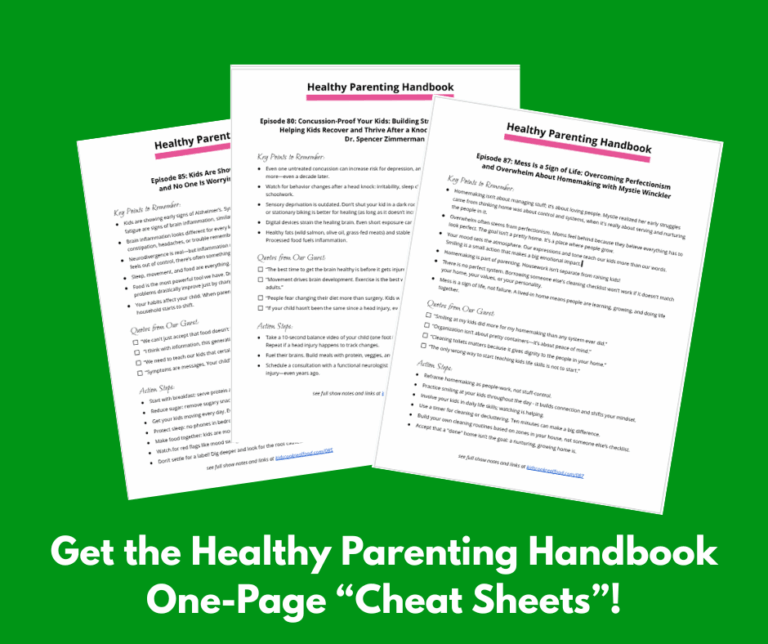
Turn expert advice into a handbook you can actually use.
I’ve interviewed hundreds of incredible experts on the Healthy Parenting Handbook podcast! Out of time to listen? You can skim on your phone!
These one-page summaries give you the highlights of every episode fast, so you can find what you need when you need it (and nothing to download).
100% privacy – You’ll also get Katie’s email newsletter with more practical tools for raising capable, confident kids. Change your preferences easily any time.
Key Takeaways about Raising Resilient Kids
- Really, go watch Dr. Kathryn’s TEDx Talk first!
- Kids build confidence and resilience by facing age-appropriate challenges, not by having every difficult or uncomfortable experience removed for them. Kathryn mentions Julie Lythcott-Haims’s book How to Raise an Adult. Here’s my interview with Julie.
- When parents repeatedly rescue, reassure, or remove discomfort, kids may feel better in the moment but can begin to believe that the situation was dangerous or that they were not capable of handling it themselves.
- Healthy kids are not necessarily happy and comfortable all the time, and a better goal is helping children develop “handleability,” the belief that something can be hard and they can still handle it. I love this – totally what we want to happen with #LifeSkillsNow!
The Picky Eater Playbook: Get Pre-Order Bonuses!
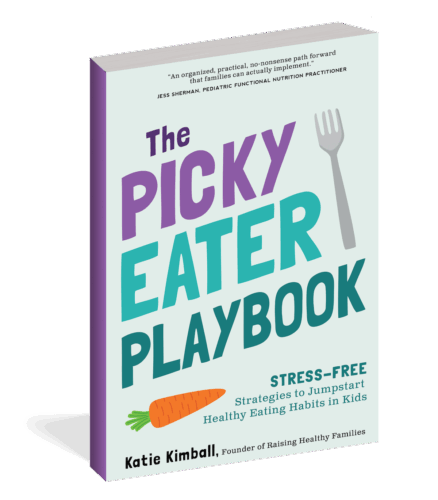
My first traditionally published book releases November 10, 2026! The Picky Eater Playbook: Stress-Free Strategies to Jump Start Healthy Eating Habits in Kids is packed with real-life stories, flexible strategies, and step-by-step routines to turn dinner from a power struggle into something the whole family can enjoy.
If you’ve done the No More Picky Eating Challenge and want to have all my strategies at your fingertips, it’s the perfect resource! Or if you’re just beginning to tackle dinnertime struggles at your house, it will walk you through my whole system for eliminating picky eating.
Pre-order now and get some amazing bonuses!
Learn More about The Picky Eater Playbook- Children are more “anti-fragile” than we sometimes assume, which means manageable stress and challenge can strengthen emotional resilience just as physical exercise strengthens the body.
- Helping a child become brave does not mean forcing them into frightening situations, but instead encouraging small, voluntary steps toward something that feels uncomfortable or scary.
“If we reduce a child’s capacity for agency, we are reducing their confidence in themselves.” – Katie Kimball, Raising Healthy Families
- Parents can make hard experiences feel more manageable by explaining what is happening, showing children that the challenge is possible, adding playfulness when appropriate, and cheering them on as they practice.
Action Steps from This Episode
- Notice when your instinct is to immediately fix, rescue, reassure, or remove a challenge, and ask yourself whether your child is actually unsafe or simply uncomfortable.
- Give your child opportunities to handle small, age-appropriate frustrations and challenges before stepping in to solve the problem for them.
- When your child says something feels scary or hard, acknowledge the feeling while also communicating confidence that they can handle the next small step.
- Break intimidating situations into smaller “bravery workouts” so your child can gradually practice moving toward the challenge instead of avoiding it completely.
- Praise your child for being willing to try, tolerate discomfort, and keep going rather than focusing only on whether they succeeded or felt happy.
- Look for everyday opportunities to let your child practice independence so they can gather real evidence that they are capable of handling difficult things.
Resources We Mention for Raising Resilient Kids
- See Dr. Kathryn’s books:
- The Be Brave Activity Book: 100 Exposure-Based Challenges That DARE Kids to Boss Back Their Worry and Anxiety Once and for All (Amazon/Bookshop.org)
- Releasing in February 2027 – The Can-Do Activity Book for Kids: Try Things on Your Own, Deal with Big Feelings, and Grow Confident Along the Way (Amazon/Bookshop.org)
- Watch Dr. Kathryn’s TEDx Talk, “How to raise kids who can handle hard things”
- How to Raise an Adult by Julie Lythcott-Haims and my interview with Julie
- Get your kids started learning to do hard things with #LifeSkillsNow!

Kathryn Hecht, PhD is a Minnesota-based child and adolescent clinical psychologist, author, and outspoken advocate for children’s mental health. A sought-after speaker, she presents nationally on pediatric anxiety and OCD and serves as pediatric training faculty for the International OCD Foundation’s Behavior Therapy Training Institute. Dr. Hecht is the author of The Be Brave Activity Book and a partner at Anxiety Treatment Resources. Her recent TEDx talk on brave parenting was selected as a TED Editor’s Pick.

Leave a Comment