
Did you know 50% of girls dislike their bodies as they enter high school—and some of those habits start as newborns?!?
Family nutrition expert and mom Maryann Jacobsen, RD and I sat down to dig DEEP into how we talk about food with our kids, and why simply “not talking badly about our weight” is superficial advice destined to fail.
From womb to college, this information will help you take positive steps in your parenting journey (and stress a little less at each stage). A quick overview of what you’ll learn:
- Why not knowing how to eat cookies developed an awful relationship with food for Maryann – and the magical moment that turned that around for her. (She knows how to eat cookies now!)
- Why defining a “healthy relationship with food” is a huge question with a bigger answer.
- How Americans misunderstand “moderation” – and we both get a little frustrated by this excuse!!
- The best way to feed (and not feed) your baby in the first 1,000 days.
- Why all toddlers are picky and the strategy to get through it (ages 2-6). It’s not your fault, tired parents!!
- How to deal with the influence of other people feeding your children (yes, we go there with food after sporting events, but Maryann’s answer may surprise you).
- The deep hurt body image causes to our relationship with food and others – and the discussions needed to prevent and remedy negative body image. Moms of girls especially, you NEED this section!!!
- Why picky eating can be a GOOD thing!! 😮
…and so much more. This is a power-packed interview that every parent needs to hear!
Can’t see the video? Click to watch “Powerful Eating” on YouTube.
No time to watch the whole video? Here are the notes!
Powerful Eating Video Time Stamps
- 0:19: Maryann Jacobsen is a dietitian who followed her passion of becoming a writer. People have been asking me for ages if I could interview her. I recently was invited to be interviewed on her “Healthy Family” podcast which you can check out here.
- 1:24: Maryann shares how she became interested in nutrition and pursued writing as her way of sharing information with people.
- 3:12: As Maryann studied nutrition, she found herself being very dogmatic, afraid of fat and carbs, unable to indulge in a treat without bingeing and she struggled to eat in a way that made her feel good. After her internship for school, she realized her views on eating had changed and began looking into how her attitudes had developed over the course of her life, and what was different now.
I didn’t know how to eat cookies…I was afraid of food. -Maryann Jacobsen
Creating a Healthy Relationship With Food
- 6:45: Maryann defines a “healthy relationship” with food as listening to your body, seeking nutritious foods because they make you feel good rather than out of obligation, separating food from emotions and being able to regulate your food intake.

- 8:05: A healthy relationship with food is really just one aspect of a healthy relationship with one’s body and oneself. There are so many life factors that contribute into how we relate to food and eating.
- 9:20: So many people don’t know how to tune in to their body and pay attention to how they feel.
- 10:07: Maryann talks about moderation a lot in her book “How to Raise a Mindful Eater.” It has become an excuse for some people to say “everything in moderation” as they indulge in something they feel guilty about eating. Maryann describes how she views moderation with a healthy mindset.
A Child’s Healthy Diet Is Different than Adults’
- 13:10: Kids regulate themselves differently than adults. They may eat a large dinner and not much for breakfast, or a bunch of protein one day and more carbs the next day.
- 14:21: In Maryann’s book, My Body’s Super Power, she has a hunger scale to help you teach your kids how to evaluate how hungry they are. Ask them questions before a snack or meal to help them determine what type and how much food their body needs at that time.

- 15:58: It’s important to have structure around eating. For example, eating meals around the table and having certain times that you eat. Maryann’s book Fearless Feeding is a great resource for this.
- 18:04: Maryann goes through some helpful tips for each stage of childhood development. You may be surprised when feeding issues can start developing.
- 20:14: In toddlerhood many kids start rejecting foods and becoming “picky.” How the parent responds can lead to negativity around eating.
- 21:29: As kids enter school they encounter all the outside influences and snacks in the classroom. They are able at this point to learn more about how different foods make them feel and how to eat sweets without mindlessly bingeing.
- 23:05: Puberty leads to increased hunger and growth, a need for independence, a heightened awareness of body image, the ability to understand more specific nutritional concepts and take ownership of what they eat.
Girls need to know that it’s normal to gain weight around the middle as they enter puberty. -Maryann Jacobsen
Kids don’t need plastic knives. They need real skills.
Teach safe technique, focus, and confidence in the all-time fav lesson from our kids cooking class! (ages 2-12)
The Difference Between Boys and Girls and Their Body Image
- 25:43: Both boys and girls gain weight during puberty, but girls particularly gain a lot of fat to prepare for the onset of their menstrual cycle. There’s a phenomenon called “weight misperception” today where many girls incorrectly think they’re overweight due to the media’s portrayal of “normal.”
- 26:58: Research shows that if you have a healthy body image you’re more likely to eat well, sleep better, be in a better emotional state and generally take good care of your body. About 50% of girls ages 9-14 don’t feel good about their body. Many times they just don’t know what’s going on as they’re experiencing changes.

- 28:11: We can teach kids about nutrition and health, but if we don’t address body image, we’re leaving out a significant aspect of their relationship development with their body and food.
Kids don’t need plastic knives. They need real skills.
Teach safe technique, focus, and confidence in the all-time fav lesson from our kids cooking class! (ages 2-12)
We need to shift how we look at our bodies to appreciating it for what it can do instead of just looking at it as an object that’s supposed to look a certain way. -Maryann Jacobsen
- 30:17: Ask your kids what they appreciate about their body. If you have a child who complains about certain aspects of their body, see if you can brainstorm ways to view that same trait in a positive light with them.
- 32:01: Boys go through puberty slower than girls. They tend to have their biggest spurt of growth at the end. A boy who grows later is more at risk for body image problems, whereas a girl who develops early is more at risk.
- 33:14: Another of Maryann’s books, From Picky to Powerful, empowers kids to make healthy choices for themselves. Maryann shares some of the positive aspects of picky eaters and how to empower them in their strengths versus focusing on their weaknesses.
- 38:06: We end of Maryann’s message of encouragement for parents. It’s a good one, don’t skip it!
“I just want my kids to eat what I make!”
This free 5-day challenge was made for you.
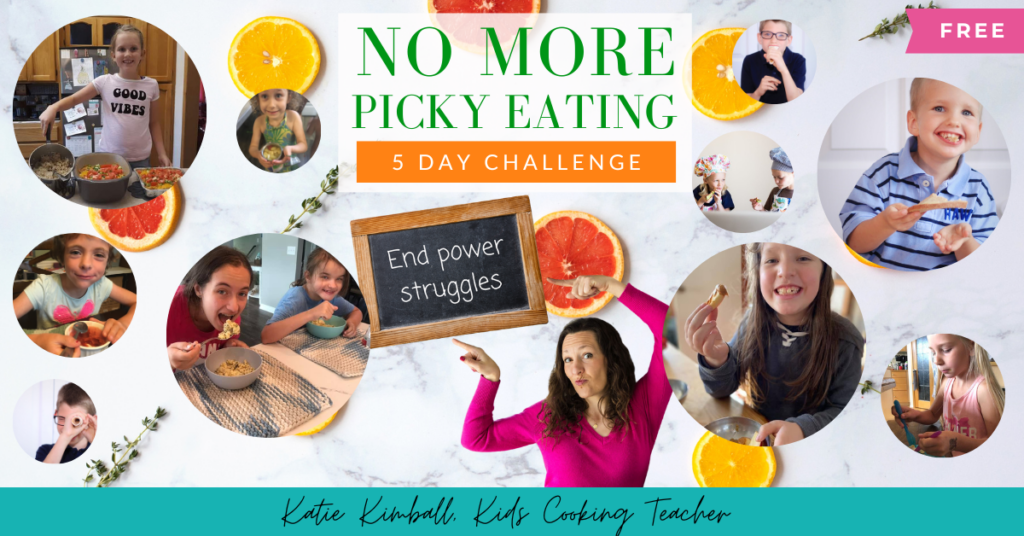
Spend just 30 minutes a day learning practical strategies that reduce mealtime battles and help kids build confidence with food.
Resources We Mention About Food Relationships
- Here’s a Kitchen Stewardship post about DHA, an important nutrient for infants
- Division of responsibility by Ellyn Satter
- Maryann’s books: Fearless Feeding, From Picky to Powerful, The Family Dinner Solution, How to Raise a Mindful Eater, and My Body’s Superpower
- Sign up for the next No More Picky Eating Challenge
Find Maryann’s blog and podcast here


Leave a Comment