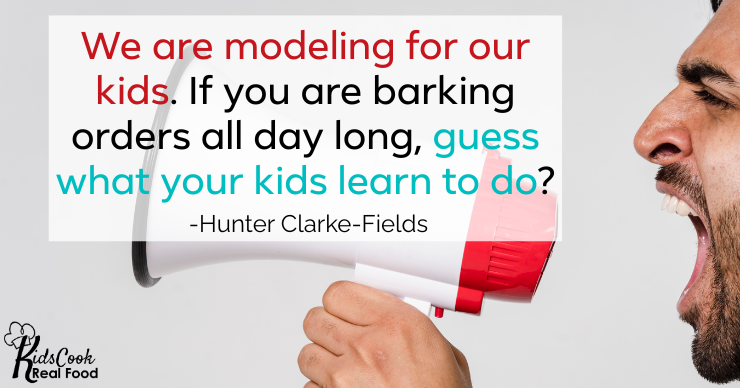
Raise your hand if you’ve ever yelled or lost your cool as a parent.
Keep that hand up if you thought you would never yell as a parent.
I know, right?
It’s the story of many who go on to be mindful or positive or grounded parenting experts. “I never thought I would…”
Me neither!
But you know what? Parenting is HARD WORK for NO PAY and you’re doing it for tiny people who are NOT GRATEFUL.
That means we need tools, and today’s guest will give you some powerful ones in the form of mindfulness for parents.
Hunter Clarke-Fields’ book, Raising Good Humans, includes a parenting manifesto with these lines:
“Mindful Parents value wisdom over reactivity, empathy over obedience, and begin anew every day.
Mindful Parents live what we want our kids to learn, knowing that the best parenting is in modeling.”
In this interview, we’ll discuss:
- Why we aren’t consciously choosing to be a yelling parent – it’s not our fault.
- How to unlearn the reactivity and relearn a new language of parenting
- Why obedience is not actually the right goal
- Why yelling isn’t actually effective
- Why it doesn’t help to pretend to be calm
- How kids trigger us and the pathway around those triggers
- The plan for handling tantrums
Tons of hope and encouragement – hit play!
Find all the episodes of the Healthy Parenting Handbook here, or wherever you get your podcasts:





Don’t forget to leave us a review on Apple Podcasts too! Thank you!
Can’t see the video? Watch Parenting Without Yelling here on YouTube!
No time for the video? Here are the notes!
Mindfulness for Parents
- 0:47: Today I’m talking with Hunter Clarke-Fields, best-selling author of Raising Good Humans and Raising Good Humans Everyday. We’re going to talk about the amazing things that will happen in your household when you work on mindfulness.
- 2:10: Hunter shares how she got passionate about mindfulness and the unique spin she puts on her teaching. More about highly sensitive kids here. The Thich Nhat Hanh books Hunter mentioned.
- 5:15: Mindfulness is the practice of putting your attention into the present moment with an attitude of kindness and curiosity. Most of us live our lives planning for the future or lost in the past, but not in the present moment.
- 6:29: Moms live in go, go, go mode. We’ve trained ourselves to fit small tasks into every minute of the day. We train ourselves to constantly be looking ahead for the next thing to be done, and we actually lose the ability to be mindful and present.
- 7:59: It’s called a mindfulness practice for a reason; it takes practice.
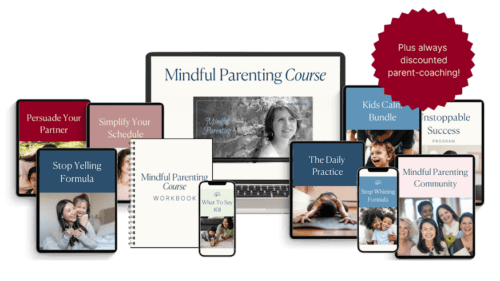
Learn more from Hunter Clarke-Fields with the Mindful Parenting Course!
Kathryn says, “Since joining Mindful Parenting, we’ve built a better connection and our days are filled with mostly teamwork, open communication, and naming our feelings and the reactivity is decreasing on both ends. Now, the evening routine is mostly relaxed and enjoyable!”
Benefits of Mindfulness
- 8:33: Practicing mindfulness helps parents be less reactive. When we’re in fight, flight, or freeze, we can’t engage our whole brain to make conscious choices, solve problems, and control impulses. We want to be able to choose how we react to our kids, not react on an angry impulse. Learn more about the lizard and monkey brain states that control our reactions.
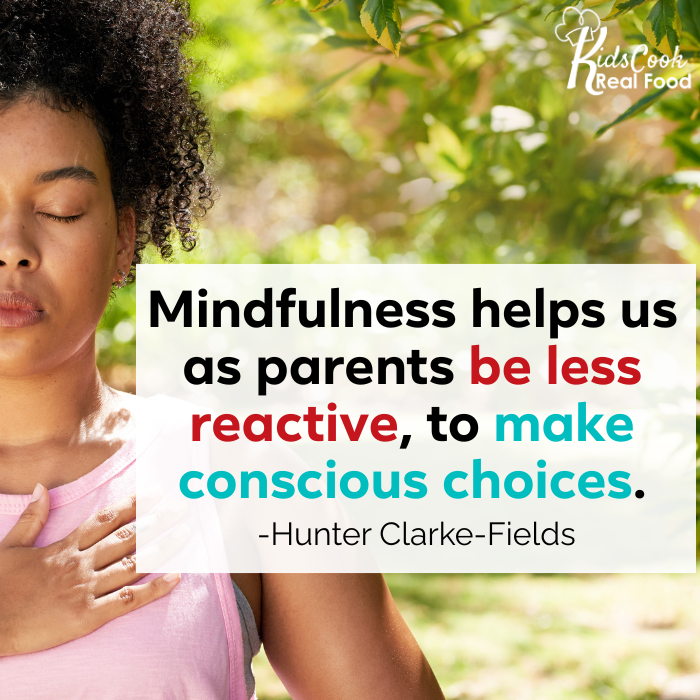
- 10:58: When we react to conflict with wisdom rather than impulse, we’re teaching our kids how to react as well. Sending a child to their room for fighting with a sibling doesn’t have to be a punishment. It’s modeling for your child that when you’re overwhelmed, you need to take a break to regulate yourself.
- 13:16: It’s never too late, we start fresh every day. No matter the age of your child, you can begin implementing mindfulness practice in your family.
- 14:41: Some old school methods of parenting are based on the idea that kids should fear us and be instantly obedient. This doesn’t create healthy, connected relationships, but these ideas are hard to break out of.
Parenting Without Demands
- 16:56: Commands create resistance. They often aren’t helpful. A really simple way to get around harsh commands is to think, “How would I ask my child’s friend (whom I don’t know well) to put their shoes on?” or “How would I let my respected, elder aunt know that it’s time to go somewhere?” You wouldn’t be barking out commands, you’d be respectfully communicating. Again, this models how your child should treat others.
- 19:40: “I messages” are an effective way to communicate with others in a non-confrontational way. Instead of blaming the child (i.e. “Why didn’t you clean this up?”), use “I messages” to let them know how it affects you. (i.e. “When you leave crumbs on the counter, I feel really frustrated and it makes extra work for mom and dad.”)
Kids don’t need plastic knives. They need real skills.
Teach safe technique, focus, and confidence in the all-time fav lesson from our kids cooking class! (ages 2-12)
Parenting Without Yelling
- 22:11: It’s ok to yell once in a while, we aren’t perfect robots. However, we don’t want to scare our children, and we want to model for them how to manage and recover from difficult emotions. Kids can’t hear what we’re saying when we send them into fight, flight, or freeze by yelling. Hunter has a “Stop Yelling Formula” course.
- 24:00: The first step to yelling less is to reduce your reactivity. If you’re so stressed out that any little thing is going to push you over the edge, that’s going to make you yell more, and that’s not your kid’s fault. Reducing your stress overall is probably the number one most important thing you can do to reduce your yelling is to reduce your overall stress.
So self-care is not selfish. It is actually taking responsibility, and it’s modeling how to be a healthy, happy human. -Hunter Clarke-Fields
- 25:06: Another tip is to start a mindfulness practice. Try taking a walk without your cell phone, sit and have a 3-minute meditation, introduce little pauses, and slow down your life.
- 25:50: The word “trigger” comes up a lot in Hunter’s book. Our kids have an amazing ability to trigger us into fight or flight by doing normal kid things. If you notice yourself having extreme reactions to certain behaviors, try to understand why. Does it bring up something from your childhood or an unresolved wound from your past?
- 28:22: In the moment, when you feel like you’re losing your calm, don’t pretend everything is ok or push through it. Name the feeling: “I’m feeling frustrated.” “I’m starting to get angry.” Then do something like remove yourself from the room, or turn your back, and take deep breaths.
- 31:22: As you take deep breaths, you can try mantras like “I’m helping my child.” “This is not an emergency.” “You can shake out the tension.”
“I just want my kids to eat what I make!”
This free 5-day challenge was made for you.
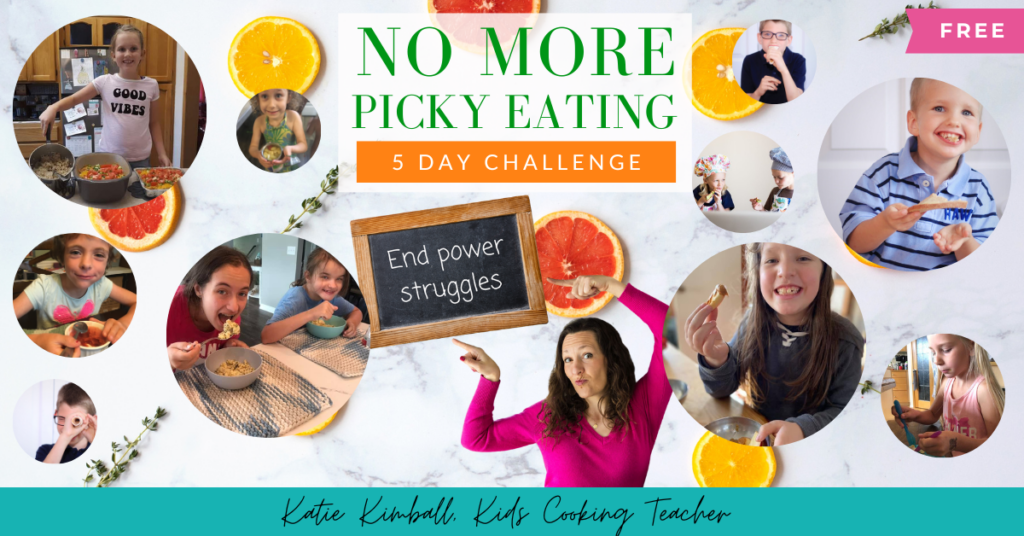
Spend just 30 minutes a day learning practical strategies that reduce mealtime battles and help kids build confidence with food.
Connecting With Your Kids
- 32:53: Hunter’s book is divided into two parts. The first is for the parents and has some tough truths in it. So many of us are doing things that disconnect us from our kids, even though we desperately want to build a connection. You need to be present with them, really listen to them without distraction.
- 36:10: When our kids come to us with a problem, we want to rush to fix it or give suggestions, but that isn’t always helpful. Reflective listening means you’re reflecting back what they’re saying to validate and show you’re hearing and understanding them.
- 37:05: You can even get the conversation started by asking, “Do you want help with this problem or do you need to vent?”
Mindfulness and Tantrums
- 38:29: Tantrums and mindfulness are about as far away as you can get in the dictionary of parenting. When a child is in a full-blown tantrum, all you can really do is be there with them. Take deep breaths, keep them safe, if you need to, go take a break, and come back. Talk about it later when everyone is calm.
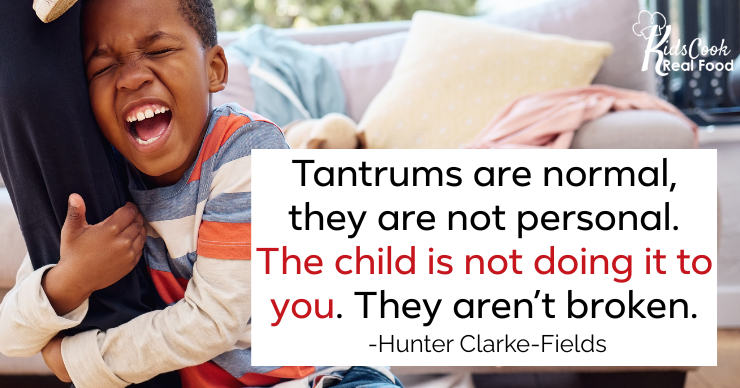
- 42:13: Work on yourself and heal baggage from your past rather than passing it on to your kids. This does get easier over time. Learning emotional regulation takes work on the front end, but it pays off in the long run.
- 47:28: We end with a message of hope: when you yell, you can repair the relationship.
Resources We Mention for Parenting Without Yelling
- Get Hunter’s books:
- Raising Good Humans: A Mindful Guide to Breaking the Cycle of Reactive Parenting and Raising Kind, Confident Kids: Amazon, Bookshop
- Raising Good Humans Every Day: 50 Simple Ways to Press Pause, Stay Present, and Connect with Your Kids: Amazon, Bookshop
- Raising Good Humans Guided Journal: Your Space to Write, Reflect, and Set Intentions for Mindful Parenting: Amazon, Bookshop
- Find Hunter online: Mindful Mama Mentor
- Follow her on social media: Facebook, Instagram, YouTube
- Hunter’s free guide to repair the relationship after yelling
- Hunter’s “Stop Yelling Formula” Course
- Some quick meditations to try
- More about highly sensitive kids here
- The Thich Nhat Hanh books Hunter mentioned
- Learn more about the lizard and monkey brain states that control our reactions

Hunter Clarke-Fields is the host of the Mindful Parenting Podcast (Top 0.5% podcast), a global speaker, #1 bestselling author of Raising Good Humans and Raising Good Humans Every Day, Mindfulness Meditation teacher, and creator of the Mindful Parenting Course and Teacher Training. With over 20 years of experience in meditation and yoga practices, Hunter has taught mindfulness to thousands worldwide.

Leave a Comment