
Kelly Brogan, MD is an expert in fighting depression and anxiety as a psychiatrist and author.
Statistics are grim: 1/3 of our kids and teens experience anxiety or depression, and we’ve seen a massive increase in recent years. Why is there so much anxiety and depression in kids?
It’s National Depression Awareness Month – but rather than figure OUT if and when our kids have depression (or anxiety!!), wouldn’t it be better to PREVENT and actually HEAL from it!?!?
My guest this week, Dr. Kelly Brogan, MD, is a psychiatrist who doesn’t do drugs – she could prescribe, but she won’t, because she’s all about uncovering the root causes and solving people’s mental health problems FOR GOOD. Here’s how she alleviates anxiety and depression in kids.
Can’t see the video? Click to watch “Helping Kids with Depression and Anxiety” on YouTube.
No time to watch the whole video? Here are the notes!
Helping Anxiety and Depression in Kids
- 0:32: Dr Brogan is board certified as a psychiatrist but also as an integrative holistic medicine, which changes everything. She is an expert in a root-cause resolution approach to mental health, especially depression and women’s health issues. She doesn’t do drugs. 😉 Most importantly, she is a mom of 2 girls and passionate about showing people that their most vibrant health is possible if they can connect their bodies and minds and return to the person they were born to be.
There is something very wrong with being a child in America today. -Dr. Kelly Brogan
Why the Increase in Anxiety and Depression in Kids?
- 1:32: Why we are seeing such an increase in depression and anxiety in kids? It’s not one answer, our environment, diet and lifestyle are all full of contributing factors. The scary part is that Dr. Brogan says our kids are like the canary in the coal mine, because they experience the toxic load before adults. Uh oh…
- 3:33: The way the medical system is categorizing and defining the symptoms kids are experiencing is the problem. In the early 1980s the DSM-III (a book that describes psychiatric labels and draws lines between what is normal and abnormal behavior) began applying these mental health labels to children.
- 4:38: 13% of kids are now labeled as ADHD. The go-to solution is prescribing a stimulant rather than looking at the child’s diet and environment first to see if optimizing these areas of their life would alleviate their symptoms.
Are 13% of children really sick or is something wrong with the context we are putting them in? -Dr. Kelly Brogan
Kids don’t need plastic knives. They need real skills.
Teach safe technique, focus, and confidence in the all-time fav lesson from our kids cooking class! (ages 2-12)
- 5:20: The way children are being diagnosed and treated is a reflection of what Robert Whitaker calls the “guild of psychiatry.” The “guild” wants to be seen as a legitimate medical profession separate from psychology. Parents then hear their child has a “brain disorder” rather than discussing behavioral problems. The result is medication and then more medication to manage side effects and so on.
Is there a simpler solution that would better resonate with our shared and collective understanding of what raising healthy children looks like? -Dr. Kelly Brogan
- 7:31: Why “depression” and “anxiety” are 2 sides of the same coin. Dr. Brogan doesn’t use the word “depression” in fact, and I love the way she describes how the brain actually works to display feelings of “depressed” or “anxious” on the outside.
- 8:55: Our culture teaches that discomfort is a problem. We are not taught to deal with feelings of discomfort. Rather than developing a deeper understanding of what is going on, we learn to manage the symptoms.
- 9:39: Our nervous symptoms are on fire just from environmental exposures, never mind the psycho and spiritual components. There are so many things wrong that it’s hard to know where to start to help our kids heal.
Root Causes of Anxiety and Depression in Kids
“Psychiatric Pretenders”
- 10:16: Dr. Brogan starts with the low hanging fruit first. She sees many “psychiatric pretenders” which are physical imbalances that cause symptoms of psychiatric conditions but can be reversed (sometimes within just a couple weeks) by lifestyle changes.
- 10:35: Can you guess a significant trigger for these psychiatric pretenders that is given to kids way too much? This one “food” is causing so much inflammation in the body that simply cutting it has helped some of her patients heal from severe anxiety and panic attacks!
It’s not always limited to kids bouncing off the walls after they have some ice cream. This literally can be a driver of what becomes lifelong psychiatric prescription treatment. -Dr. Kelly Brogan
- 11:17: Dr. Brogan shares about a patient who was having 6 panic attacks a day and had a complete reversal of symptoms within a month just by changing her diet. If those kinds of results can be seen by diet changes then we need to rethink the theory that depression and anxiety are caused by imbalances in the brain and isolated from the rest of the body.
- 12:27: If you have a child who is over or under-reacting to their environment or emotions here are some practical tips to get started: cut sugar, processed gluten and dairy and go organic. Try this for a month and see what happens. This allows you to learn your child’s baseline.
- 15:24: Many moms project their own resistance to diet changes onto their children. Give them a chance and see how they do. The resistance will fall away after a week or two.
- 16:17: Why is organic included on Dr. Brogan’s top-tier list? The more we learn about the effects of GMOs, pesticides and herbicides the more we see negative impacts on the gut microbiome, liver function and even brain function.
- 16:40: We understand that our brain impacts our digestion. Ever lost your appetite when you were nervous about a test? But what science is just now diving into is how our digestion and gut microbiome affect our brain function. It’s a two-way communication between the brain and gut.
When we impact our gut ecology, which we do most profoundly through nutrition, we actually have an impact on the immune base signaling that’s happening in the brain and that has the most direct impact on mood, cognition and behavior that we can leverage. -Dr. Kelly Brogan
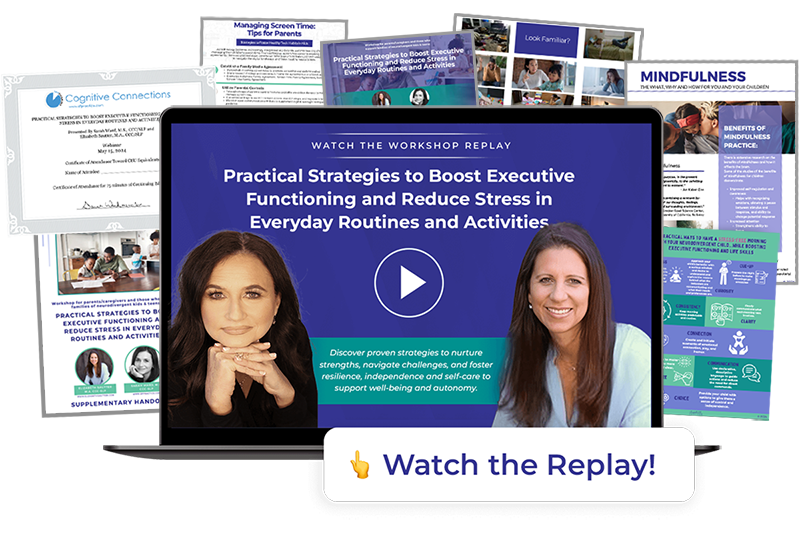
Led by Elizabeth Sautter and Sarah Ward, experts in social-emotional learning (SEL) and executive functioning, this workshop will provide you with practical strategies that can be seamlessly integrated into daily routines and activities, benefiting both you and the children you love and support.
Connecting the Mind and Body for Anxiety and Depression in Kids
- 17:40: Ever heard of the medical field of psychoneuroimmunology? We breakdown exactly what that means.
- 18:19: We have a very dichotomized view of our minds and bodies being completely separated, but studies are showing otherwise. No matter what is going on in the child’s environment, what’s in their head is more important to help them heal from depression or anxiety. But it’s not what you think! Depression isn’t a chemical imbalance, but it may be the thought that counts.
- 19:52: Before you look at what you can do to take care of your kids, consider Dr. Brogan’s #1 step which is to take care of yourself. Make sure you are keeping yourself healthy and giving your kids a model of what it looks like to take good care of themselves.
Prioritize [yourself] in a way that your kids are gonna notice. -Dr. Kelly Brogan

- 21:34: There are also ways we can send signals of safety to our kids and turn off their fight or flight instinct. Allow them to feel safe and accepted. Teach them to express and work through their emotions instead of suppressing them.

- 22:42: Reflect and witness rather than evaluate performance. We don’t want to fall into our kids only feeling loved for what they can do well or good behavior. We want them to feel loved no matter what.
- 24:01: We know that we’re carrying a toxic load and everything we are exposed to is just adding up. How does the “everything in moderation” philosophy play into this? Due to bioindividuality, we really can’t determine what is safe or how much is safe. We previously had a “the dose makes the poison” approach to determining toxicity, but now we know that this dose is different for different people and at different times.

- 26:31: If we have power over anything, it’s our household. Control what you can, but step 1 is to not freak out, for very good reasons. Each of us needs to find the right balance for our family.
- 28:48: When it comes to pharmaceuticals, one exposure can literally change your child’s life. Dr. Brogan draws a hard line in this area and encourages parents to do their own research.
- 29:30: Again, it isn’t always black and white. What is your hierarchy of attention? Which toxic exposures do you choose to draw a line on and where do you accept moderation?
“I just want my kids to eat what I make!”
This free 5-day challenge was made for you.
Spend just 30 minutes a day learning practical strategies that reduce mealtime battles and help kids build confidence with food.
Find Dr. Kelly Brogan, MD online:
- Her website
- Her book, A Mind of Your Own
- Her children’s book, A Time for Rain
- Really cool tool to see what might be going on in your body that may be affecting your brain


Leave a Comment