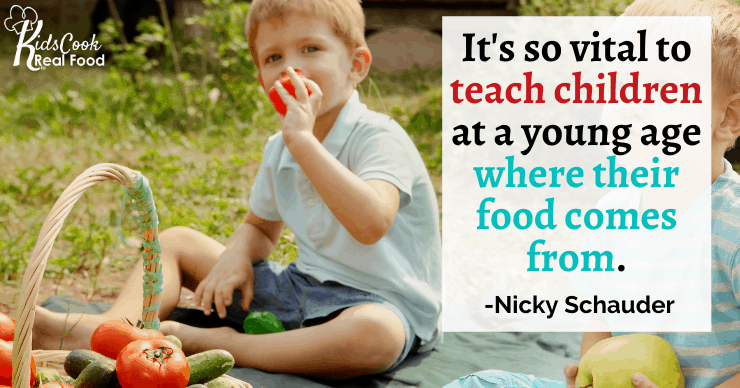
Sure, we teach kids to cook…but the beginning of connection with your food is to GROW it.
People often assume I garden with my kids as well as cook, but my brown thumb is a real weakness! 🙁
I called upon my friend Nicky Schauder, founder of Permaculture Gardens, to help us out with some simple ideas to get kids involved in growing their own food.
Baby step #1 doesn’t even involve a garden…or buying seeds!
Baby step #2 is how you eat the food you grow in baby step #1…and it won’t even have to alter your meal plan!
I’m telling you, Nicky knows her stuff, and the fact that she and husband Dave and their 6 kids grow hundreds of pounds of food in a tiny urban yard proves it. They’re passionate about helping families grow their own food!
You’ll be inspired by how beneficial gardening is to your family, your child’s health, the environment, your budget, and even seed sustainability (prepare for a shocker on that front!).
Let’s learn about growing our own food!
Be sure to learn more from Nicky and try out a free preview of her course this month…
Can’t see the video? View Gardening with Kids here on YouTube.
No time for the video? Here are the notes!
Tips for Gardening With Kids
- 0:06: I obviously talk about food and kids a lot, we talk about getting kids in the kitchen and picky eating. I constantly hear from other moms that kids love to eat foods they grow in the garden, and are more likely to try new foods that they grow themselves.
- 0:36: I asked Nicky Schauder of Permaculture Gardens to come on the Healthy Parenting Connector and talk to me about gardening with kids.
- 2:39: Nicky shares how she got into gardening and how she ended up growing 300 pounds of food each year in their urban yard.
- 5:21: If you’re unsure where to start growing your own food start with sprouts. You can plant peas, beans, or lentils from your pantry and grow your own sprouts to incorporate into soups, spaghetti, and salads. Microgreens can sometimes contain more nutrients than the full plant. You can do this in just about any climate and you don’t need any yard space. (If you don’t want to deal with the dirt, you can take this one step simpler and just sprout lentils or beans in a jar! Small seeds like radish or broccoli will grow tiny little plants that you can toss on salads, lentils or beans will have much smaller sprouts than you’d get by planting.)
- 7:20: Anything you would eat raw (like lettuce) you should eat the sprouts raw, but others like beet sprouts can be cooked as well.

Benefits of Gardening With Kids
- 8:39: Nicky shares about teaching kids about where french fries come from and how to grow potatoes.
- 9:22: Nicky’s oldest two children had a variety of allergies as babies, but they’ve mostly grown out of them over the years. She attributes it to them cleaning up their diet by growing their own produce.
- 10:24: What kids eat really is the root of health or disease.
- 11:07: Other than health, what other gardening benefits are there for kids? It goes far beyond the kids to the family, community, and beyond.

- 13:31: Nicky has seen her own children become more connected with where things come from and it spills beyond the garden. They’re more aware of the cycles of nature and the impact of other industries on the environment. They can tell the difference between their produce and the tomato in the grocery store.
Kids don’t need plastic knives. They need real skills.
Teach safe technique, focus, and confidence in the all-time fav lesson from our kids cooking class! (ages 2-12)
- 15:05: I read an article recently saying that food is not medicine because not everyone can afford healthy food. Aside from the illogic of that statement, growing your own can be a great, budget-conscious way to boost your fresh produce supply. 5 tips to plant what you already have in your pantry!
Seeds are just magical little capsules of life. -Nicky Schauder
- 16:03: In the last century we’ve lost 94% of the seed varieties that used to be planted. Nicky shares an infographic and tells us how this works.
- 18:44: Before they had seed catalogs mothers would pass on their seeds to their daughters on their wedding day. Neighbors would share seeds with each other and have family or regional varieties.
Why Wouldn’t You Start Gardening With Your Kids?
- 20:35: There are so many excuses to not garden, no time, no space, no money, brown thumb, etc. Nicky and her husband Dave help people overcome these obstacles and teach anyone who wants to learn how to garden.

- 24:30: Your first baby step is to plant something (beans, peas, lentils) from your pantry for sprouts.
- 25:03: Nicky always has a webinar coming up. Until Thursday of this week they’re running a free trial of their gardening mentoring program Grow it Yourself. If you catch this after that trial but before the April 15 webinar, check out “Growing Food in Small Spaces.”
Resources For Gardening With Kids
- Try Grow it Yourself for free (closes April 1)!
- Nicky’s webinar “Growing Food in Small Spaces” on April 15!
- Follow Nicky on social media: Facebook, Instagram, Pinterest
- Guest posts by Nicky:
- More gardening tips from the archives
- Benefits of getting in the dirt
- How to sprout lentils and legumes
 Nicky and Dave Schauder are passionate about helping families grow their own food.
Together, they run Permaculture Gardens at growmyownfood.com, a website filled with garden resources such as free webinars, educational blogs, and “Grow-It-Yourself/GIY” – garden mentoring program to help families grow abundantly!
Permaculture Gardens has received the “Most Sustainable Brand” award at the Green Festivals and Nicky & Dave’s work has been featured in the Huffington Post, Permaculture Research Institute – Australia, and Green America.org. Until the pandemic, they also volunteered at their local Title 1 school and started a permaculture garden after-school program for the elementary kids there.
Dave and Nicky have been invited to speak at health expos, university symposia, podcasts, and local gardening clubs about permaculture in small spaces.
Permaculture is best known for maximizing production in large agricultural lands. But because the rules for working with nature are universal, permaculture principles can help you grow your own food even if you have a tiny backyard or garden plot!


Leave a Comment