
Bet you a million bucks you’ve heard people say (or said yourself):
- It’s too complicated to get healthy – everyone says something different!
- Such and such diet/strategy/exercise worked for so-and-so, why isn’t it working for me?
- I feel like I’ve tried everything and it’s so hard to figure out what works!
Maybe, just maybe… everyone is different?
Years ago the term “bio-individuality” began to be a buzzword, and I thought it would be the “next big thing.” It is, sort of.
It might not be big enough.
But it still should be!
What if your genes could give you a pathway to your OWN optimal health? Not your friend’s success, not the next influencer’s advice, and not even current research?
Using genetics to make a personalized health plan sounds cutting edge, and it is – but it’s also reality.
My guest Brenda Wollenberg and I talk about gene-based holistic wellness programs today, and even more exciting, the promise and hope of epigenetics.
Epigenetics is the theory that through what we do and what happens to us – our environment – we can change our genes, basically toggle certain ones on or off. Your genes are not your destiny!
Listen in to find out how this works and even how you can apply epigenetics and gene personalization to your parenting and keeping kids healthy, even if you never get your kids’ genes tested.
Find all the episodes of the Healthy Parenting Handbook here, or wherever you get your podcasts:





Don’t forget to leave us a review on Apple Podcasts too! Thank you!
Can’t see the video? Watch Epigenetics and Wellness here on YouTube!
No time for the video? Here are the notes!
What Is Epigenetics?
- 4:09: Today on the Healthy Parenting Handbook I’m talking with Brenda Wollenberg about the emerging field of epigenetics. Brenda shares her background and story with us.
- 8:04: What is epigenetics? The literal definition is “over and above genetics.” Epigenetics studies how our behaviors and environment can actually change the way our DNA works or how our genes express themselves.
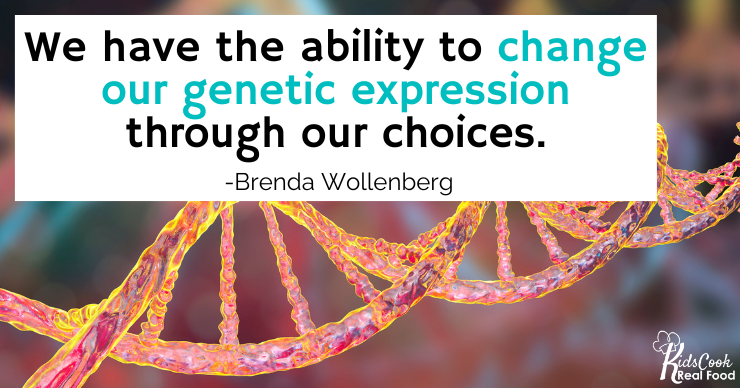
- 8:45: You can’t change your genes, but you can make choices that will impact how those genes express themselves.
- 10:36: Some environmental factors that can affect genetic expression are the food you eat, how you move your body, getting sun on your face first thing in the morning, how you handle stress, pesticide, and toxin exposure, being in a stressful job or relationship, and adverse childhood events. Reduce toxic exposures in your home.
- 12:38: Here’s a little refresher on genetics if it’s been a while for you. DNA is made by stringing four chemical bases together. The gene alphabet is only four letters long, A, G, T, and C. The bases pair together, A with T, and C with G to form units called base pairs. The order these units go in gives the information that cells need.
What Changes Gene Expression?
- 13:35: Environmental factors can toggle certain genes into a dormant position so they aren’t expressed, or a positive expression can be rekindled that was being suppressed by inflammation for example.
- 15:01: Brenda likes to think of the genes you receive at birth as an electrical panel. All the switches are one way or the other as your original DNA coding. Some of the switches are in an adverse position, maybe you don’t handle stress well or have more food-seeking behavior.
- 15:38: If you get a power surge, those little switches on your circuit board can get flipped all different ways. A “power surge” could be a great deal of stress as a child, a car accident, or inflammation caused by food you’re eating.
Does Epigenetics Affect Future Generations?
- 16:22: How does this affect the passing of genes through generations? People are told they’ll get cancer, type 2 diabetes, or be obese because that’s their family history and it’s in their genes. Now we know there’s hope. You can have a predisposition in your genes for certain traits and conditions, but if you manage your “trigger genes” you can avoid developing those conditions.
- 17:21: When people realize they can effect change in their health and wellness the internal motivation to make healthy choices is high.
- 19:51: Some of the negative effects of epigenetics that Brenda sees are that people will fall for scams by paying a lot for genetic reports that aren’t thorough and getting “snake oil” recommendations or supplement recommendations from people who aren’t educated enough on the topic. There are also some security concerns where data is sometimes sold. Do your research and ask lots of questions before choosing a company to do genetic testing with.
Kids don’t need plastic knives. They need real skills.
Teach safe technique, focus, and confidence in the all-time fav lesson from our kids cooking class! (ages 2-12)
- 22:56: With any knowledge, but especially new knowledge, what we know is incomplete. People are extrapolating generalized or generic advice, which may not always apply to an individual, unique human, even if some genes match up because the genetic profile is so complex.
There’s a ton of empowerment in saying, who cares what the genes passed on to me say? I have a lot of power to turn them on and off. -Katie Kimball
How Stress Affects Our Genetics
- 24:24: It makes sense that things like pesticides and gluten can affect our health, but what about things like trauma and stress? How does that have a tangible impact on our gene expression? Here’s the episode that I mentioned about trauma.
- 25:55: Trauma and stress release stress hormones into our bloodstream. Excessive cortisol can turn up to 90% of your genes into an adverse position whether or not you’re living a healthy lifestyle otherwise.
- 26:20: Childhood trauma has more of an impact because children don’t understand their role in the stress. They may take on the burden of guilt for something that happens to them and they have fewer tools to process and handle trauma and stress.
- 28:15: The HPA axis balances our stress hormones. This stands for hypothalamus, pituitary gland, and adrenals. The hypothalamus triggers the adrenal glands to secrete cortisol and there’s a negative feedback loop to stop the production of cortisol when there’s enough. There is a gene that is instrumental in this feedback loop, and if you have a specific variant of this gene then your body won’t stop production of cortisol when it should.
- 28:55: People who have this gene variant will carry trauma or any adverse experience in their body and have a harder time processing it.
- 32:10: Gene variants and expressions can be passed through the generations as well, almost like a chemical note. You can be the one to break the cycle and stop negative expressions from passing on to the next generation.
Epigenetics and Wellness
- 34:53: Let’s talk about some tools we can use to shift our genetic expression. Brenda uses the acronym BALANCE: it stands for Body type, Attitude, Laughter and play, Activity, good Night’s sleep, Clean water, and Eating for health. These are all key areas of health to clean up.
- 35:55: Diet usually comes first. You need energy. You need to know how much protein you need, how much carbohydrates you can handle, and how much saturated fat you need. This is all based on your individual genetics. What kids should eat according to a pediatrician.
- 37:22: Our genes also determine how much and what type of exercise you do well with. You may enjoy HITT, but it could be killing your muscles and causing inflammation. Maybe you’d do better with something endurance-based like biking or swimming.
- 38:26: The main areas to focus on are: what are you eating? How are you moving? How are you calming? And then how are you supplementing?
- 38:40: There are so many varied diets and recommendations out there, that it’s confusing and hard to know what is the best choice for you. Knowing some of your genetic propensities makes the path much more clear. Finding nutrient balance for kids.
- 40:08: Brenda teaches her clients to use the OCC formula when working through health issues. Observation, Curious, Compassion. Observe what’s going on, get curious about what might be causing it, and then be compassionate on yourself as you try to correct it.
“I just want my kids to eat what I make!”
This free 5-day challenge was made for you.

Spend just 30 minutes a day learning practical strategies that reduce mealtime battles and help kids build confidence with food.
Getting Genetic Testing Done
- 44:20: If you’ve already done something like 23andMe, you can send Brenda your data to do a gene analysis. There’s a company called Allure that she recommends if you are looking to have your genes mapped. Brenda really digs into the layers of your genetics to give you the best recommendations she can. She works virtually here.
- 48:26: Observe your kids and you can figure out a lot about their metabolic typing on your own. Maybe your child falls asleep after having a big pasta dinner or maybe he seems more energized.
- 51:17: In Brenda’s family, they make a lot of “make your own” type meals like taco salad, wraps, and stir-fries where each child can decide whether they want beans or meat and how much rice, etc to eat according to their genetics.
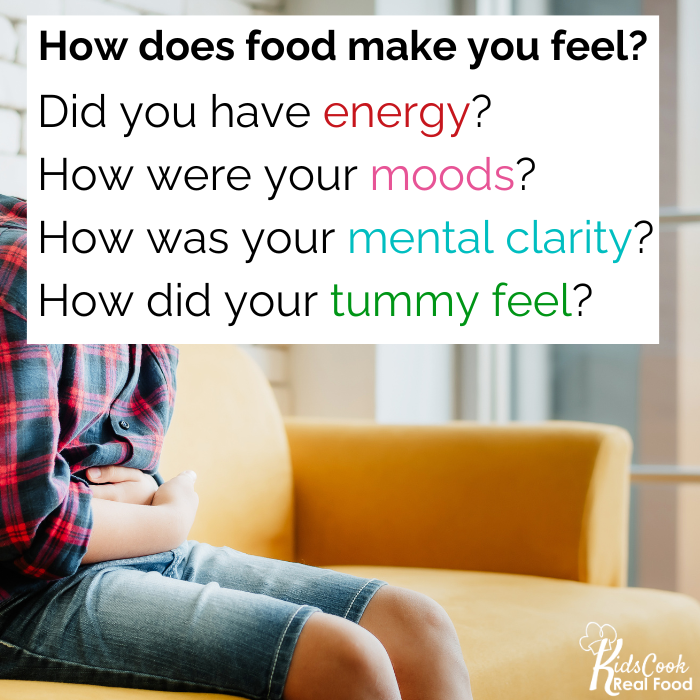
- 51:52: Here are some of the questions Brenda suggests to talk to your kids about how food makes them feel: Did you have energy? How were your moods? How was your mental clarity? How did your tummy feel?
- 54:37: We leave you with a message of hope. Be a lifelong learner and have grace on yourself when you make mistakes. We all need to shift our perspective or approach sometimes when we encounter new information.
Resources We Mention
- Reduce toxic exposures in your home
- What kids should eat, according to a pediatrician
- Finding nutrient balance for busy families
- Find Brenda online here
- Follow her on social media: Facebook, Instagram
- Brenda’s new book Metabolic Health Roadmap
 Brenda Wollenberg’s area of focus is analyzing and interpreting genetic profiles to design personalized holistic wellness programs. She has been featured on TV and podcasts, has had articles and newspaper columns published in a wide range of print media, and enjoys teaching in a variety of educational and corporate settings. Author of Overweight Kids in a Toothpick World—a practical manual for families dealing with childhood obesity—and Eat. Sleep. Move. For Your Genetic Body Type: How to physically and emotionally care for a unique you, she loves to co-create, with her clients, a personalized per body type and genetics, whole body (physical, emotional, and spiritual) path to wellness.
Brenda’s decades of experience as a social worker, co-leader of a faith community, and nutritionist allow her to uniquely and compassionately help clients not only “get” the science of their genetics but also assist them in “seeing” patterns of behavior that may have contributed to unhelpful gene expression. Then, Brenda helps clients “shift” that behavior—be it food plan, exercise, stress management, or supplements—to one that is more supportive of overall health.

Leave a Comment