Have you ever eaten chocolate or chips when you feel stressed?
Rewarded yourself for a job well done with a little sticky celebration?
Hid from sadness with a whole box of ice cream to yourself?
The term “emotional eating” might be new to you, but I’m sure you can see how it works. This interview with Tricia Nelson, author of Heal Your Hunger, is powerful in that we unlock the hidden truth behind why many of us can’t lose weight —
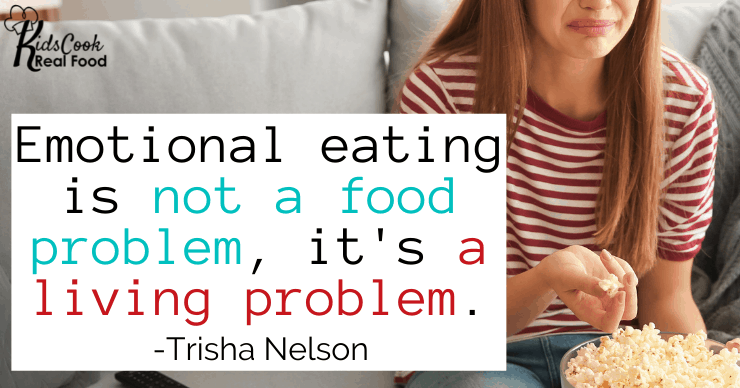
It’s not about the food.
It’s not about self-discipline.
It’s about feelings.
In this chat, we focus on the adults, on how to get through our own emotional eating, and although we touch upon how this impacts our parenting, it’s not about kids’ health today.
You’ll find out:
- What emotional eating is, and how it differs from food addiction
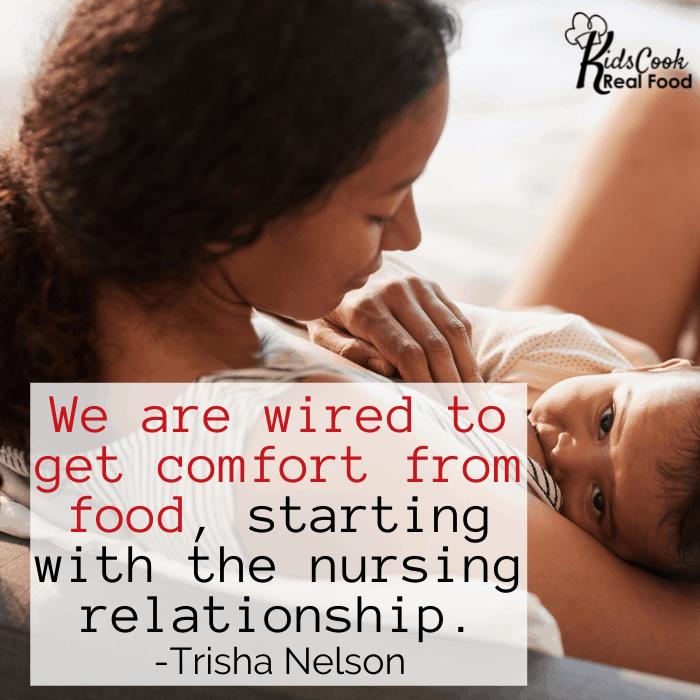
- How we’re wired for comfort food
- The #1 trait of emotional eaters (which, you guessed it, has nothing to with food or self-discipline!)
- How to re-learn how to listen to your body’s physical hunger cues
- Some questions you can ask yourself to differentiate between emotional eating and true hunger
- The interesting correlation between Tricia’s solution for emotional eaters and the first step of my process to help picky eaters
- How to avoid raising kids who are emotional eaters
- 3 practical steps to take to avoid the blame game and end emotional eating today
Super quick note that this isn’t a kid-friendly interview, nothing huge, but you might not want to have this one on with kids in the background.
Join Tricia in her Secret Sauce to End Emotional Eating Facebook group (anyone can join) and be sure to take her emotional eating quiz today.
Love the Handbook?
Find all the episodes of the Healthy Parenting Handbook here, or listen on your favorite podcast player:





Don’t forget to leave us a review on Apple Podcasts too! Thank you!
Can't see the video? Watch on YouTube →
No time for the video? Here are the notes!
These time stamps match the video and not the audio version, but the should be close.
End Emotional Eating
- 1:35: I first encountered Tricia as part of a speaking competition and I was enraptured by her talk on healing emotional eating.
- 2:29: Tricia Nelson has spent over 30 years researching addictive personalities and is an emotional eating expert.
- 3:43: Tricia shares her background with us and how she struggled with emotional eating.
- 6:24: Emotional eating can be very isolating, especially in parents.
I needed to address my emotions so that I wasn’t reacting to those emotions with food. -Tricia Nelson
- 8:02: Emotional eating is not a love of food and cooking. (I want all the kids in my course to love cooking and serving others with food!) It’s when food becomes obsessive.
Emotional Eating vs. Food Addiction
- 9:44: There’s a spectrum of unhealthy food obsession ranging from emotional eating all the way to food addiction. Tricia has a quiz on her website to help you determine where you land.
- 11:03: Your level of control and the consequences of your choices are the factors that determine if you’re an emotional eater or have an addiction. Tricia gives some examples.
- 13:22: Sugar is a common culprit for food addiction that Tricia sees. If you’re curious about sugar addiction check out these interviews with Sara Vance and Sam Shay for more.
Kids don’t need plastic knives. They need real skills.
Teach safe technique, focus, and confidence in the all-time fav lesson from our kids cooking class! (ages 2-12)
- 13:47: There are lots of consequences of emotional eating that people don’t think about. It can touch many areas of life beyond weight.
- 15:28: Regardless of any physical effects, binge eating isn’t a healthy way to deal with negative emotions. There are some serious mental health issues at play here.
If you can’t course correct in spite of the consequences, there’s a deep-lying emotional connection to food. -Tricia Nelson
- 17:12: Tricia works with people to help them learn to process emotions so that they don’t get buried. Repressed emotions can pop up as health problems years down the road.
What Causes Emotional Eating?
- 19:20: We look at the Anatomy of an Emotional Eater. There are 24 personality traits that are very specific to emotional eaters. Other people can have these traits, but emotional eaters usually have many of them.
We need to pinpoint the traits that create the stress that’s at the root of emotional eating. -Tricia Nelson
- 21:00: The number one trait of emotional eaters is people-pleasing. This often starts from a traumatic or difficult situation in childhood. People-pleasing leads to being overwhelmed, stressed, and resentful. Food is often used as a reward.
- 25:15: How do you differentiate between actual hunger and emotional hunger? One of Tricia’s recommendations is to only eat 3 meals a day with nothing in between. She explains why this helps. One caveat: this recommendation is for adults, not kids! My rule of thumb to allow kids to feel hunger and avoid all-day snacking is to keep any snacks at least 90 minutes away from a meal in either direction.
- 29:16: When you have a sudden hunger pain and it hasn’t been long since you ate, pause and see what is going on emotionally? Just being aware of the connection between cravings and emotions can make a huge difference.
“I just want my kids to eat what I make!”
This free 5-day challenge was made for you.

Spend just 30 minutes a day learning practical strategies that reduce mealtime battles and help kids build confidence with food.
Preventing Emotional Eating in Kids
- 30:56: We talk about tips for preventing emotional eating in our kids. If a parent is an emotional eater, the kids are much more susceptible. Here’s my post about avoiding emotional eating habits in kids.
What are we using food for and how do we talk about it in front of our kids? -Trisha Nelson
- 33:14: Trish has 6 self-care habits that she does on a daily basis and teaches to her clients. You have to fill your cup first so you have the ability to give from a full cup. When you’re giving from a deficit that’s when you’re more likely to reach for food to fill the void. Here are the stress mastery posts I mentioned (part 1 and part 2) and my Stress Mastery eCourse.
- 36:11: It’s important to refill your tank before it’s depleted. I know some of you are waking up to babies and toddlers and can’t get even a few minutes quiet in the mornings, but I want to encourage you that there are ways you can recharge with little mindset shifts.
- 37:55: We leave you with 3 practical steps you can take if you think you or someone in your family is an emotional eater. 1. Slow down and take something off your plate, 2. Find community, (here’s the Facebook group mentioned), 3. Put foods you don’t want to eat out of the way.
Resources We Mention to End Emotional Eating
- Tricia’s book: Heal Your Hunger
- Is sugar addiction real?
- How we’ve broken our metabolism: tips for cutting out sugar
- Tips for summer snacking
- Master your stress: Intro to stress mastery, make stress your BFF, stress mastery for busy moms
- Avoiding emotional eating in kids
- Connect with Trish on her website
- Take the quiz to find out if you are an emotional eater or food addict
- Follow her on Facebook
- Join the Secret Sauce to Emotional Eating Facebook group (It’s free! Anyone can join!)
- Trish has generously offered you listeners a complimentary 30-minute session: Emotional Eating Breakthrough Session


Tricia Nelson lost fifty pounds by identifying and healing the underlying causes of her emotional eating. Tricia has spent over thirty years researching the hidden causes of the addictive personality. Tricia is an Emotional Eating Expert and author of the #1 bestselling book, Heal Your Hunger, 7 Simple Steps to End Emotional Eating Now. She also certifies health coaches so they can get better results, referrals, and revenue by helping their clients overcome emotional eating. Tricia is the host of the popular podcast, The Heal Your Hunger Show and is a highly regarded speaker. Tricia has been featured on NBC, CBS, KTLA, FOX, and Discovery Health.

Leave a Comment