I couldn’t stop thinking about this interview with Jessica Joelle Alexander – and honestly, I haven’t stopped since! As a mom and as someone who teaches kids to cook and helps families connect around the table, I was deeply struck by how peacefully and intentionally Danish families seem to live: more play, less pressure; more “we,” less “me.”
In this episode of the podcast, I’m talking with Jessica Joelle Alexander, author of The Danish Way of Parenting and The Danish Way Every Day. This is part two of our conversation, and we’re digging into:
- what hygge really is beyond candles and cozy blankets
- how Danish families use mealtimes and simple food to build connection instead of conflict
- why involving kids in cooking and chores from toddlerhood can actually feel like play
- the powerful idea of equal dignity and seeing our kids as true members of the family team
- how all of this helps children “rest well within themselves” and grow a deep, quiet sense of contentment
If you’ve ever felt torn between giving your kids a “real childhood” and preparing them for success, or if you’re tired of power struggles around food, chores, and screens, this conversation will feel like a big exhale. Jessica offers such a hopeful, practical picture of family life that isn’t about striving and measuring, but about raising kids who genuinely feel at home in themselves.
Let’s dive into part two!
Find all the episodes of the Healthy Parenting Handbook here, or wherever you get your podcasts:





Don’t forget to leave us a review on Apple Podcasts too! Thank you!
Can’t see the video? Watch here on YouTube!
No time for the video? Here are the notes!
Danish Family Life Time Stamps
0:36 – Welcome back for part 2 of this amazing interview with Jessica Joelle Alexander. I’ve referenced it a TON with other people since we recorded together. And I adored Jessica so much she’s coming on as a camp leader for #LifeSkillsNow Season 5!
1:59 – Jessica explains hygge as a space families intentionally enter together where negativity, stress, and divisive topics are set aside to focus fully on connection.
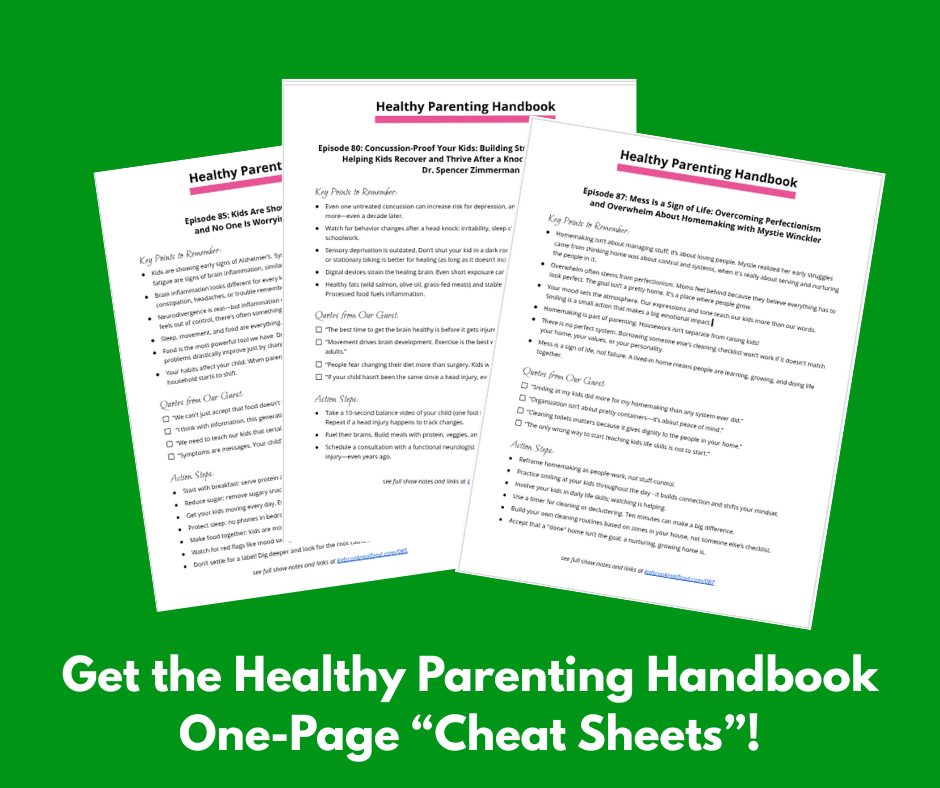
Turn expert advice into a handbook you can actually use.
I’ve interviewed hundreds of incredible experts on the Healthy Parenting Handbook podcast! Out of time to listen? You can skim on your phone!
These one-page summaries give you the highlights of every episode fast, so you can find what you need when you need it (and nothing to download).
3:30 – Children naturally live in the moment, which makes hygge especially powerful and intuitive for them. When families practice hygge, children gravitate toward that calm, drama-free togetherness! You can have a “hygge hour” together.
The Real Meaning of Hygge
3:54 – Hygge is often misunderstood as candles and cozy blankets, when in reality it’s about the spirit of togetherness and presence. Maybe it’s felt unreachable for those of you in really warm places, but it’s actually about a lot more than sheltering from the cold.

4:23 – I feel like Father Leo, whom I interviewed here, must have some Dane in his Filipino heritage. 😉 He talked about calm at the dinner table. Jessica thinks this peace at the table is also important.
Removing Stress from Your Dinner Table
5:14 – Jessica describes how Danish families often offer simple food choices or shared one-pot meals to encourage autonomy and togetherness.
5:51 – I connect these practices to helping picky eaters by keeping stress off the table and creating a sense of curiosity and empowerment around food. It’s what I teach in the No More Picky Eating Challenge!
The Danish way of parenting is automatically feeding into a healthy relationship with food at the table, regardless of what is on the table. – Katie Kimball, Raising Healthy Families
Cooking and Chores in Danish Homes
7:22 – Jessica shares that children in Denmark are deeply involved in cooking and household tasks from a very young age. She covers this in her newer book, The Danish Way Every Day.
If you start young and you see your child as a as a helper rather than a hindrance, then it also helps at the dinner table. – Jessica Joelle Alexander
9:03 – Jessica explains that chores are a major part of Danish family life and are introduced alongside play from early childhood. Woohoo! You know I love this. (Need a place to start? Check out our family’s chores system.)

9:51 – Here is a sweet story of a time Jessica’s niece wanted to play and instead her aunt brought her into the kitchen to help.
10:55 – Jessica and I are on the same page. I feel like I fed her some of these lines but I swear I didn’t! Giving responsibilities to your kids is a gift, not a burden!
11:14 – Jessica explains that Danish families operate with a strong team mentality, where everyone contributes and supports each other. Does she have a hypothesis why Americans are so bad at this? She does – listen in here to hear it.
13:13 – I think sometimes our American families are built more like a business model than a team, sadly.
What “Equal Dignity” Means in Parenting
13:45 – Jessica introduces the concept of “equal dignity,” meaning children are treated as worthy of respect while still having clear boundaries.
14:49- Americans hear “play is important” and swing so far that they don’t want to interrupt play with chores.
Kids don’t need plastic knives. They need real skills.
Teach safe technique, focus, and confidence in the all-time fav lesson from our kids cooking class! (ages 2-12)
15:15 – Jessica introduces the Danish value of “resting well within oneself” as a true measure of success for children.

16:24 – I explain why I struggle with the word happiness and how Americans often chase it self-centeredly. Jessica found Danes don’t really think of themselves as happy, but they tend to have a sense of contentment.
The Danish Way Every Day
18:58 – Jessica shares that her new book The Danish Way Every Day focuses on turning everyday moments like cooking, eating, and routines into opportunities for connection. It builds on her first book by offering practical ways to live the Danish mindset daily. The book also includes play ideas, routines, and ways to foster empathy.
21:30 – Jessica shares that one of the greatest outcomes she’s seen is how well her kids get along as siblings. Sibling connection should be a success metric in American schools!! I’m so glad my kids get along and Jessica is too.
22:23 Jessica explains that Americans rely on happiness rankings because we like measurable proof.
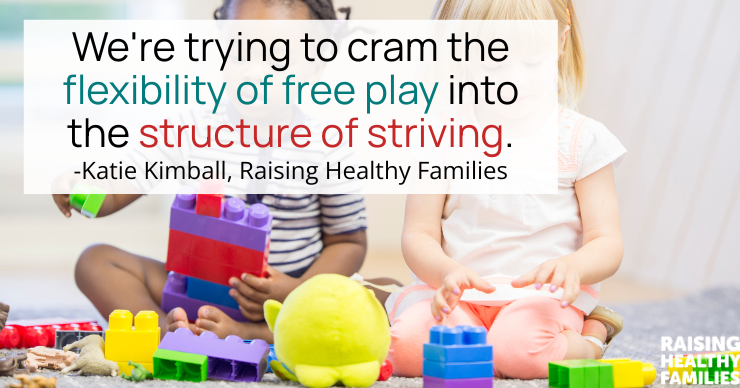
We’re trying to cram the flexibility of free play into the structure of striving. – Katie Kimball, Raising Healthy Families
24:00 – Jessica encourages parents to find a like-minded community that values play, connection, and childhood.
“I just want my kids to eat what I make!”
This free 5-day challenge was made for you.
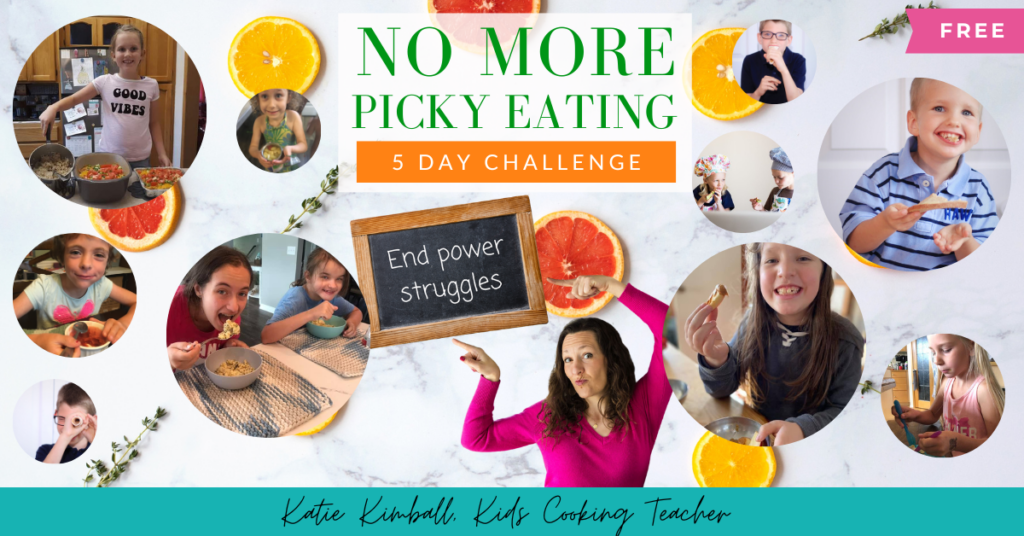
Spend just 30 minutes a day learning practical strategies that reduce mealtime battles and help kids build confidence with food.
Resources We Mention for Danish Parenting
- Jessica’s books: The Danish Way of Parenting (Amazon/Bookshop.org) and The Danish Way Every Day (Amazon/Bookshop.org)
- Building Strong Families, Connected Kids with Father Leo of Plating Grace
- my No More Picky Eating Challenge
- 3 Reasons Giving Your Kids Responsibilities Is a Gift
- How to Raise Siblings Who Love Each Other
- Find Jessica at her website Jessica Joelle Alexander or follow her on social: Facebook, Instagram, X, YouTube
 Jessica Joelle Alexander is a Bestselling Author, Danish Parenting Expert, Columnist, Speaker and Cultural Researcher. Her work has been featured in the NY Times, Time, BBC World News, Vanity Fair, NPR, Huffington Post, The Wall Street Journal and many more. Her books have been published in over 32 countries. She has a regular column in the Copenhagen Post and she currently researches and writes for UC Berkley’s Toward Belonging Center.
Jessica’s book The Danish Way of Parenting is one of the most sold parenting books of all time. She has been a spokesperson for LEGO on the power of play and gives talks on parenting, leadership and wellbeing around the world. She is extremely passionate about the human condition, building character values and creating a more compassionate society.

Leave a Comment