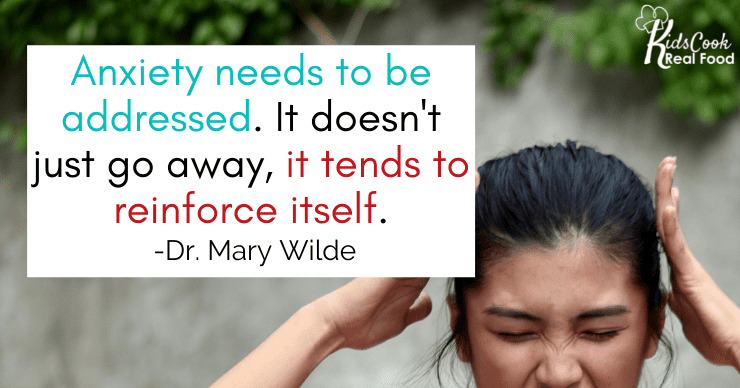
Wait until you hear how Dr. Mary Wilde and I connected! We’ll start with that fun story and then dig into topics that have never been more important than they are today:
- The impact of the culture on teen anxiety
- How food and mood are connected
- Why parents need to give themselves compassion most of all
- The power of building resilience (and a few practical tips to do it)
- Common deficiencies that affect mood
- How anxiety shows up differently in little kids and teens
- Whether restrictive diets are “worth it” when your child is struggling with mental health
Can’t see the video? Watch here on YouTube!
No time for the video? Here are the notes!
Building Resilience in Kids
- 0:08: I connected with today’s Healthy Parenting Connector guest in a bit of a funny way, and we’re here today to have a great conversation about kids’ health.
- 2:00: Dr. Mary shares her story with us. She was trained as a conventional MD, but now she treats in a very holistic manner.
- 6:22: Are we really more overwhelmed than in the past? We really need to focus on emotional tools to help us process all the overwhelming input and tap into our capacity for resilience.
We feel more overwhelmed but we are as capable as we ever were. -Dr. Mary Wilde
Building Resilience Through Self-Compassion
- 7:35: Compassion builds resilience. Resilience is our capacity to bounce back.
- 8:52: When I hear “self-compassion” I don’t really know how that looks practically in the day-to-day. Self-compassion allows us to have a sense of calm even in the face of stress.
- 12:43: Raising teens and tweens can be a bit stormy. We’re seeing anxiety rise at alarming rates in our adolescence. Dr. Mary shares some encouragement for parents who are learning to help an anxious child. More strategies to manage anxiety in kids.
- 16:06: We talk about some of the thinking that can lead a child down the anxiety path and some ways to break the cycle.
- 21:34: We’re fed the line that your diet, sleep, and lifestyle doesn’t impact mental health. Therapy and medication are often your only options when you go to a doctor with anxiety.
- 22:28: In younger kids, anxiety looks like acting out behavior. They don’t know how to deal with their big emotions. They could also have something physically going on that they can’t express like digestive trouble or pain.
When kids are in a state of threat they will go at anything coming their way. -Dr. Mary Wilde
Food Strategies to Support Mental Health
- 24:51: Getting more real food into your diet and avoiding highly processed foods is a great start to help with any health issue. Take baby steps when changing your diet. It takes years to overhaul from a standard American diet, give yourself compassion and grace.
- 28:35: Try to encourage your kids to eat the fruits and vegetables they like more frequently as you incorporate more variety. Pair carbs and sugar with protein and fat to avoid blood sugar highs and crashes. More on blood sugar regulation here.
No matter what life throws at our kids, we need them to be resilient.
This free download will give you some practical and actionable steps to improve brain health and resilience.
- 29:33: There’s mixed research out there on sugars, but you can tell in your body that you feel different when you eat candy vs chicken and vegetables. It has an effect on you. Here are a couple more posts to check out if you need more encouragement to limit sugar: breaking sugar addiction, tips to lessen sugar intake, and the link between inflammation and sugar.
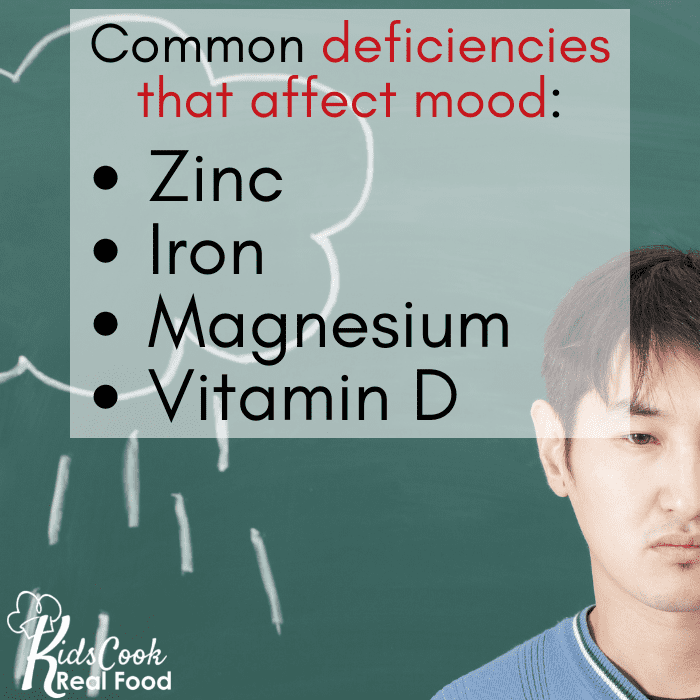
- 30:44: Dr. Mary recommends supplementing with omega-3s and looking for deficiencies with vitamin D, iron, zinc, and magnesium which can affect mood regulation. Everything you need to know about magnesium and kids.
Food Allergies, Mood and Behavior
- 32:11: Food allergies and sensitivities can also be at play when kids aren’t feeling well. Dr. Mary recommends keeping a food log if you suspect allergies or sensitivities. Some foods like dairy and gluten you may be eating every day or meal even. For these, it may be easier to remove them from your diet for a few weeks. Here’s my daughter’s experience going dairy-free and an interview about dairy intolerance specifically.
- 35:04: Be careful to take note of potential deficiencies if you do cut out a food or food group from your diet. Also, beware of allergy-friendly processed food that’s full of fillers and highly processed foods. Many vegan, dairy-free cheeses and creamers, and gluten-free products are highly processed.
Kids don’t need plastic knives. They need real skills.
Teach safe technique, focus, and confidence in the all-time fav lesson from our kids cooking class! (ages 2-12)
- 36:00: Some of the common food culprits that cause anxiety and behavioral symptoms are salicylates, amines, glutamates. In common terms you would recognize that would be: milk, dairy soy, and eggs.
- 37:03: There are three diets that are well set up to test out foods for these sensitivities. They are the Feingold diet, the FAILSAFE diet, and the REID diet.
- 38:29: You have to commit to one diet at a time, be really strict about it, and then add foods back in one at a time to test for reactions.
- 41:58: Dr. Mary gives us a message of hope for families.
Resources We Mention for Building Resilience
- Dr. Mary’s Resilience School
- Compassion Parenting Membership Community
- Strategies for managing stress and anxiety in kids
- Avoiding low blood sugar “hangry” meltdowns
- Taming the beast of sugar addiction
- Strategies to reduce sugar intake
- The link between sugar and inflammation
- Choosing a fish oil supplement
- Everything you need to know about magnesium for kids
- Why you might want to eliminate dairy
- A kid’s experience going dairy-free
- The Feingold diet
- The FAILSAFE diet
- The REID diet
- Connect with Dr. Mary on her website
- Follow Dr. Mary on Instagram and Facebook
 Dr. Mary Wilde is an integrative pediatrician and owner of Imagine Pediatrics Behavioral Health and Wellness in St. George, Utah. She uses a strength-based, whole-child approach to address emotional and behavioral issues in kids. Her main focus areas are anxiety, ADHD, and parenting. Dr. Wilde has created several online resources, including an online course for kids and teens with anxiety called “Resilience School,” and a parenting membership community called “Compassion Parenting.” She is an author, podcaster, TEDx speaker, and frequent contributor to various online platforms. She and her husband Jason are the parents to 8 sons. Visit drmarywilde.com to learn more.

Leave a Comment