
Moms take care of everyone…but sometimes we forget ourselves.
If you’ve had those moments when you blow up at a kid or spouse and then realize, “Oh, I haven’t eaten in 4 hours,” you know what it’s like to feel ‘hangry.’
My guest today draws upon personal and professional experience with nutrition and balancing blood sugar to give us a masterclass on how to think about the contents of our food and fueling ourselves (and our families) for the day.
You’ll learn:
- 2 goals for daily eating
- how to anchor your food to feel better all-day
- the real cause of mood swings, anxiety, and tiredness
- why grocery shopping and trying new recipes may sometimes seem like a fun challenge and other times be a drag
- how to teach our kids about healthy fuel and choosing balanced meals
- whether calorie counting makes sense for moms in the thick of it
- how to stay motivated to feed our families when it starts to get us down
- some excellent grocery shopping tips to keep you on a budget
Chandis created a Christian-based series of nutrition and food classes for the whole family to watch, and you’ll get a taste of how important they are in this interview.
Find all the episodes of the Healthy Parenting Handbook here, or wherever you get your podcasts:





Don’t forget to leave us a review on Apple Podcasts too! Thank you!
Can’t see the video? Watch Balancing Blood Sugar here on YouTube!
No time for the video? Here are the notes!
Balancing Blood Sugar
- 1:03: My guest today on the Healthy Parenting Handbook is a young mom and Registered Dietitian Nutritionist who created a new video series, Eating Close to Nature. Today we’re going to talk about balancing blood sugar and taking care of your health as a mom.
- 2:56: Chandis shares her own health background with us and how she came to study nutrition. In middle school, she discovered that she tended towards low blood sugar. She had to learn what to eat and how often she needed to eat to feel her best, so her interest in nutrition began very early.
- 6:34: Chandis took over grocery shopping for her family when she was 16. I don’t think I’ve ever talked to anyone who did that before! She learned to look for deals, watch sales and coupons, check unit prices, and read food labels.
- 7:47: Moms have so much on their plates and food is often a cause of burnout. Meal planning, shopping, cooking, cleaning, repeat, repeat, repeat. Some add in food allergies or selective eaters, it’s a big task! Chandis seeks to equip moms to feed their families well without overwhelm!
Why Should We Balance Our Blood Sugar?
- 9:35: It’s common for moms to put themselves last and when that means we aren’t eating well or enough it hurts our ability to serve our families.
- 10:32: Two things Chandis is passionate about are eating close to nature and balancing blood sugar. Those two things should be your goals throughout the day when it comes to your food.
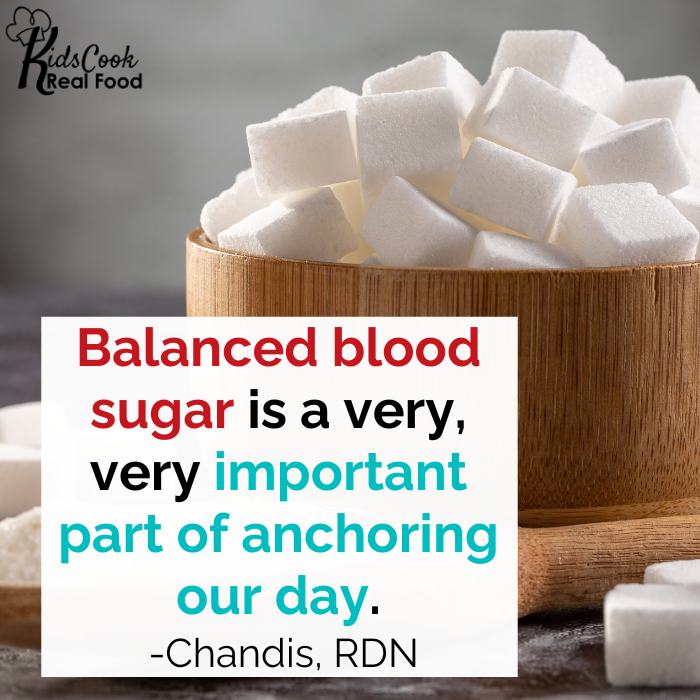
- 11:55: When we don’t have balanced blood sugar, that means we’re either going too long without eating or eating foods that spike our blood sugar. As moms, we often go too long without eating. The day gets away from you and before you know it, you’re having mood swings, anxiety, shakiness, lightheadedness, and fatigue. The second part is to avoid eating too much carbohydrates that will spike blood sugar. Read more about “hangry” symptoms.
How to Balance Blood Sugar
- 12:57: To avoid blood sugar spikes you want to anchor your day with fat, protein, and fiber. Healthy fats include avocado, coconut, cream, and butter. Kids tend to crave fats, our brains are made of about 60% fat. Fat is like a hug for our bodies and our moods.
- 13:46: Protein is another anchoring point for blood sugar. It’s much easier to get enough protein with animal-based proteins, but it is possible with plant-based.
- 14:14: Fiber sources include whole grains, legumes, lentils, and whole fruits and vegetables.
When we do balance our blood sugar, we can feel calm, and more resilient to take on different tasks, and it helps us get from one meal or snack to the next. -Chandis, RDN
- 14:50: Chandis’s kids are 8, 6, and 3 now and they’ve heard about eating fat, protein, and fiber to balance blood sugar their whole lives. Chandis tells them fat is a hug for our mood, protein gives us strength and energy and fiber cleans out our guts.
- 16:22: To begin introducing these concepts to your kids, say things like, “We’re going to add this sausage to breakfast because it’s a good protein.”
- 17:49: There is a lot of conversation, especially online, about what wording to use around food. I think the term fuel is pretty neutral. We can all say “Yes food is fuel for our bodies.”
- 18:51: An exercise you could do with your kids is to give them a meal component and figure out what to add to make it a complete meal.
Kids don’t need plastic knives. They need real skills.
Teach safe technique, focus, and confidence in the all-time fav lesson from our kids cooking class! (ages 2-12)
Do Fad Diets Help Balance Blood Sugar?
- 20:00: Chandis doesn’t recommend calorie counting. Calories do not digest the same across the board. If you look at a chicken breast and a cup of soda, the soda may have fewer calories, but it’s going to spike your blood sugar and it isn’t going to give you the same nutrition.
- 21:59: Intermittent fasting is a quick way to hurt your adrenals and thyroid by not supplying enough nutrients. Food is a really great way to have self-care for ourselves throughout the day.
- 22:55: When we talk about eating close to nature, we can take one aspect of intermittent fasting and that’s not eating late at night. It’s very important to reset our digestion each day and follow the natural light in nature. As it’s getting darker it’s time to stop eating, when the sun rises, it’s time to start eating again.

- 23:57: Especially if you struggle with blood sugar imbalance, starting the day with a big cup of coffee is not a good choice. Chandis starts the day with hot cocoa made from milk, cocoa powder, sea salt, and monk fruit or maple syrup.
- 24:59: Our energy is a lot like a campfire. The logs are long-lasting fuel, that’s healthy fats. Next, protein is some medium-sized sticks. Carbohydrates are kindling, they burn quickly. Some carbs are fine, but we don’t need to overly focus on them.
How We Feed Our Families is Important
- 26:28: For moms who are starting to feel burned out, go back and think, Is this meaningful? Does it matter how I feed my kids? Does it really matter? Could I just slide them something that’s already made and call it a day? We are made to eat, several times a day. It’s about connection. We gather together throughout the day to nourish our family.
- 28:56: When mom is getting burned out, it’s probably time to pass some cooking skills on to the kids. I now have 3 kids who make dinner one night a week!
- 31:05: Chandis makes it a family activity to go grocery shopping. They check their grocery budget and go on a mission to hunt for groceries for the week.
- 33:07: Chandis likes variety so she rotates between several grocery stores including a discount grocery store. She only goes to one store each week though. People tend to overbuy when they go to several stores following sales.
- 35:21: Start with the needs and then if you have room in the budget you can move on to wants like snacks.
- 37:47: Let’s try to focus on the wins and give ourselves grace. We tend to focus on and get tripped up on the imperfections.
- 39:14: Bring your kids into the kitchen. Let them help you cook to encourage them to try new foods. From a young age, expose them to a variety of flavors. During pregnancy and breastfeeding your baby can taste what you eat.
- 41:37: Our guts and tastebuds are always changing, give your kids time and freedom to explore foods when they’re ready.
- 42:57: Don’t pressure kids to taste something. Chandis gives the options: look at it, poke it, smell it, toss it, or share it with a sibling.
- 44:09: If a child is slowly narrowing down their acceptable foods, variety is the antidote.
- 44:50: We leave you with a quick win you can do today!
Resources We Mention for Balancing Blood Sugar
- Read more about “hangry” symptoms
- If food is causing burnout, it’s probably time to pass some cooking skills on to the kids
- I now have 3 kids who make dinner one night a week!
- Listeners can use the coupon code “handbook” for 20% off the “Eating Close to Nature” series
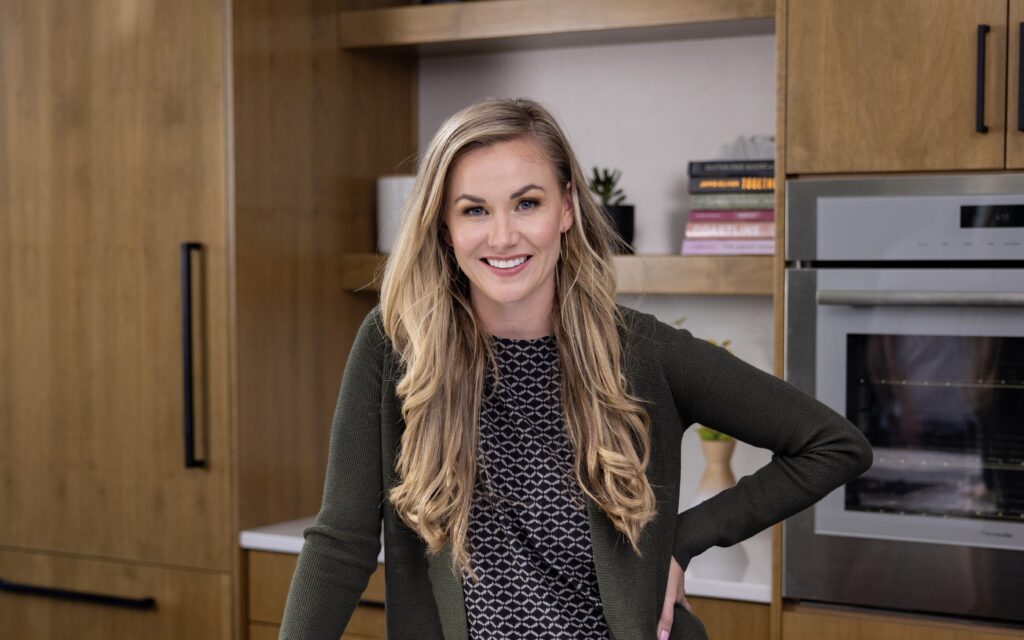
Chandis is a Christian, a wife, and a homeschooling mom of three little ones. She is a Registered Dietitian Nutritionist (RDN) with a degree in Nutritional Science from Pepperdine University. She’s worked for over a decade as a Registered Dietitian in different settings, including the Dietetic Supervisor of a 40,000-student school district, as well as one-on-one nutrition counseling.
Now as a mom of three, Chandis’ professional and personal motherhood experiences, along with her Christian faith, have culminated to create a new video series called, “Eating Close to Nature.” In this creation-based series, Chandis hosts 12 video episodes where you’ll learn the why behind the food choices she recommends and the details of the specific products, brands, and recipes she uses to nourish her family. This is a wholesome series that the entire family can watch.
Chandis has dedicated her career to supporting moms in navigating nutrition information, and today she is excited to help clarify common nutrition questions that can help lighten the load for moms and families.

Leave a Comment