Humans are designed for relationships.
Then why are they so difficult???
My guest today, Dr Morgan Cutlip, is a sought-after relationship expert, but she doesn’t talk down to moms – she’s right in it with us.
If you’ve ever had a disagreement with your spouse about who’s doing more than the other in the home, how full your brain is, or whether one of you is angry or just using your “go time” or “business” voice – you need this info.
We’ll dig deep into mental load with topics such as:
- what the mental load IS and why it really really impacts our relationships…
- where “Mom brain” comes from and why it’s real
- why the emotional aspect of mental load is the hardest to hand off or share
- possible gender roles when it comes to mental load and how that impacts our marriages
- the conversations we need to have with spouses to keep things running smoothly (and protect our mental health)
- how to model good relationship building as a life skill for our kids
- the difference between seeing marriage as a one-player vs two-player game
- the importance of 2 A-words: appreciation and assumptions
- the difference between discernment and judgement and how to teach that to our kids
- one super practical tip to raise kids who take initiative as adults (amazing!)
- how our caregiving skills as mothers get used well and also need to be redirected at times
Oh man, folks…this really is a juicy interview. I’m so impressed with the blend of practical advice and philosophical nuggets to make me think. A must-listen!!
Find all the episodes of the Healthy Parenting Handbook here, or wherever you get your podcasts:





Don’t forget to leave us a review on Apple Podcasts too! Thank you!
Can’t see the video? Watch Balancing Mental Load here on YouTube!
No time for the video? Here are the notes!
Balancing Mental Load
- 1:31: Today, I’m talking to relationship expert Dr. Morgan Cutlip on the Healthy Parenting Handbook!
- 3:46: Dr. Morgan shares her background with us. She almost grew up right into the field of psychology since her dad was in school throughout her childhood. She used to go to his doctoral classes with him and work through hypothetical counseling situations with him as a game.
- 6:00: Dr. Morgan is the second or third interview guest this month who said, “I thought I’d be really good at being a mom, but then life happened…” You can’t go to school for being a mom, nothing really prepares you for the way your kids can push your buttons like no one else.
What Is Mental Load?
- 7:48: Mental load is a phrase you’ve probably heard lately, but it hasn’t been around for long. The conversation was started by a French comic artist who made comics about how in a stereotypical husband/wife relationship the wife feels like she’s drowning and the husband just says “You should have asked” instead of taking on some of the burden to notice what needs to be done. Since then, books and documentaries have been made about the topic. The book Dr. Morgan mentioned is Fair Play by Eve Rodsky.
- 9:50: Dr. Morgan defines mental load as the invisible running to-do list that we carry around in our minds that takes up cognitive real estate. It crowds out energy for other things, it takes up space in our brains. If you’re overwhelmed and full in your mind, you’ll be less patient with those around you, you’ll be forgetful and preoccupied, and you’ll have “mom brain.”
- 11:05: Mental load has three main domains of tasks:
- Mental tasks like making grocery lists or planning a birthday party
- Physical tasks like doing the laundry and dishes. These are the easiest, and often, this is where our partners do jump in
- The real kicker is the emotional domain, which is calculating the cause and effect of all the options throughout the day.
- 12:52: The emotional domain is the hardest to quantify and the hardest to pass off. As an example, your son has a baseball game, so you’re preparing his breakfast. In your head, you’re running through all the ramifications of what will happen if he doesn’t eat his breakfast, shows up to the game hungry, and doesn’t play his best.
Talking to Your Spouse About Mental Load
- 14:20: Dr. Morgan says it isn’t actually important that your partner understands mental load to do something about it. If they’re willing to jump in, take initiative, and participate as a partner even when they don’t understand what’s going on in your head, that will move the needle forward.
- 16:19: Let’s talk a bit about Dr. Morgan’s new book. She wanted to help couples navigate conversations about mental load. Usually, the woman initiates the conversation, and there’s an element of husband vs wife, but Dr. Morgan wanted to make it husband and wife together vs mental load. You’re on the same team.
The enemy is not your partner. The enemy is the massive amount of responsibilities we take on in a modern society. It is the hustle culture, the feeling that we must always be in motion and be productive in order to be good enough. -Dr. Morgan Cutlip
- 19:14: It’s not always going to be 50/50. Things shift in different seasons, and we need to regularly touch base to reevaluate and make adjustments to who does what in your relationship. Here’s the interview with Tidy Dad I mentioned.
- 21:11: How can you make sure each spouse feels seen and heard in these conversations? Dr. Morgan has 2 tips.
- 21:39: Be excessive with appreciation. Many people say they don’t want to show appreciation for their spouse doing something they should be doing because it makes it sound like a favor or like they’re going above and beyond. Why are we like that? This is a two-player game. It feels good to be appreciated. So, acknowledge and appreciate what your spouse does.
- 23:11: People have an almost instinctual tendency to withhold what we aren’t getting. If we aren’t getting appreciation, then we withhold it. It’s a self-protection tactic that many people do subconsciously. In our closest relationships, that can cause issues.
- 23:48: The second tip is to be gracious with your assumptions. We tend to create entire narratives in our minds that assign motivations and accuse and can change the tone of our relationship.

Kids don’t need plastic knives. They need real skills.
Teach safe technique, focus, and confidence in the all-time fav lesson from our kids cooking class! (ages 2-12)
Avoiding Misunderstanding in Marriage
- 26:03: We can do this with ourselves and our kids as well, where we create a narrative in our heads that undermines our closeness and relationship. Dr. Morgan talks more about this in her firset book.
- 27:04: My husband and I have had many conversations where he thinks I’m angry when I was just using my “getting stuff done” voice. We have to communicate about these things so we can understand what each other is actually thinking.
- 27:38: Men are happiest when women are happy and everything is rainbows and flowers. When the woman is stressed, it disrupts the sense of peace in the home, and the man doesn’t know how to handle it. If he reacts intensely with a “business voice”, it comes across as angry or scary to the woman, which turns the dial up on her stress.
- 28:57: Be very clear with your intentions so that you can’t be misconstrued. “Hey, I’m in get-her-done mode, so if you hear my intensity, just know I’m not upset with you.”
Teaching Kids About Relationships
- 29:41: Our kids will learn how to maintain relationships from watching our own. We can start young, teaching them about the importance of choosing which friends they hang out with, which builds the skills to choose a spouse when they’re adults.
- 31:00: We can teach them to have discernment and use good judgment in their relationships. One way to introduce this idea is to analyze characters in books.
- 32:36: The conscience has two functions: do you live consistently with your moral code, and can you transport yourself into other people’s perspectives? It’s hard to teach little kids about the conscience.
- 33:21: Dr. Morgan uses a metric of thumbs up, thumbs middle, and thumbs down to identify how her kids feel around their friends. It’s really helpful to get to the root of why they feel that way and whether those are good friends or not.
- 35:09: When Dr. Morgan has interviewed and surveyed women about mental load, she’s discovered one of the biggest things they want is initiative-taking from their partners and their kids.
- 35:39: You can do exercises with kids to help them notice and see what needs to be done. Go into the living room and say, “Take care of two things you notice need to be done.” Let the kids find things on their own instead of giving them specific instructions.
“I just want my kids to eat what I make!”
This free 5-day challenge was made for you.
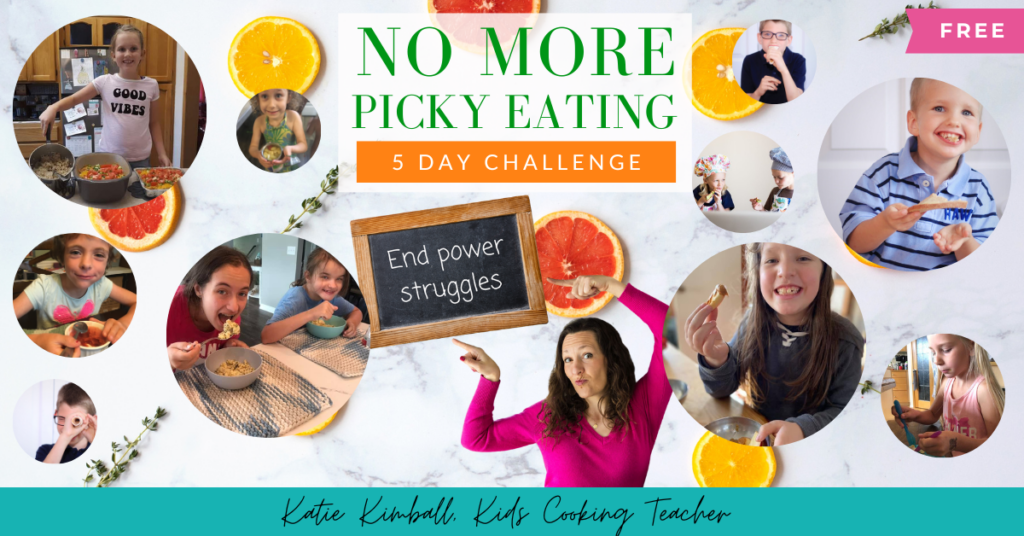
Spend just 30 minutes a day learning practical strategies that reduce mealtime battles and help kids build confidence with food.
Taking Care of Mom
- 38:20: In Dr. Morgan’s first book, Love Your Kids Without Losing Yourself, she has a section at the end of each chapter called Go Mom Yourself. In early motherhood, we’re pulled to self-sacrifice to keep our kids alive, but we get stuck there, and no one is taking care of mom. Dr. Morgan tells mom to do a 10-second check-in throughout the day to see how you need to adjust.
- 40:34: The rates of autoimmunity in women are off the charts. We tend to ignore the signs that we need to be taking care of ourselves. Most of the things called “self-care” are surface-level and difficult to do with young children. True self-care is maintaining your sense of self and staying connected to who you are.
- 42:11: Let’s get into the kitchen! Involve your kids in what you’re doing; invite them to participate.
Chores are fun when you do them with a parent. When you get that quality time, or you throw on some music and you’re chatting about stuff, it doesn’t need to feel like a chore. -Dr. Morgan Cutlip
- 44:27: Dr. Morgan has an audio course for couples to help with seeing each other’s perspective.
- 46:47: We leave you with a message of hope. If you are in a moment of overload, it will not feel that way forever. If you are in a bad spot in your relationship and you feel like a little bit of that hope is slipping away. The way you feel today is likely not how you’re going to feel a year from now. Try to keep that perspective in mind.
Resources We Mention for Balancing the Mental Load
-
- Check out Dr. Morgan’s books
- Fair Play by Eve Rodsky
- My interview with Tidy Dad
- Dr. Morgan’s audio course for couples
- Find Dr. Morgan online
- Follow her on social media: Facebook, Instagram, Pinterest
- Get Dr. Morgan’s free guide to talking to your partner about mental load
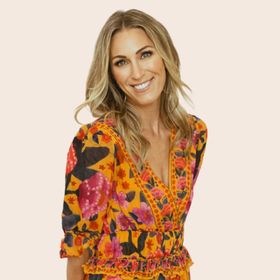 Dr. Morgan Cutlip, an author, speaker, PhD in Psychology, and highly sought-after relationship expert, knows what it feels like to lose yourself in motherhood, and she’s determined to help mothers navigate it better. Throughout her career, she has helped hundreds of thousands of people worldwide learn how to form and maintain healthy relationships. Dr. Morgan has been a featured relationship expert with Good Morning America, Teen Vogue, The New York Times, Women’s Health Magazine, MOPS International, Loveology, and Flo, the #1 app in health and fitness. Her new book, Love Your Kids Without Losing Yourself, is available now, and A Better Share: How Couples Can Tackle the Mental Load for More Fun, Less Resentment, and Great Sex is available for preorder now. Her son and daughter have taught her more than her degrees and are now in mid-to-late elementary school.
Leave a Comment