It’s so rare that I get to speak to a professional who marries FOOD and parenting, so I was tickled to sit down with Dr. Deborah MacNamara, who wrote a whole book about the relationship between food and…relationships!
This conversation will keep you on the edge of your seat with lightbulb moment after lightbulb moment, and I think it will also change the face of many family dinners in homes around the world.
We discuss:
- Why no one needs to learn how to parent, how to “teach a child to grow up”
- The REAL root cause of most “picky eating” (and why that’s in quotation marks)
- What can make kids want to eat certain foods (and avoid others – or certain times of eating)
- The answer to parents’ frustrated question: “Why does my child eat X at daycare and refuses to at home!?”
- What must come before food in any successful family dinner
- Deborah’s personal humble confession about mistakes she made while feeding her highly sensitive daughter
- The real root of why family dinners have so many positive outcomes
- Why teaching kids to cook is a way of caretaking (and the beauty of learning from and with family) – to my great relief!
- A truly surprising “natural” part of development (and why the window from age 2-5 is critical for supporting growth in this area)
- The latest counter-cultural philosophy I think you should adopt 😉
No one is talking about food and attachment – and we must!
Deborah and I could have talked for hours, and we’re so grateful for this time to share our hearts (and her professional wisdom) with you.
May your family dinners and the way you build food relationships with your children be ever changed!
Can’t see the video? Watch Attachment and Food here on YouTube.
No time for the video? Here are the notes!
Food and Attachment
- 1:30: Deborah shares her background with us and how she came to focus on parenting and healthy eating.
- 3:20: Culturally we have a behavioralist mindset where as parents we think we have to teach our kids how to grow up, how to think and feel. A developmental approach recognizes that we all have instincts, emotions, and a blueprint for maturation inside of us and parents are walking alongside children as they grow.
We are midwives to our children’s maturation. -Dr. Deborah MacNamara
- 6:10: Kids have 4 basic needs in a developmental approach: the needs to attach, rest, have emotions, and play.
- 7:56: Deborah says that we’ve become so focused on what food to serve, that we’ve lost sight of how food is meant to serve our relationships. She had a “picky eater” and as she looked for answers she realized she was creating an attachment issue with her daughter over food.
No one is talking about food and attachment – and we must! -Dr. Deborah MacNamara
- 9:45: It’s easier to change the food to appease a picky eater rather than looking at how we can shift our relationship so our child is more receptive to food. Food has always been about attachment to the land, our ancestors, our culture, and each other.
- 11:10: Love and emotion are invisible so it’s much easier to focus on the food which is visual.
The Key Ingredient in Family Dinners
- 11:55: The family dinner table comes to mind when we talk about food and attachment. Family meals are equated to many positive outcomes, however, Deborah has some interesting perspectives on negative outcomes of eating together when there is discord in the family.
We must “gather” before we eat – relationships must come before the food. -Dr. Deborah MacNamara
- 14:17: One study showed that in cases where family dinners produced positive outcomes, there was always a caretaker in the family who felt that family meals were important. It wasn’t about the food, it was about the relationships. Here’s the study Deborah mentions.
- 16:37: It’s only three family meals a week that begin to show benefits. Don’t feel overwhelmed thinking you need to start eat every meal single together if this is new to you!
- 17:00: The core of connection over food is the invitation to dependence. Offering food to someone is an invitation for them to depend on you for something vital and it creates a connection. There are so many ways we can build bridges through food.
Make sure there’s relationship when you come together around food. -Dr. Deborah MacNamara
Connection Through Teaching Kids to Cook
- 19:42: Of course here at Kids Cook Real Food™, we’re at our core all about getting kids in the kitchen. How does kids learning how to cook play into connection over food and invitations to dependence?
- 21:50: When kids are cooking for and with family members it’s a beautiful picture of connection, interdependence, and caring. Just be sure you don’t teach them to cook so that they can do it all themselves because you’re too busy or can’t be bothered. Keep relationship and connection at the heart.
- 22:16: Every family is unique, so watch out for blanket prescriptions. There are ways to adopt these principles into your family in a variety of ways. Maybe your kids make their own lunches for school, but if you provide some of their favorite foods or snacks to offer them, that’s an invitation to dependence. You don’t have to be personally doing everything for them in order to invite them to depend on you and show them that you’re reliable.
- 24:28: It comes across differently to our kids if we’re complaining about having to feed them again or make lunch when we’re so busy versus giving them some responsibility to help but guiding them along the way. You can solicit their help while still nurturing and caretaking.
- 26:03: There’s a beautiful reciprocity when we teach our kids to cook. They can help support you, their siblings, and the community. Deborah shares a touching story about her daughter’s Mother’s Day gift.
- 27:10: I tell a story about one of my daughter’s recent cooking nights.
Kids don’t need plastic knives. They need real skills.
Teach safe technique, focus, and confidence in the all-time fav lesson from our kids cooking class! (ages 2-12)
Attachment as the Solution for Picky Eating
- 28:30: We spend a lot of time figuring out what’s healthy, what we’re going to eat, where to shop, how to save money, etc. If you have a picky eater, this mental energy multiplies! What if we spent some of that time on relationships rather than worrying about food?
- 29:18: Picky eating is part of a child’s development. Around 2-3, they develop autonomy, and one aspect of that is experimenting with opinions about food. It’s a natural response to be shy or cautious about new things and that includes food. You may have a child eat certain foods only with certain people or only at daycare, it’s about attachment to that person, place, or community.
- 31:12: There was a study done in Mexico that looked into why children were eating really spicy and flavorful foods at such a young age. The researchers found that when the kids were eating with people they were attached to around the family table they developed the taste for “stronger, adult” flavors by age 5-6.
- 32:00: To try new foods kids need to feel emotionally safe, connect with the people eating the foods, and not feel pressured to eat. Bribes and punishments take away your appetite or make kids feel unsafe at the table. Sometimes there is a physical or sensory issue that’s causing picky eating. I talk more about this in my TEDx talk.
No one wants to eat something new when they feel unsafe. -Dr. Deborah MacNamara
- 33:58: I’ve seen research that shows that things like parenting style, income level, and mental health of the parent all have no effect on the development of picky eating. I always didn’t understand how that could be, but maybe this explains it. None of that matters if there is connection and attachment.
“I just want my kids to eat what I make!”
This free 5-day challenge was made for you.
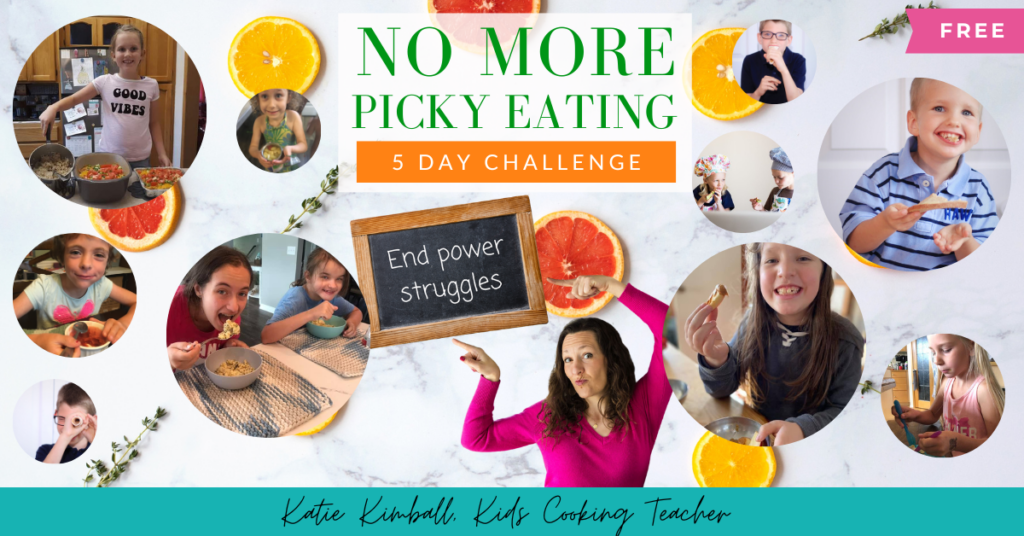
Spend just 30 minutes a day learning practical strategies that reduce mealtime battles and help kids build confidence with food.
- 35:27: People need to stop judging parents and their picky eaters for where they are on their journey. Support parents who are trying to guide their kids through this.
- 36:44: Deborah mentioned earlier a situation where a child will eat something at school or daycare, but not at home. What should a parent do in this situation? Be patient, go slow, and serve food in a loving and safe environment. It’s ok to have different foods in different places.
- 40:01: Short-order cooking and having two separate meals can interfere with togetherness around food. Deborah had a daughter who disliked butter chicken, but it was a favorite family meal. She began serving edamame with it so her daughter could have a protein source and she would eat that with rice, while the rest of the family ate everything. They’re still eating the same meal but customized to their preferences.
Sameness is a form of attachment, a way of belonging. -Dr. Deborah MacNamara
- 43:39: A lot of parents have shared with me that they have a poor or disordered relationship with food and they feel that they can’t model healthy behavior for their kids. Feeling that tension inside you is the answer, not a problem. Push back against those negative food beliefs that you’ve developed. You can find a way through and adapt.
- 49:40: The parents who have come through this challenge are more confident and better prepared for the next challenge that comes their way. Human growth comes from internal conflict.
- 51:36: When you’re stressed and don’t know what to do next, return to a simple act of caretaking. Deborah has found that this roots her, calms her, and reminds her of the caretaker she wants to be.
Resources We Mention for Picky Eaters
- Here’s the study Deborah mentions about family dinners
- My TEDx talk on picky eating
- Get more picky eating strategies here
- Sign up to be notified the next time I’m running a free No More Picky Eating Challenge
- Find Deborah online here
- Follow her on social media: Instagram, Facebook
- Infographics on picky eating and gathering to eat
- Here are Deborah’s books
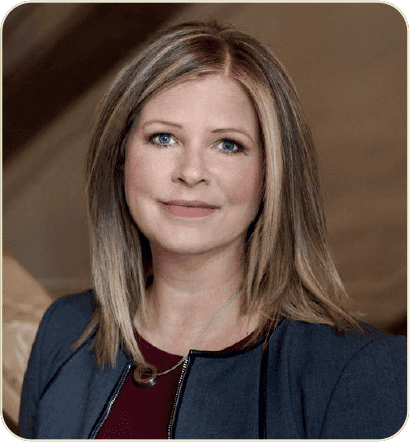 Dr. Deborah MacNamara is the author of three books, Nourished, The Sorry Plane, and Rest, Play, Grow, a clinical counselor, a mother, and on faculty at the Neufeld Institute.
Leave a Comment