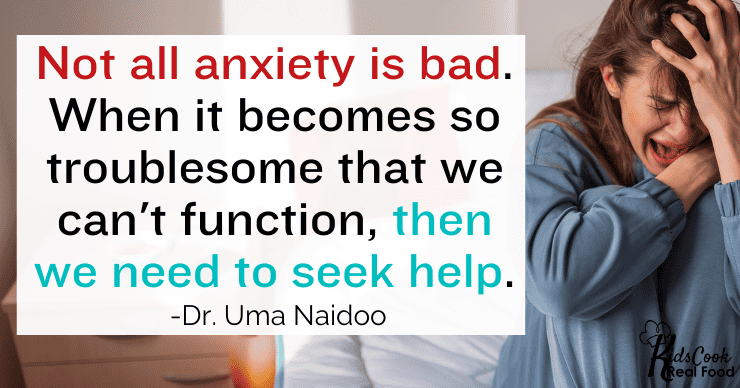
Anxiety is increasing like CRAZY not only in adults, but our teens and even our precious little ones. Where is it all coming from?
The pandemic played a role to be sure, but what happens TO us is only one piece of the puzzle. What’s happening IN our bodies and brains cannot be understated.
Dr. Uma Naidoo, MD, a “triple threat” of experience as a Harvard-trained psychiatrist, professional chef, and Nutrition Specialist, joins me today to talk specifically about how FOOD impacts the brain in areas of anxiety.
Spoiler: There is HOPE! Our brains are always changing, so we as parents have “power at the end of our forks” and in our shopping and cooking choices.
Check out this quick half-hour interview to learn:
- What other bodily function sits in the same part of the brain that lights up when someone is feeling anxiety
- How the emerging field of Nutritional Psychiatry points to answers as anxiety increases
- The difference between good and bad anxiety
- What types of food inflame the brain and what types calm the brain (Dr. Uma doesn’t prescribe “eat this, not that” diets, just an overall direction in which we should try to move)
- The connection between the gut and the brain and how the happiness hormone won’t ever let go
- A quick list of super important calming food habits for the whole family, including this question that many of us might not like: Are your kids staying hydrated enough?
- How long it takes for that cookie from a friend’s house to cause a reaction in the gut, and what snowball effect that reaction might begin
- Why sugar and ultra-processed foods deserve a skeptical look (or worse)
But we always end with that positive message to take with us! Dr. Uma said emphatically, “Our brains change all the time because of neuroplasticity. There is always hope!!”
Grab her new book Calm Your Mind With Food, for in-depth research explained easily, food recommendations, incredible brain-calming recipes, and shopping guides too.
Her first book is packed with brain-supportive recipes as well! Dr. Uma’s style blends her native Indian heritage with the best of the Mediterranean diet.
Can’t see the video? Watch how your diet affects anxiety here on YouTube!
No time for the video? Here are the notes.
Anxiety and Food
- 0:14: Put your science geek hats on! Today I’m talking with Dr. Uma Naidoo about anxiety and food.
- 1:43: Dr. Uma shares her story with us and how she became interested in nutrition and psychiatry. She grew up helping her grandmother in the kitchen and when she was older realized that cooking was a relaxing part of the day that she looked forward to, this led her to go to culinary school.
- 4:44: What is nutritional psychiatry? It’s the use of healthy whole foods and nutrients to improve your mental well-being. It can be used alongside medication, psychotherapy, and other tools.
- 5:28: Dr. Uma’s new book, Calm Your Mind with Food, focuses on anxiety. Prepandemic, anxiety disorders were the most common mental illness, and they increased by 25% during the pandemic. Globally, more than 70% of people with a mental illness never receive treatment from a healthcare professional. Dr. Uma saw these stats and wanted to provide solutions.
- 7:46: People experience anxiety differently in their bodies. Some common physical symptoms are trouble sleeping, stomach issues, and a sense of panic.
Micro and macronutrients and the immune system are all players in anxiety. -Dr. Uma Naidoo
- 8:44: The center of anxiety in the brain is the amygdala and hippocampus. Metabolism is connected to these areas of the brain as well. We know that there’s some correlation between metabolism and anxiety.
How Does Food Affect Anxiety?
- 10:22: Dr. Uma doesn’t prescribe specific foods that will magically take away anxiety. She recommends working on overall lifestyle and diet shifts that will over time reduce anxiety. Some examples are learning breathing techniques to use in moments of panic, and incorporating more cuciferous vegetables in your diet.
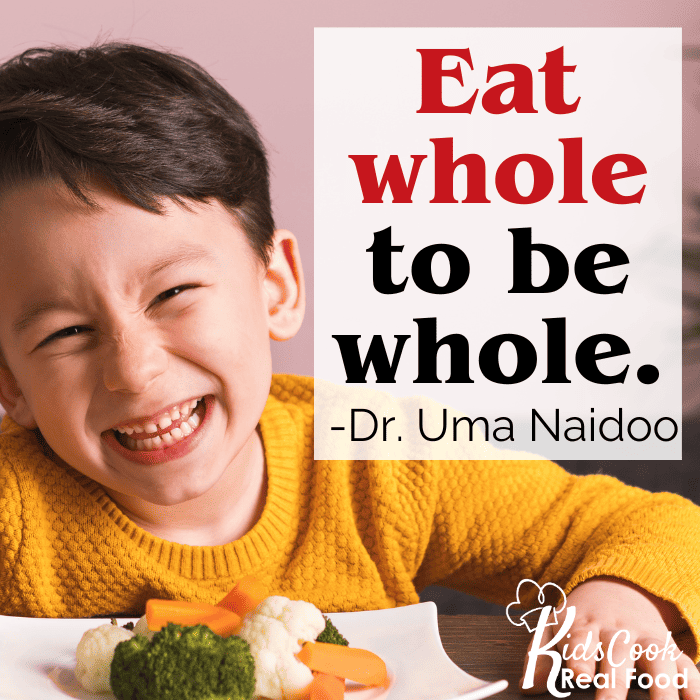
- 12:06: Dr. Uma shares 6 pillars of treating anxiety holistically in her book. One of them is to “eat whole to be whole” and one is to “lean into a kaleidoscope of colors.”
- 13:09: Of course here at Kids Cook Real Food™ we’re talking to parents and teaching kids. It’s alarming to me how the statistics on anxiety in teens and even little kids are rising so quickly.
Strategies to Reduce Anxiety with Food and Nutrition
- 14:40: Dr. Uma has a pneumatic to help parents know what to focus on with their kids. BRAINCHILD:
- B – B Vitamins (B12 and B9 are in leafy greens. Berries are rich in B6 and B9.)
- R – Rainbow veggies
- A – Antioxidants
- I – Iron and iodine (animal sources of protein come into play here)
- N – Nutrients (for example – many of us are deficient in magnesium)
- C – Choline and vitamin C (choline can be found in eggs, and vitamin C in citrus and colored bell peppers)
- H – Hydration (are your kids consuming enough water?)
- I – Insulin and blood sugar control
- L – Less ultra-processed and processed foods
- D – Vitamin D (spend 10 mins outdoors without sunblock every day for 80% of your vitamin D. Test vitamin D before supplementing, here’s a supplement we like)
- 19:00: The food we eat has an impact on our brain through the gut/brain connection. There’s always hope to adjust away from a poor diet because of neuroplasticity!
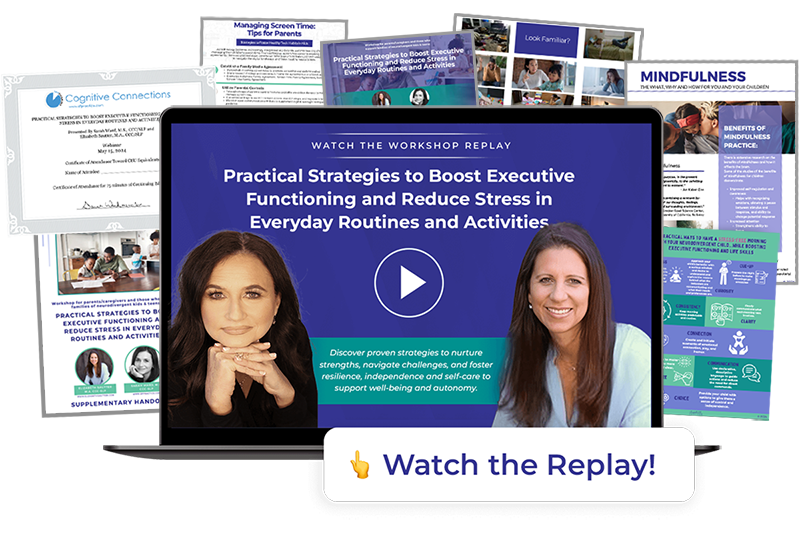
Led by Elizabeth Sautter and Sarah Ward, experts in social-emotional learning (SEL) and executive functioning, this workshop will provide you with practical strategies that can be seamlessly integrated into daily routines and activities, benefiting both you and the children you love and support.
Gut Inflammation and Anxiety
- 20:12: Inflammation is at the root of anxiety and more. Food can drive inflammation in our bodies. Seed oils and vegetable oils are very inflaming and they’re in soooo many processed foods. Consuming inflammatory foods regularly leads to gut issues like leaky gut. Here are 9 ways to start improving your gut health.
- 22:40: When we talk about diet affecting inflammation, is this big picture stuff where we look at the child’s diet over the course of a week or is there an immediate day-to-day effect? Microbes will respond within a few hours of eating a food. You might not feel worse after eating inflammatory foods, but your body is reacting and over time it builds up to increased inflammation. For some people, some foods will cause a more immediate reaction. Brain fog and attention are two things you might notice shortly after consuming certain foods.
- 24:13: Sugar is everywhere! We do want natural sugars in moderation, but all the added processed sugars are a problem. When you binge on candy, soda, and cookies, you’re setting yourself up for increased cravings. Sugar affects us negatively on a cellular level. Learn more about the link between sugar and inflammation here.
- 26:46: We end on a note of hope. Food can be joyful in our families! Don’t let rules about what foods you can or can’t consume cause you anxiety about food!
Parents need to know that the power is at the end of their fork! -Dr. Uma Naidoo
Resources We Mention for Food and Anxiety
- Get Dr. Uma’s books on Amazon:
- Get her books on Bookshop:
- The Lancet study showing an increase in anxiety
- A breathing technique to master stress
- More on why kids are experiencing increased anxiety
- A vitamin D supplement we like
- Troubleshooting poor digestion in kids
- 9 ways to start improving your gut health
- Teach your kids to identify added sugars on nutrition labels
- More about the link between sugar and inflammation
- Find Dr. Uma online here
- Follow her on social media: Instagram, Facebook
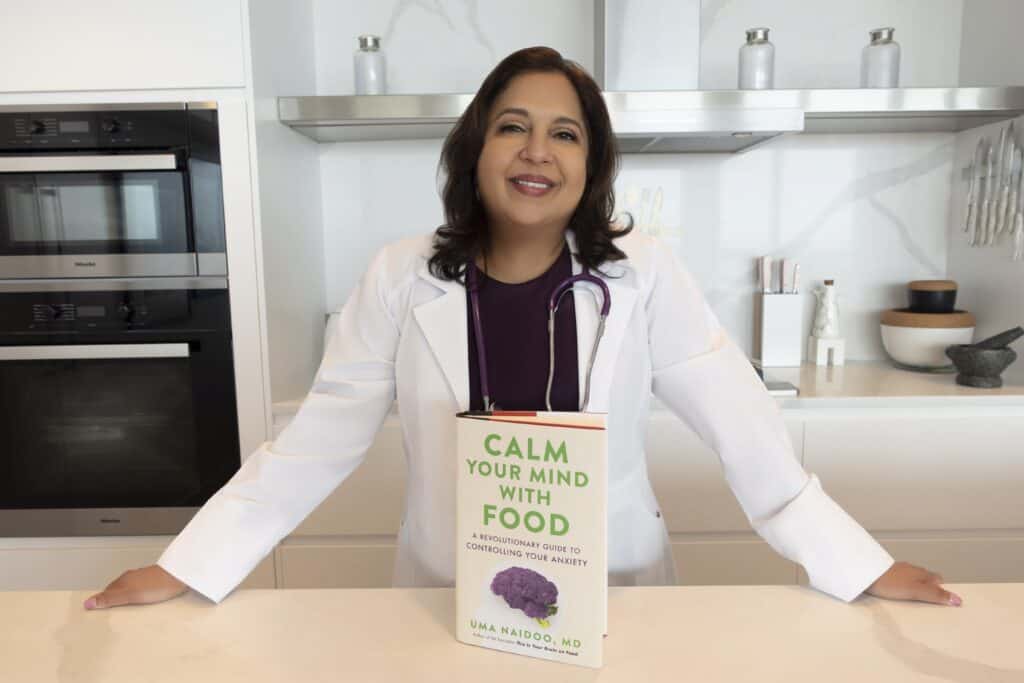
Michelin-starred chef David Bouley described Dr. Uma Naidoo as the world’s first “triple threat” in the food and medicine space: a Harvard-trained psychiatrist, professional chef graduating with her culinary schools’ most coveted award, and a trained Nutrition Specialist. Her nexus of interests has found its niche in Nutritional Psychiatry. Dr. Naidoo is the national bestselling author of This Is Your Brain On Food, and her new book, Calm Your Mind with Food. It is a groundbreaking guide where Dr. Uma Naidoo presents cutting-edge research about the ways anxiety is rooted in the brain, gut, immune system, and metabolism. She draws on the latest science on the connection between diet and anxiety and shows us how to effectively use food and nutrition as essential tools for calming the mind.

Leave a Comment