
I’ve always said that parenting is “an 18-year-long game,” fully expecting that parenting would markedly diminish after my kids turned 18. Now that I’m parenting a 19-year-old…it turns out parenting DOES change and it ought to diminish, but it’s still a thing!
Kim Muench coaches parents of “emerging adults,” a new term needed to describe 18-30-year-olds who aren’t quite ready to be real adults, apparently.
In this interview, we talk about WHY we need both this term and parenting strategies to continue our conscious, intentional parenting beyond age 18.
But this podcast isn’t just for parents of emerging adults!
If you want to set your teens up for adulthood – and since you’re here, I’m assuming you do – it starts at least in high school and most likely long before that.
Kim and I dig into the pitfalls of becoming your child or teen’s friend, screen use at various ages, life skills, problem-solving, and soooo much more. Believe me, you’ll need all of it well before your kiddo hits 18.
If you want to prepare yourself for the next phase of parenting, and more importantly, prepare your kids to enter adulthood more smoothly, this interview is for you!
Find all the episodes of the Healthy Parenting Handbook here, or wherever you get your podcasts:





Don’t forget to leave us a review on Apple Podcasts too! Thank you!
Can’t see the video? Watch Parenting Adult Children here on YouTube!
No time for the video? Here are the notes!
Parenting Emerging Adults
- 2:39: Today I’m talking with Kim Muench on the Healthy Parenting Handbook. Kim coaches parents with compassion and without judgment into healthier, happier, more functional relationships with their teens and adult children.
- 4:04: Kim shares her background with us. She has a 19-year-old daughter and 4 sons between 21 and 37. When her oldest son struggled with alcohol addiction as a young adult, Kim went back to school so that she could work with teens who were experiencing similar struggles.
- 5:25: After completing internships, Kim realized she was really drawn to working with parents rather than teens. Most parents don’t get help until they’re in crisis mode with one of their kids.
- 8:25: Once you’re in crisis mode it can be invaluable to have a neutral third party helping you process what’s happening and helping the parents be aligned with each other on how they’re going to address the issue.
- 10:55: Kim encourages parenting with rather than over our children. Let’s unpack that idea. Progressively you can come alongside your kids as they enter middle and high school, certainly, this applies to adult kids living at home. If there is a problem you would say something like “Hey, there’s a problem, here it is, how can we work on this together?” Collaborate with your older or adult kids.
- 13:13: A distinction Kim makes is that this doesn’t mean you become your kid’s friend. That is not your place as the parent. Parents need to provide their kids with structure and leadership, especially when it’s a safety issue. If it’s a choice where you can give your high schooler some autonomy, do that.
- 15:15: It’s totally appropriate to have a curfew for a high schooler and it’s appropriate if you have an adult child still living at home to ask when they plan to come home. Other adults living together like spouses give each other this courtesy so no one is up worrying or wondering if they can lock up the house.
- 16:03: Kim shares what she thinks are the two most common challenges facing parents today. First is a lack of confidence. Parents are constantly looking outside for the right answer and there are so many books, websites, podcasts, and social media influencers telling us what that is. Yes, you should educate yourself but also trust your instincts and limit who you listen to.
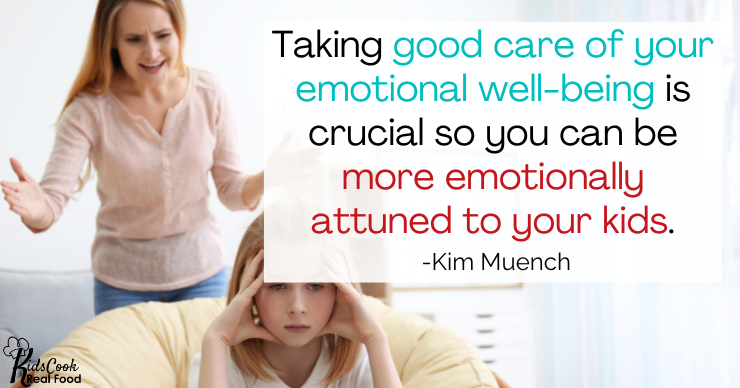
- 18:36: The more concrete challenge Kim sees parents struggling with is screen time. There is no shortage of evidence now saying that having screens in the bedrooms and at dinner is contributing to the disconnection many families feel. No screens allowed in the bedroom at night, and having screen-free zones like the dinner table or car is vital.
- 24:36: How can we prepare our teens and tweens to launch into adulthood? Start giving teens autonomy where you can. Gradually allow your kids to make more decisions for themselves when it’s appropriate for their age. Walk alongside them, talk them through decision-making, and gradually let them do it on their own more and more.
- 25:44: Continue educating yourself on the upcoming stages of parenting. Find support groups of parents with whom you can be open and honest. Take good care of yourself and notice when your child is triggering you.
- 28:13: Let’s chat about life skills! Don’t wait until it’s time for them to move out before you teach your kids how to do laundry or cook. Let your kid help in elementary school or even as a preschooler when they want to be helpful and have a good relationship with you. Teach your kids life skills here!
What Else Can Your Kids DO in the Kitchen?
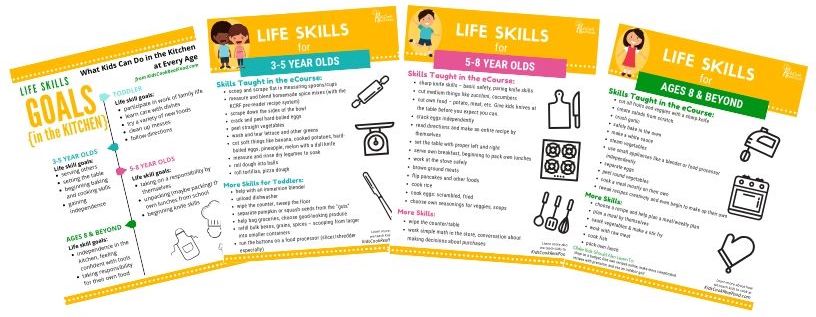
Download this printable list of age-appropriate kitchen skills for kids of any age to tack up in your kitchen and remind you what your kids can do to really help in the kitchen!
Note: When you grab our free gift, you’ll also get helpful emails about getting kids into the kitchen and eating healthy food.
- 30:20: You’ve probably experienced kids who don’t want to do chores. It’s ok to expect them to contribute to the household even when they don’t want to. Again, how can you parent with your kids in this situation? “Your laundry hasn’t been done in two weeks. How can we work together to solve this problem?” Then if their idea is at all reasonable try that first so they can see their ideas are valued.
- 31:32: We aren’t just teaching our kids to do laundry, we’re teaching them to be problem solvers, so we need to let them have some problems to solve.
- 32:28: Parenting is physically exhausting with little kids. By the time your kids are teens they can dress themselves and get food for themselves, etc, so it’s less physically exhausting, but it’s mentally grueling.
- 34:34: Once your kid turns 18 there’s a shift in parenting even if he or she still lives at home. You can still support them in solving problems and making decisions. Let them know you’re there for them, but you can’t fix everything for them. Remember this needs to be a gradual release of responsibility beginning when they’re teens. You can’t solve everything until their 18th birthday and then suddenly say they need to do it all on their own.
- 36:18: As you’re loosening the reins if something doesn’t go well, resist the urge to be angry. Be curious and help them learn from the experience. What went wrong? Do you need to scale back on releasing that responsibility to them?
- 37:15: We leave you with a message of hope.
“I just want my kids to eat what I make!”
This free 5-day challenge was made for you.

Spend just 30 minutes a day learning practical strategies that reduce mealtime battles and help kids build confidence with food.
Resources We Mention for Parenting Adult Children
- Kim’s book: Becoming Me While Raising You: A Mother’s Journey to Her Self (Amazon, Bookshop)
- Find Kim online here
- Follow her on social media: TikTok, Instagram
 Kim Muench (pronounced minch, like pinch with an “m”) is a Jai (rhymes with buy) Institute for Parenting Certified Conscious Parenting Coach and Founder of Real Life Parent Guide who specializes in working with parents of emerging adults (ages 18-29).
Kim knows moms are the emotional barometer in their families and she is passionate about educating, supporting, and encouraging her clients to parent with intention and guidance rather than fear and control. Kim’s three-plus decades raising five now adult children and years of coaching other parents empowers her to lead her clients with compassion and without judgment into healthier, happier, more functional relationships.
Kim has a self-published Amazon #1 New Release in the Parent & Adult Child Relationships category called Becoming Me While Raising You – a Mother’s Journey to Her Self. She is a sought-after and frequent speaker on topics related to conscious parenting for Fox News Radio, television news stations, and podcasts around the globe. Her mission is to spread the movement to parent WITH rather than over our children.

Leave a Comment